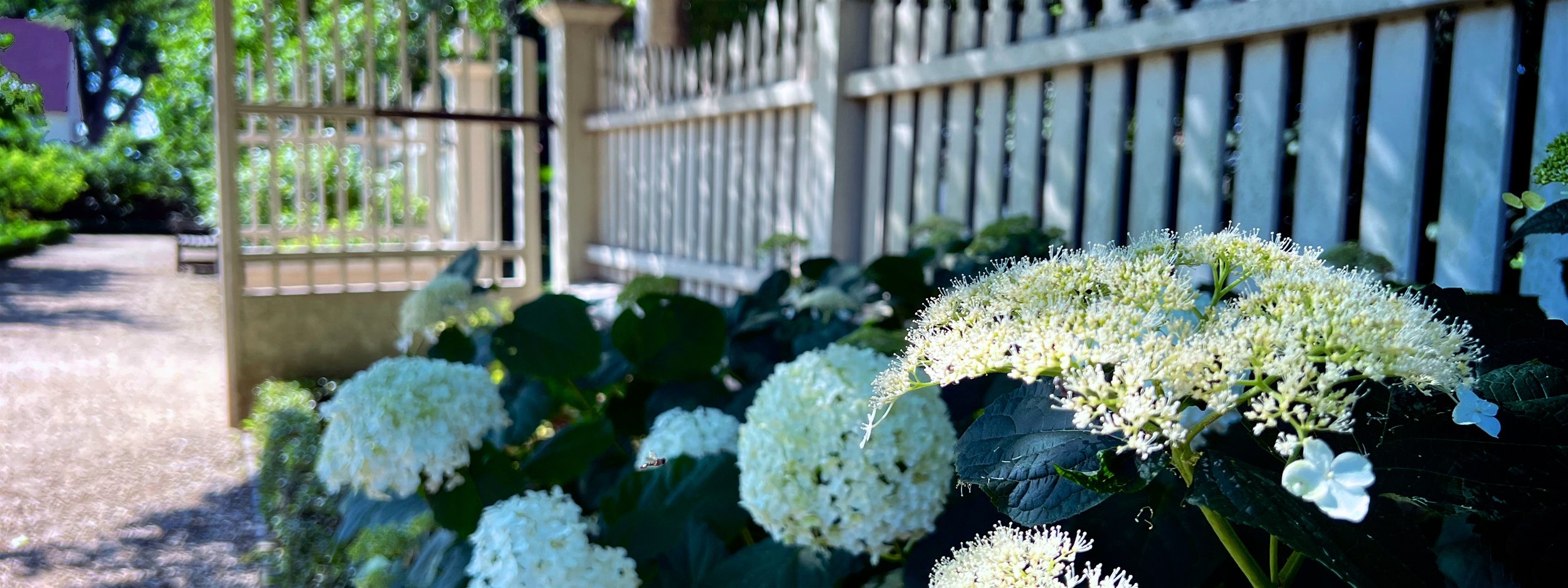
Photography by Bruce A deArmond
Mount Vernon: Georgian/Palladian Architecture, additions added in late 1750s and 1770s, finished late 1780s — Home of George and Martha Washington, Mount Vernon, Virginia
Mount Vernon is now presented in the year 1799 - The year of his death. Washington returned in 1797 from his presidency in New York and Philadelphia. Much of the work of expanding Mount Vernon was achieved in his extensive absences in his military duties - eight years for the Continental Army and eight-year Presidency. George and Martha made many cosmetic changes to bring the mansion to a more updated appearance. In addition, Mount Vernon was now hosting guests, an estimated 677 in 1798, in an almost revolving-door fashion. The curation and restoration of Mount Vernon now reflect these many changes.
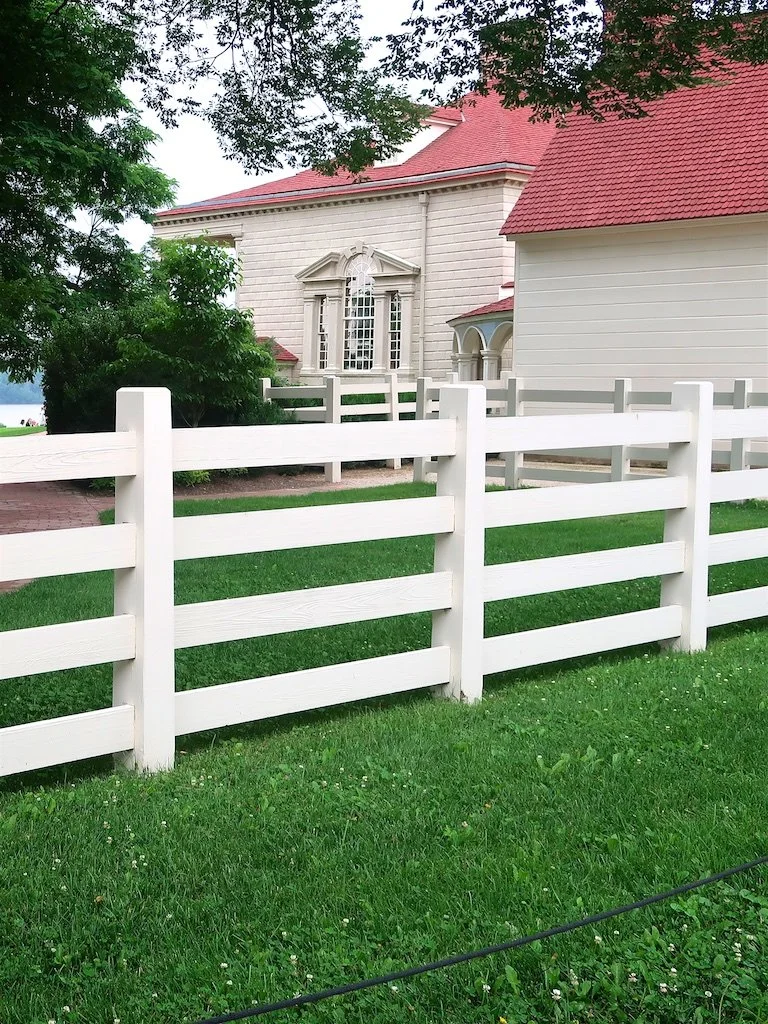
Palladian Window: Doric pilasters divide the three-part window; the pilasters are paneled much like the piers on the east elevation's piazza. The window features a broken pediment with three "voussoirs" over the central portion of the exterior.
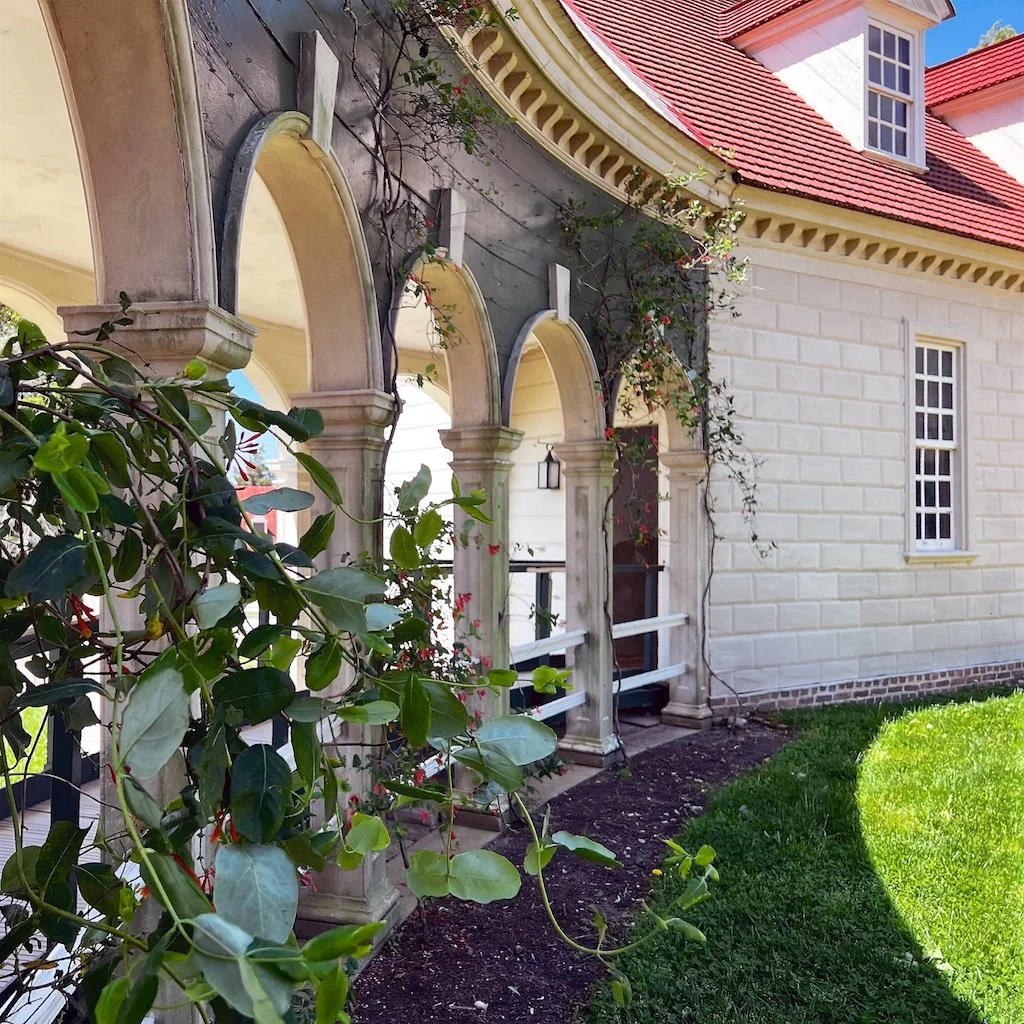
Rustication: A manner of treating the exterior of a wooden building to make it appear as if it is made of stone. The effect is achieved by cutting and beveling the wooden siding boards (at Mount Vernon, the boards are made of pine) at regular intervals to simulate stone blocks and by applying sand to the surface to imitate the rough texture of stone.
The design of the Venetian window is based on the English pattern book: Batty Langley's The City and Country Builder's and Workman's Treasury of Designs (1740) - a popular architectural source in the colonies with gentlemen builders such as Washington.
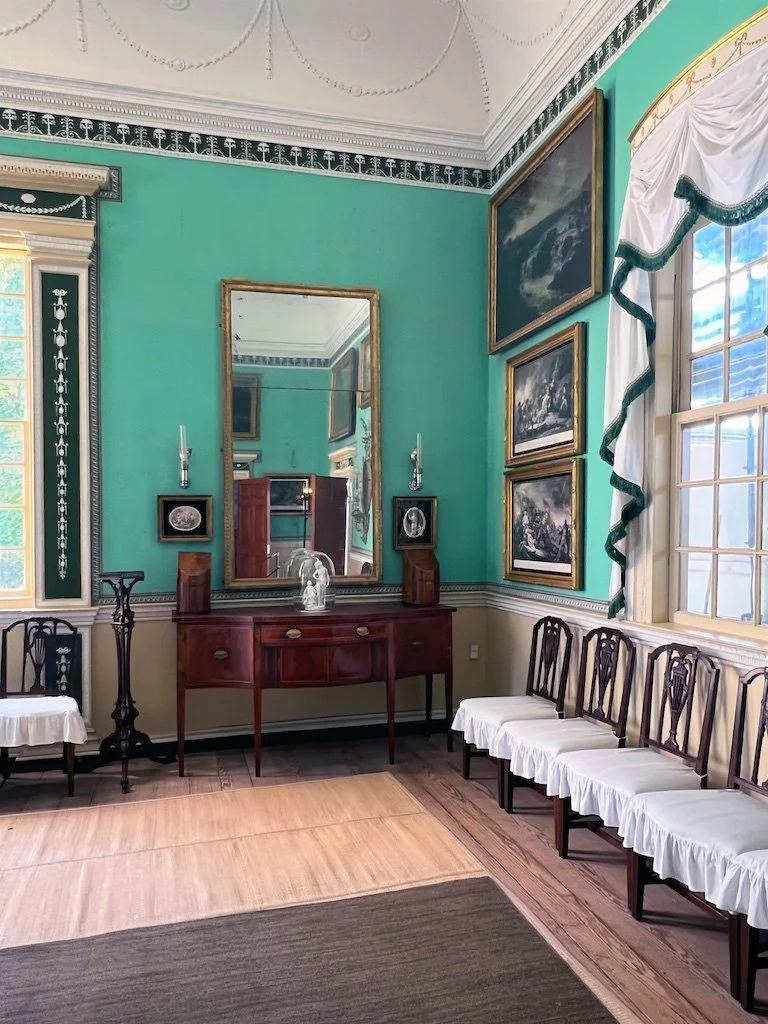
New Room: Friend Samuel Vaughan, newly emigrated from London, advised Washington about the latest developments in Robert Adam's designs. Vaughan gifted Washington the beautiful Adam-inspired fireplace used in the New Room.
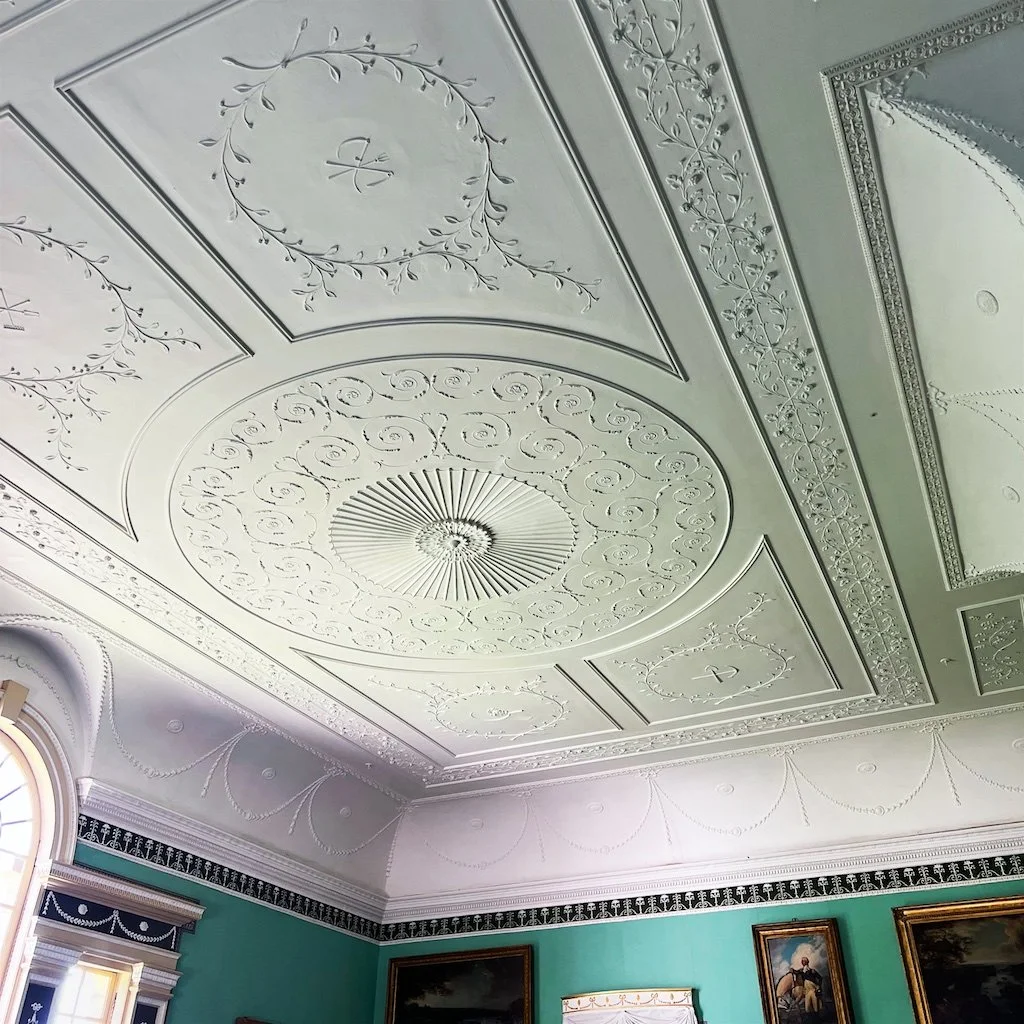
The Plaster Ceiling: Highly skilled stucco worker and plasterer John Rawlins designed the plaster ornament in the New Room. He signed a contract with Washington on February 25, 1786 and finished July of 1787.
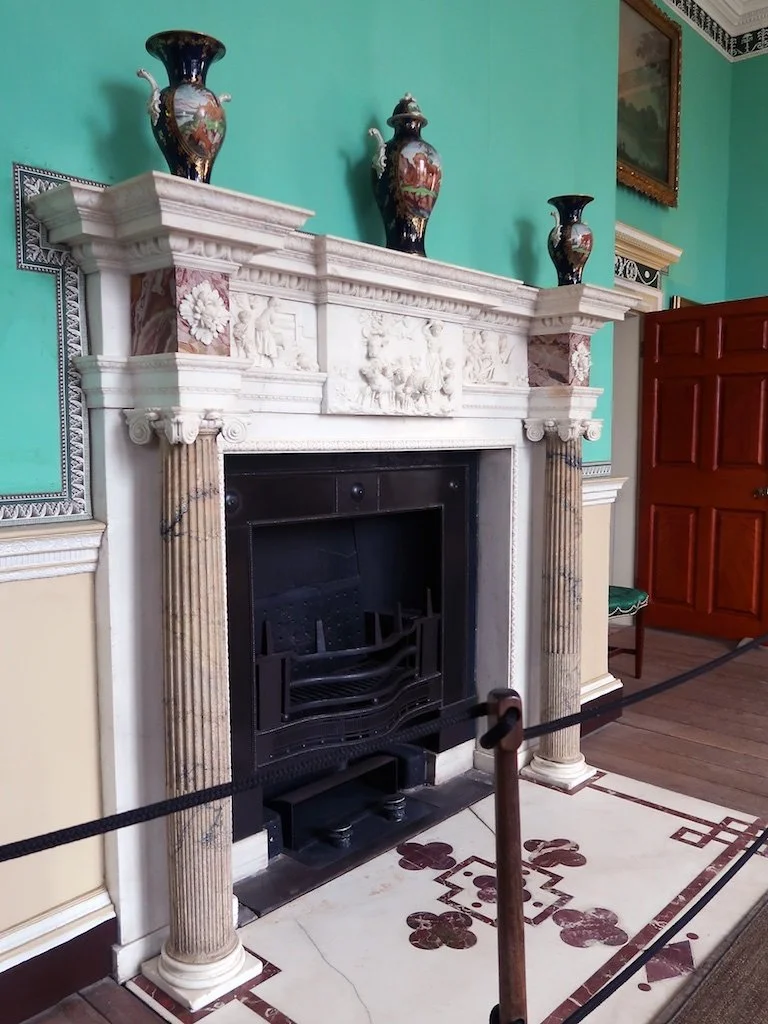
New Room: The Adam-style marble mantlepiece was presented in 1784 to George Washington by friend and advisor Samuel Vaughan and placed prominently in the New Room.
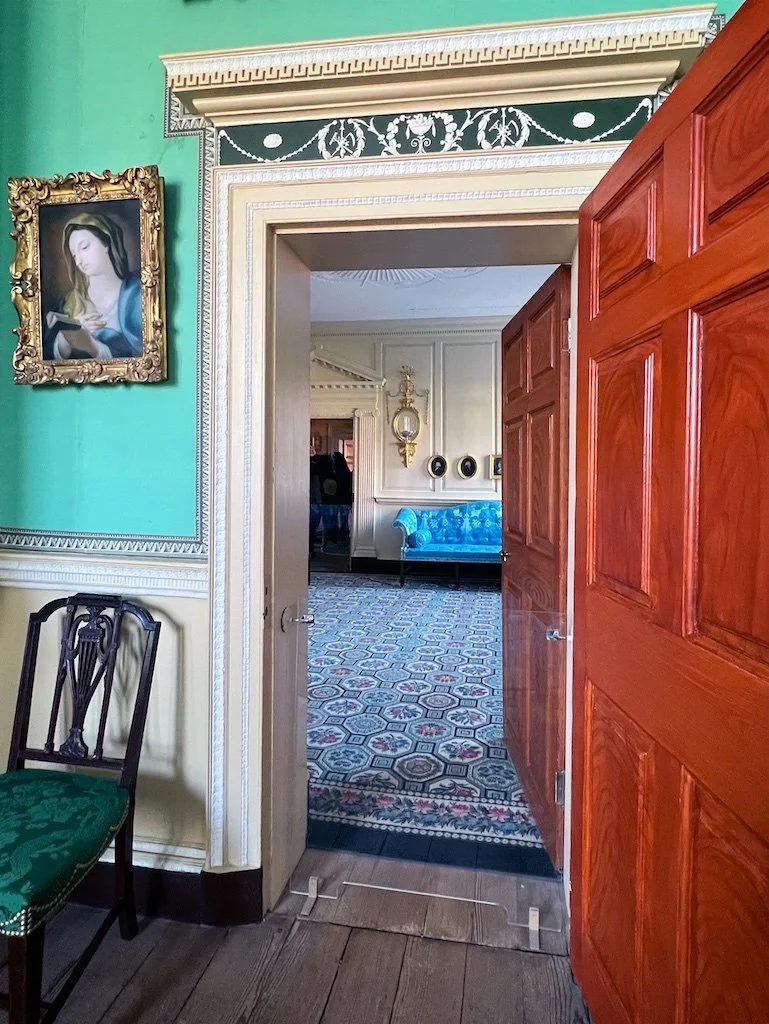
Front Parlor: Viewed from the New Room. This was the domain of Martha Washington for entertaining visitors and guests. The Wilton carpet was ordered in 1797 via Philadelphia. In 1785 the ceiling design was changed by John Rawlins to match what he did for the New Room.
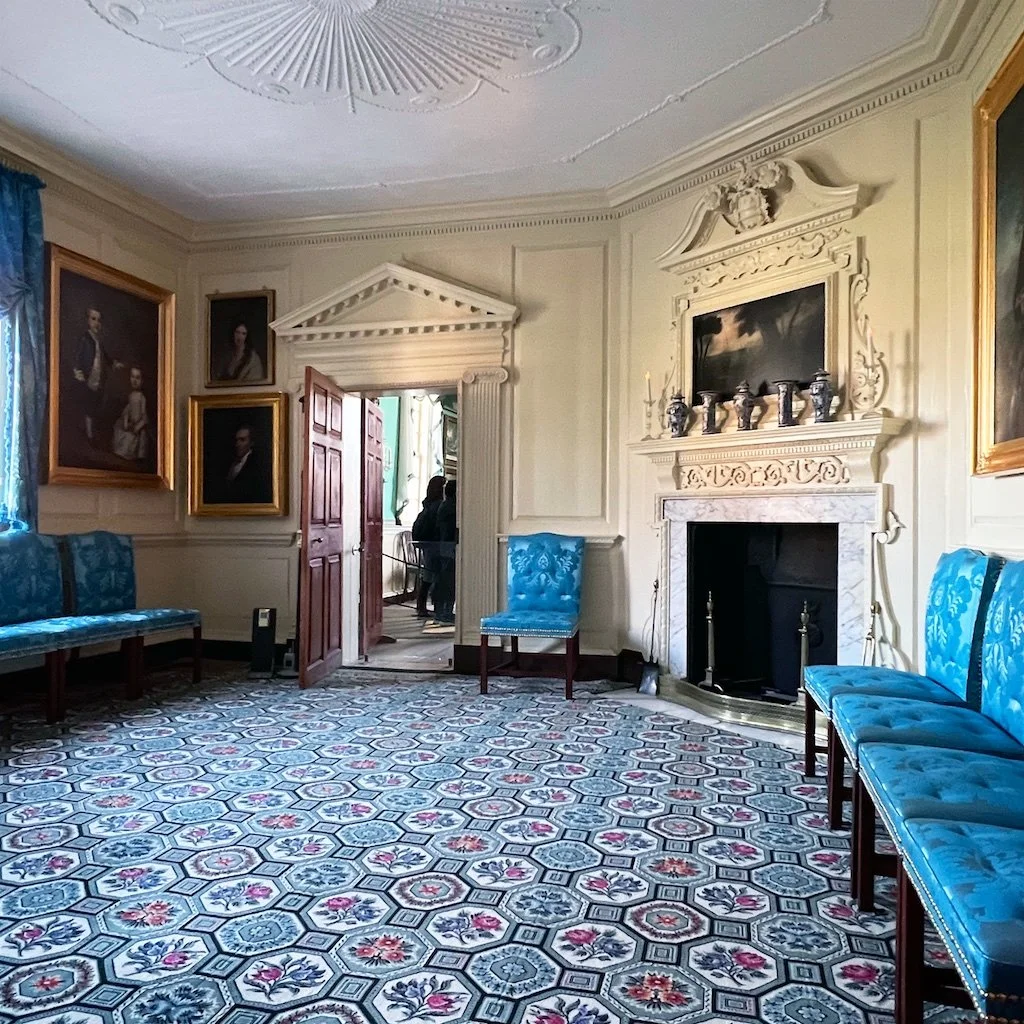
The Front Parlor: When the New Room was completed, the Front Parlor was changed so that it and the Central Passage could act as an entry to the New Room. Both were painted a new stone paint color, and a new Front Parlor doorway was added to open into the New Room.
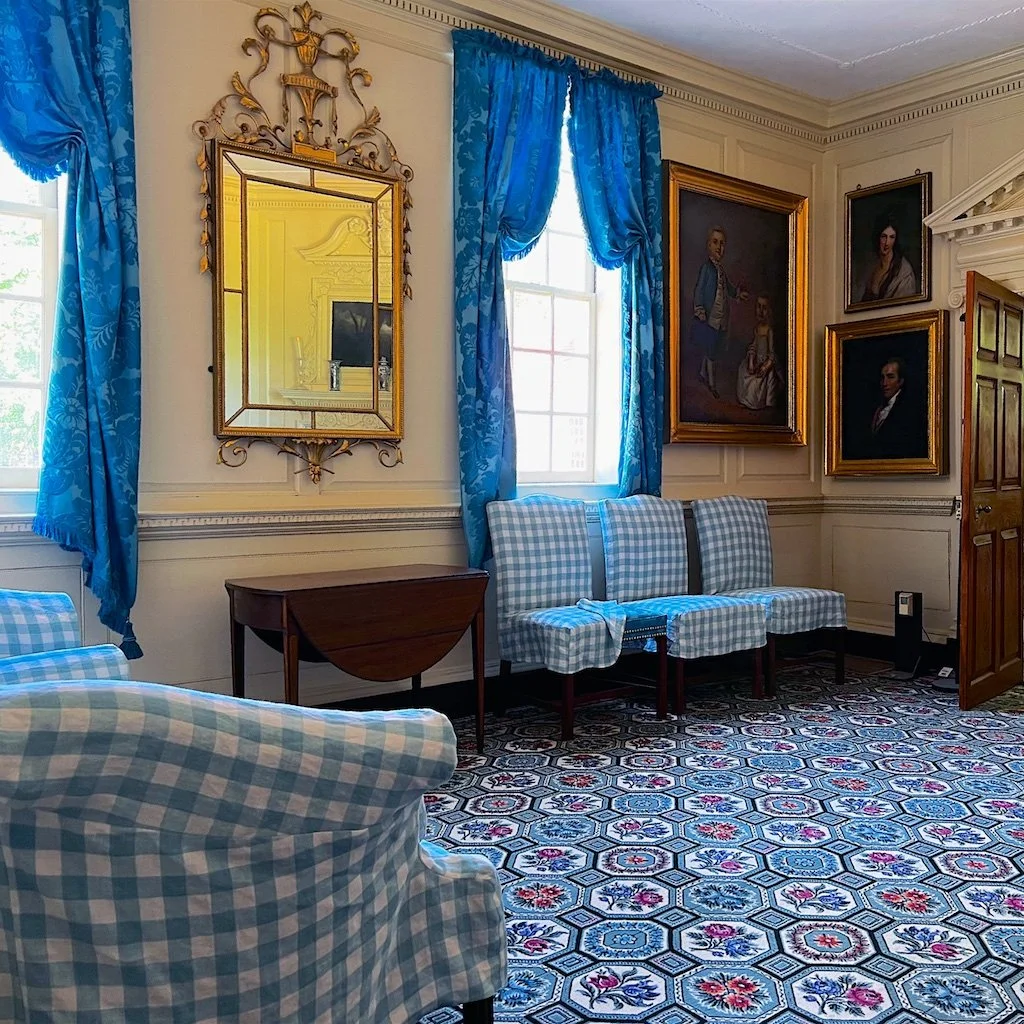
The Front Parlor: In the summer, slip covers were put on to help protect the very expensive silk and Saxon blue worsted wool upholstery. The furniture was acquired by Washington through a friend from neighboring Belvoir Plantation, George William and Sally Fairfax, before departing Virginia to return to England in 1774.
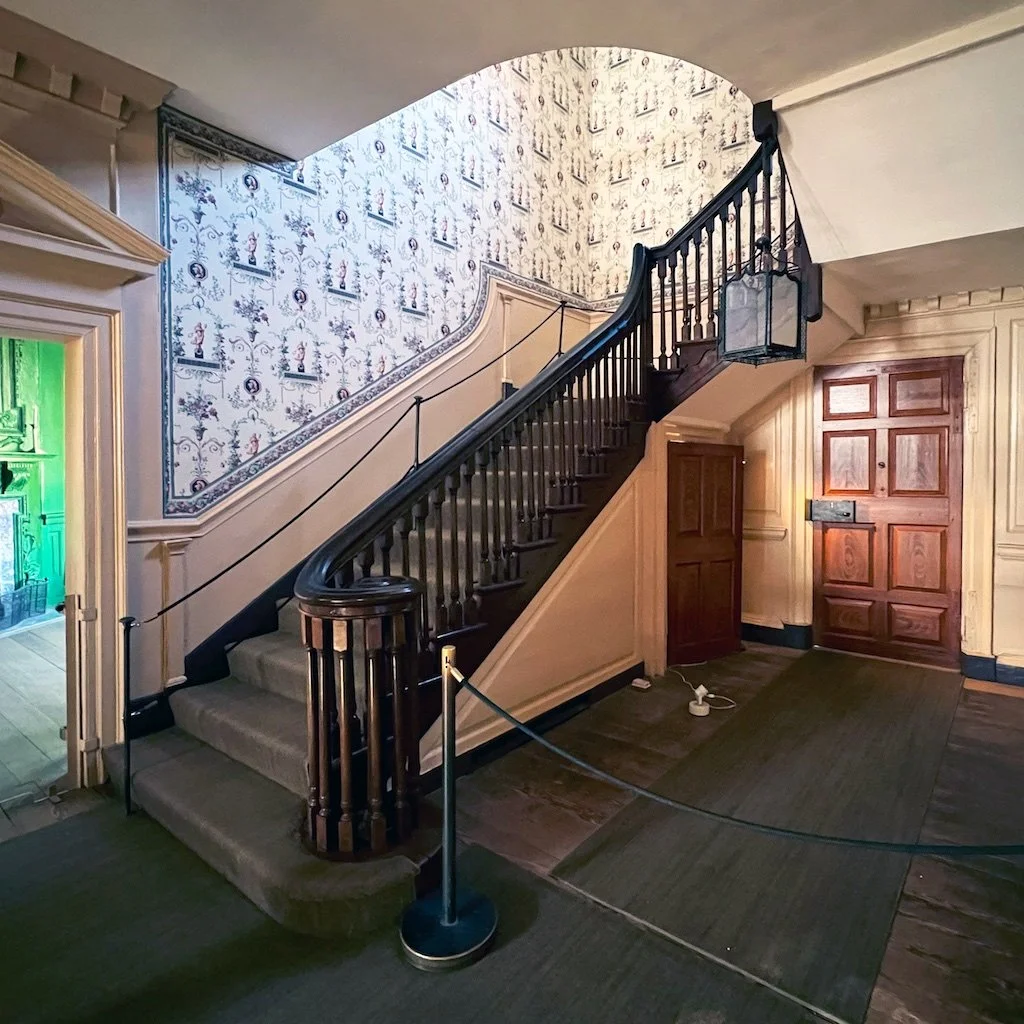
Central Passage: The Central Passage runs the width of the house. The black-walnut staircase was added in the 1758-1759 expansion of Mount Vernon - Washington added the french wallpaper in the 1790s along with painting to match the Front Parlor.
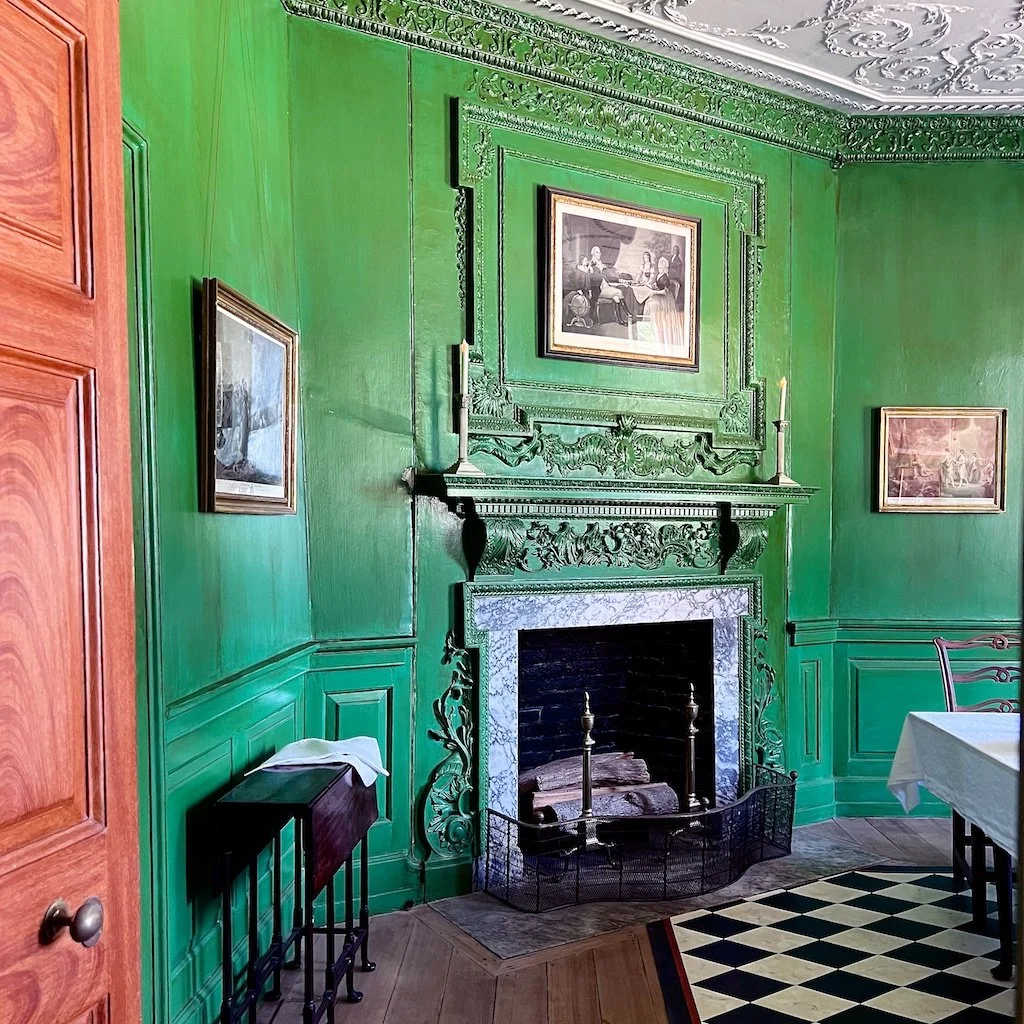
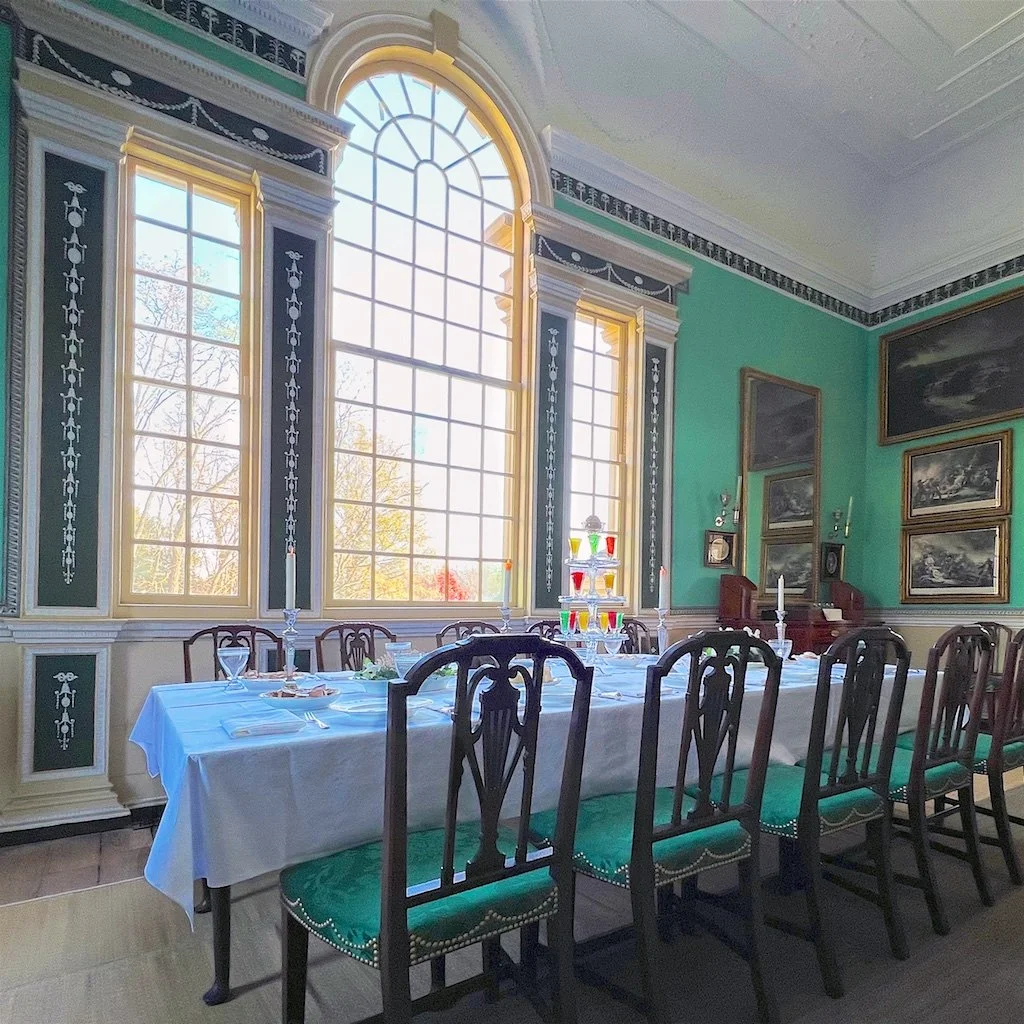
The Dining Room: Part of the original house was built in 1734. Previously red, in 1785, adapting the "mode" arriving from London - the verdigris-green paint was added.
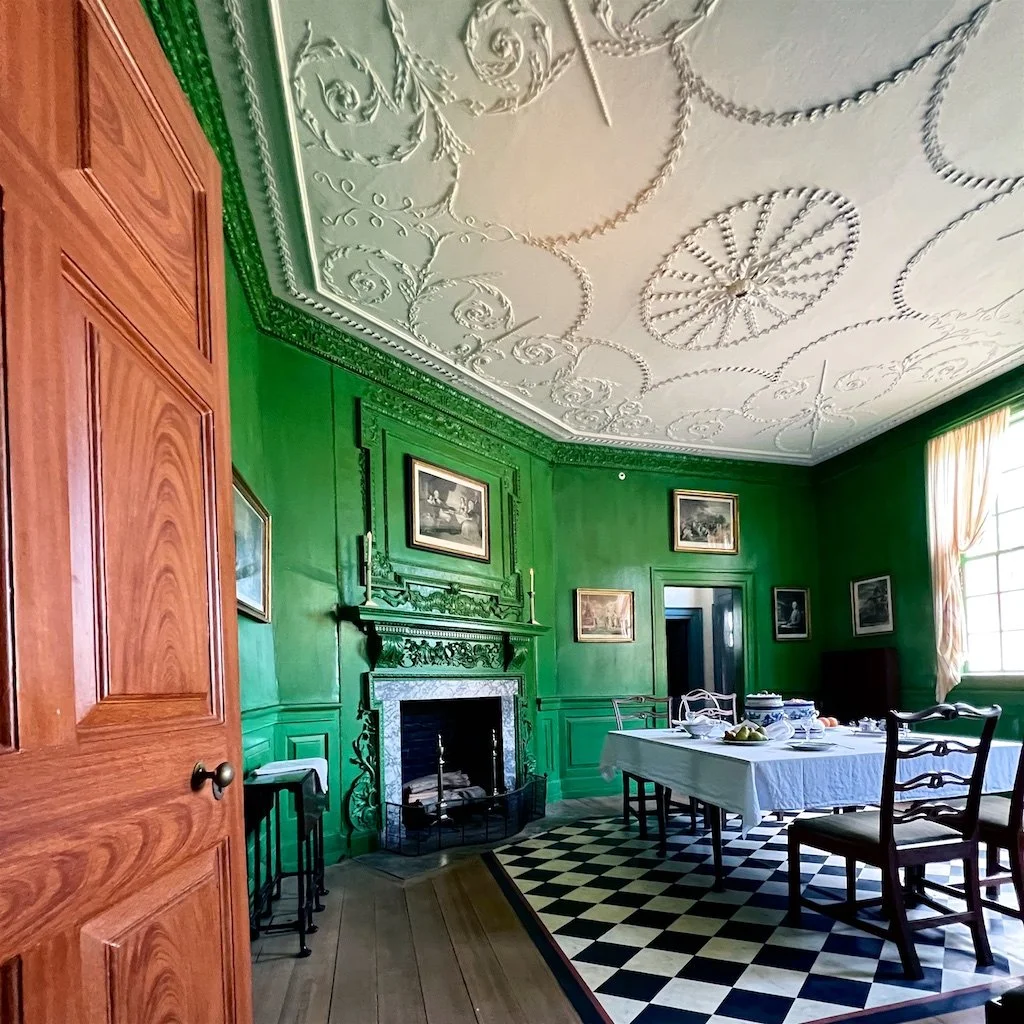
Dining Room Ceiling: In 1775, Washington hired an expert plasterer for the ceiling and mantle detail, identified simply as the "Stucco Man," who came from working on Kenmore in Fredericksburg, Virginia. It took five months to complete the hand-tooled ceiling.
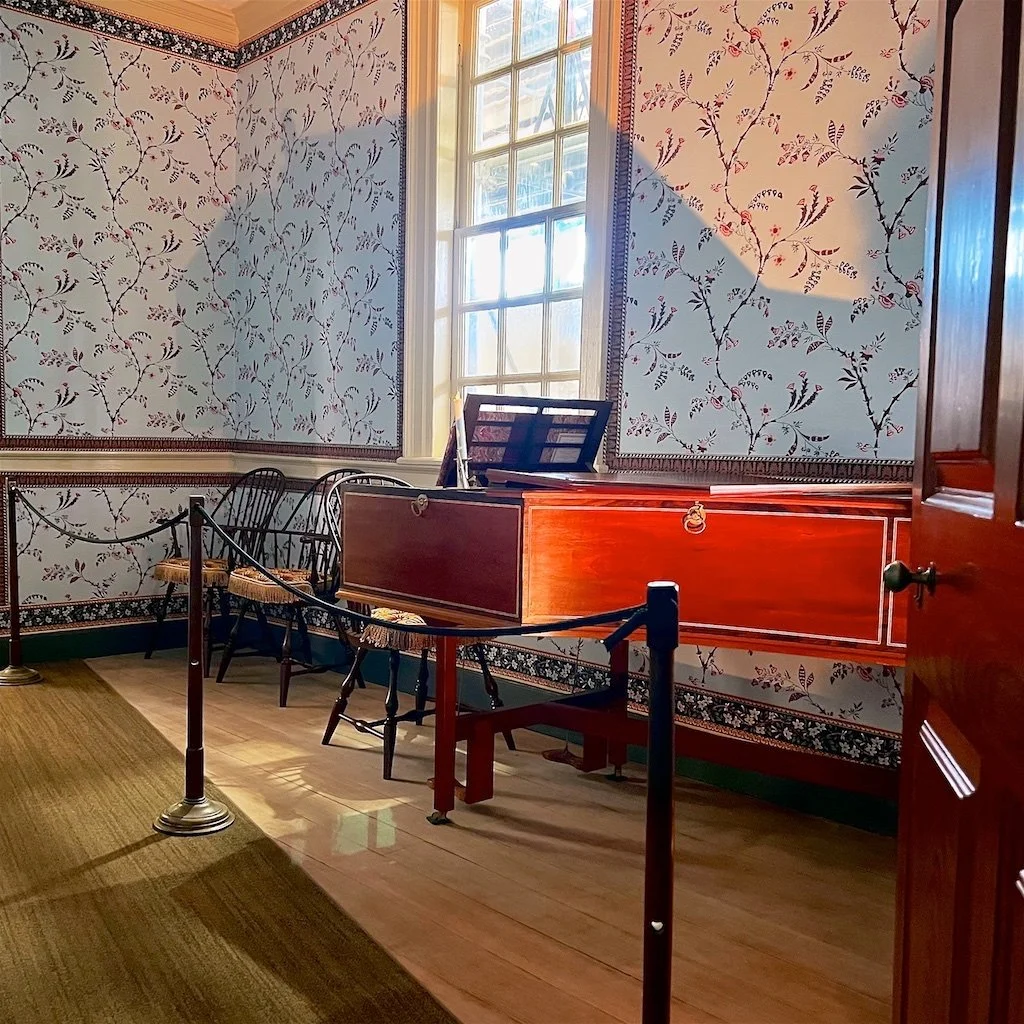
Little Parlor: The new curation of 1796-1799 features the addition of wallpaper. This room had previously been a guest room. The harpsichord brought music to Mount Vernon and added to George and Martha Washington's life and their hospitality.
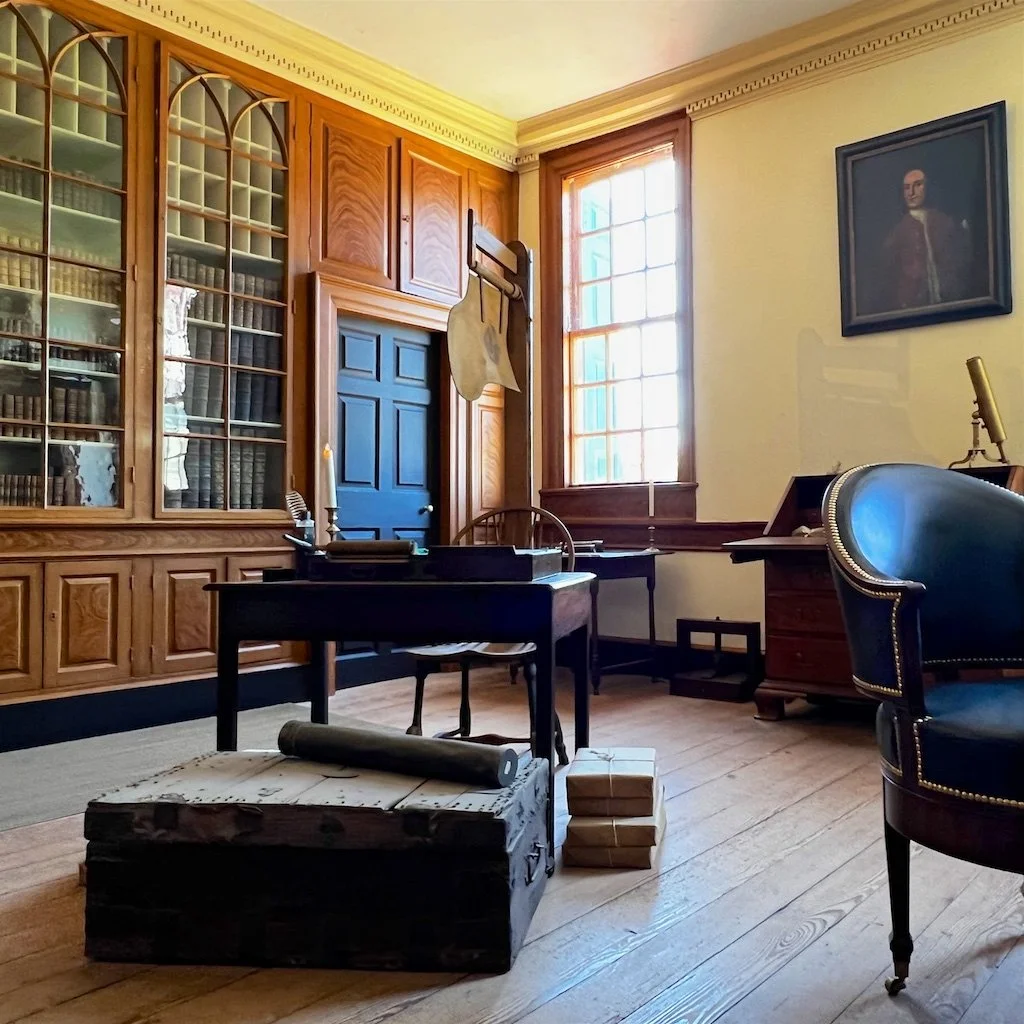
Study: Directly beneath the bedroom of George and Martha with its own stairs - Washington had about 900 books in his library. The Study, a very private space, was where Washington managed the estate and his extensive correspondence.
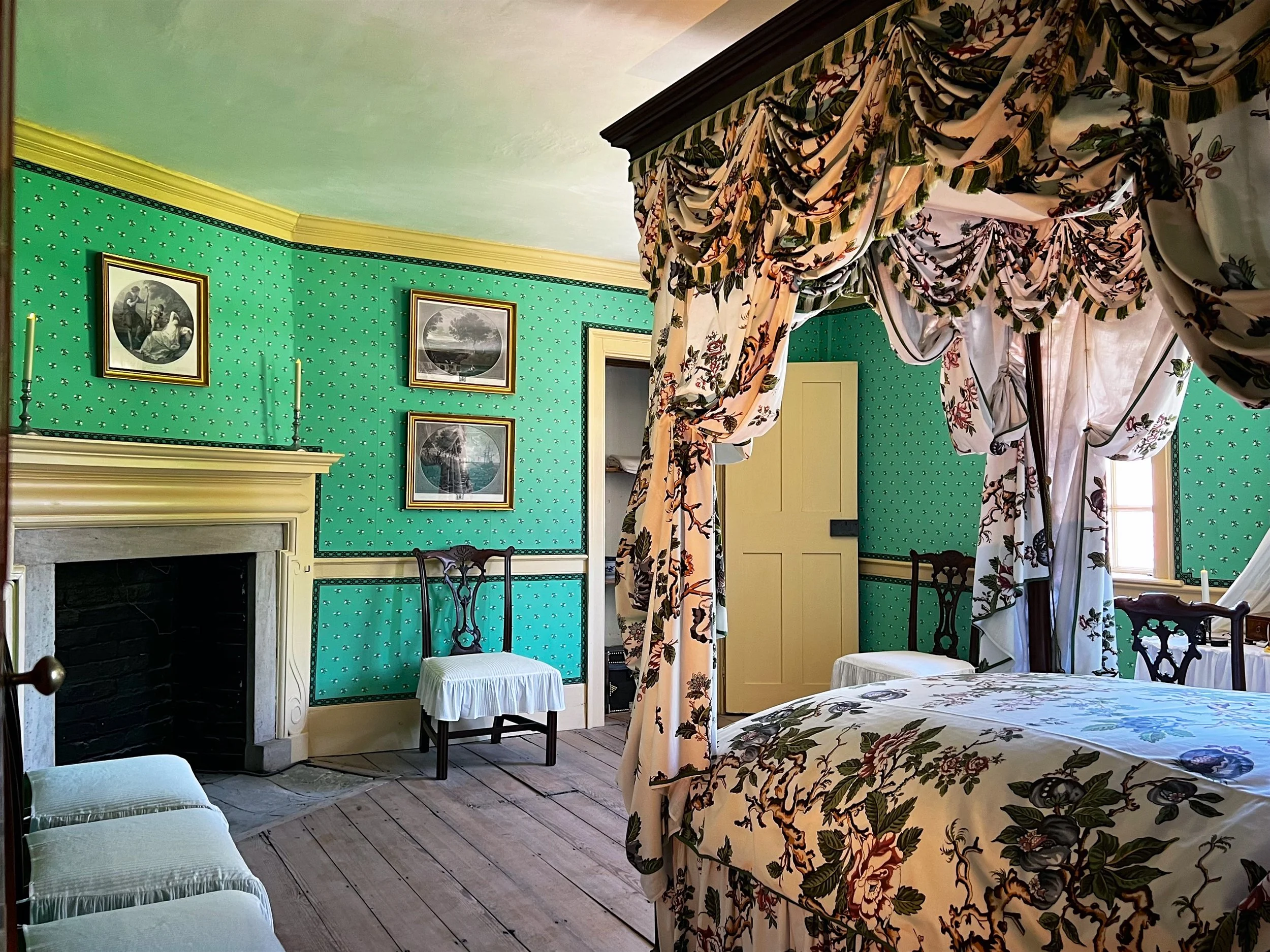
Chintz Room: The Chintz Room was one of the finest of the six primary bed chambers at Mount Vernon. It was located on the second floor in the southwest corner.
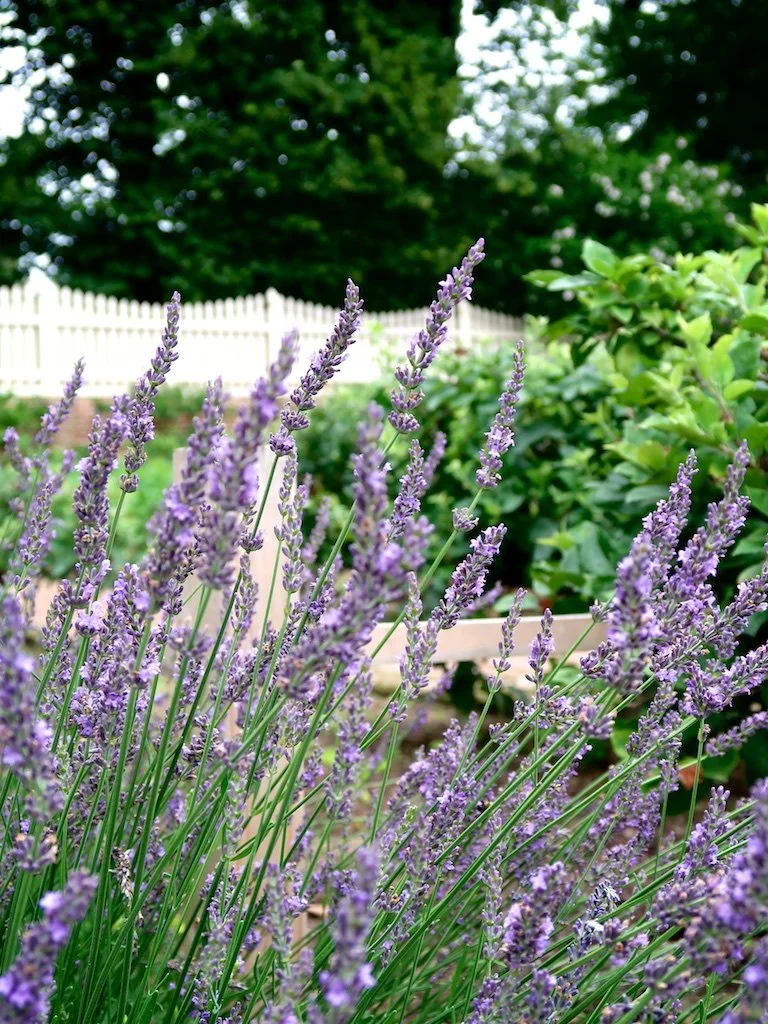
Lower Garden: Martha Washington oversaw the kitchen garden (Lower Garden), allowing her to keep fruits and vegetables on the table year-round..
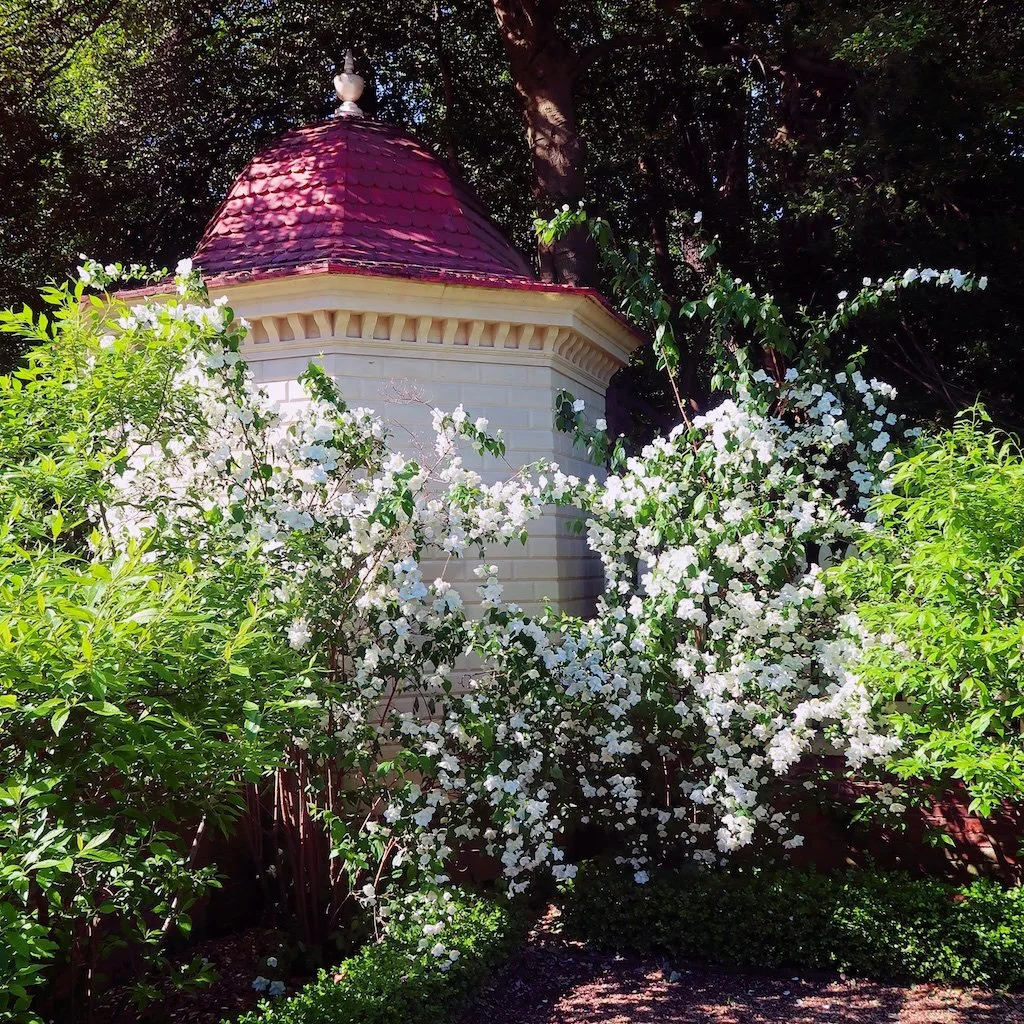
Upper Garden: Washington finished enclosing the walls of the Upper Garden in 1776.
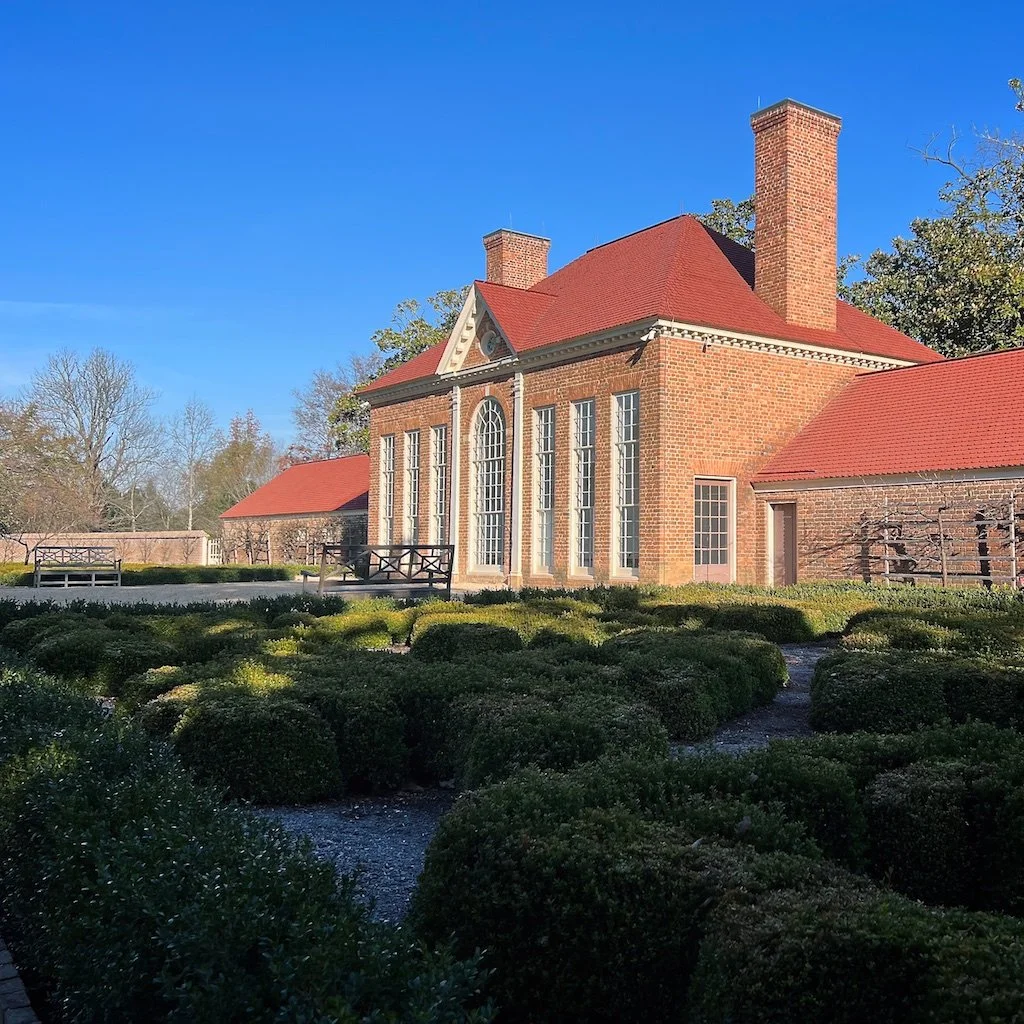
Upper Garden: One of two formal boxwood parterres. The greenhouse is the Upper Garden's architectural centerpiece and contains more exotic plants, including lemon and orange trees.
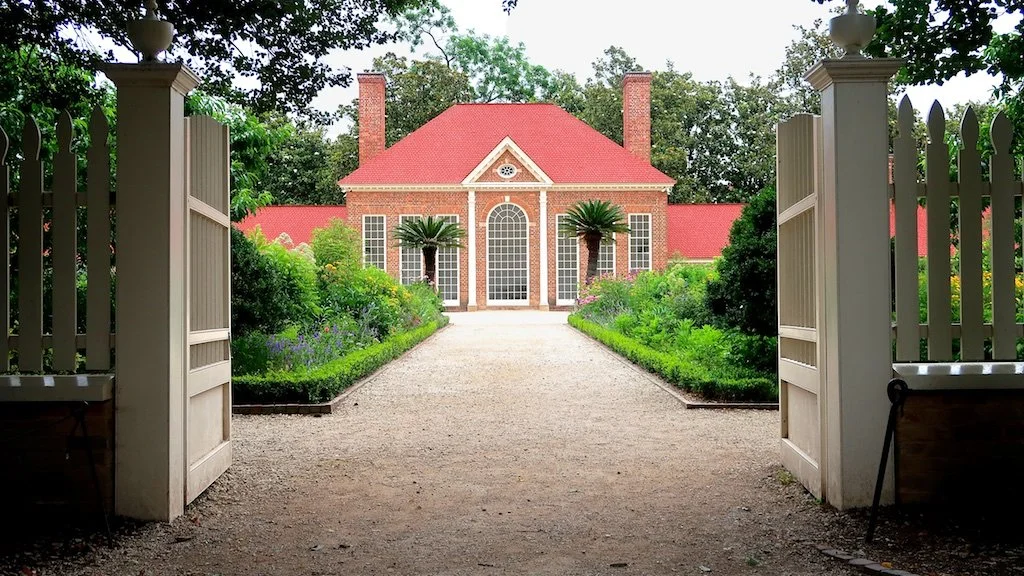
Greenhouse: Completed in 1787— the Greenhouse allowed Washington to grow tropical and semitropical plants. Lemon and orange trees and sago palms grew here. Unfortunately, Washington's Greenhouse burned in 1835
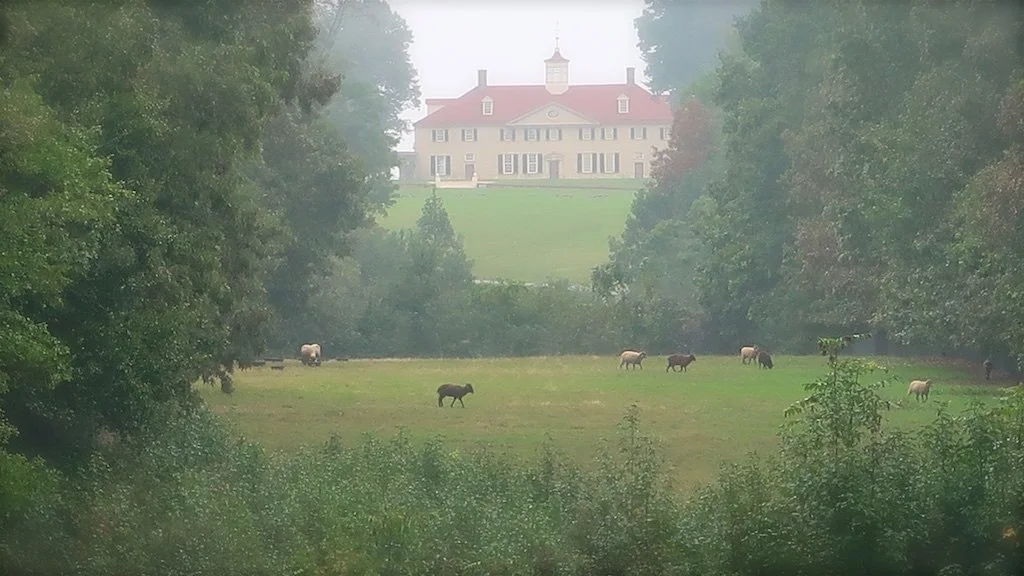
West Gate: View from the 18th century visitor's approach to Mount Vernon.
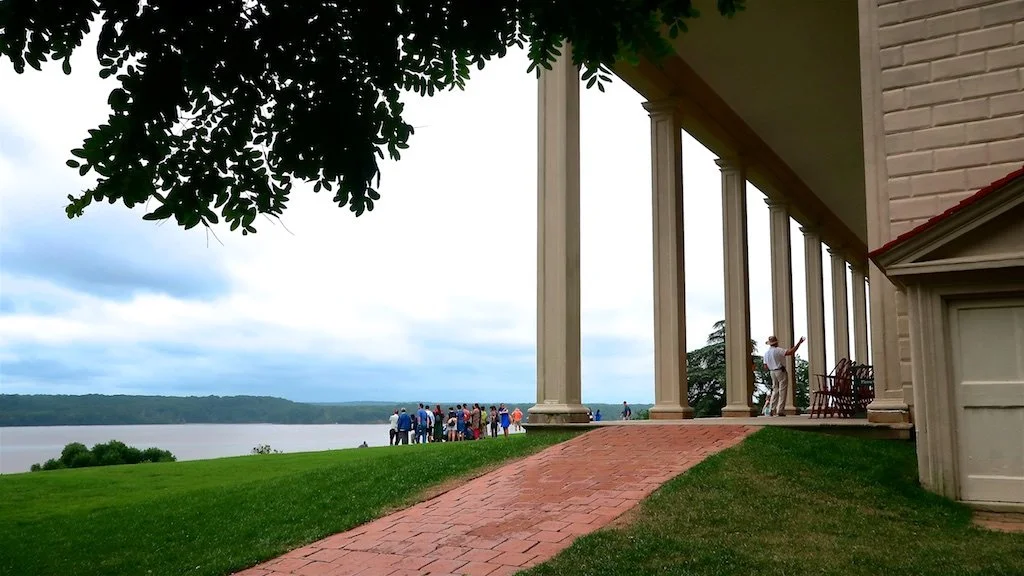
The two-story piazza is the Mansion's most distinctive architectural feature. The Washingtons treated the piazza, fitted with Windsor chairs, as an outdoor room.