Photography by Bruce A deArmond
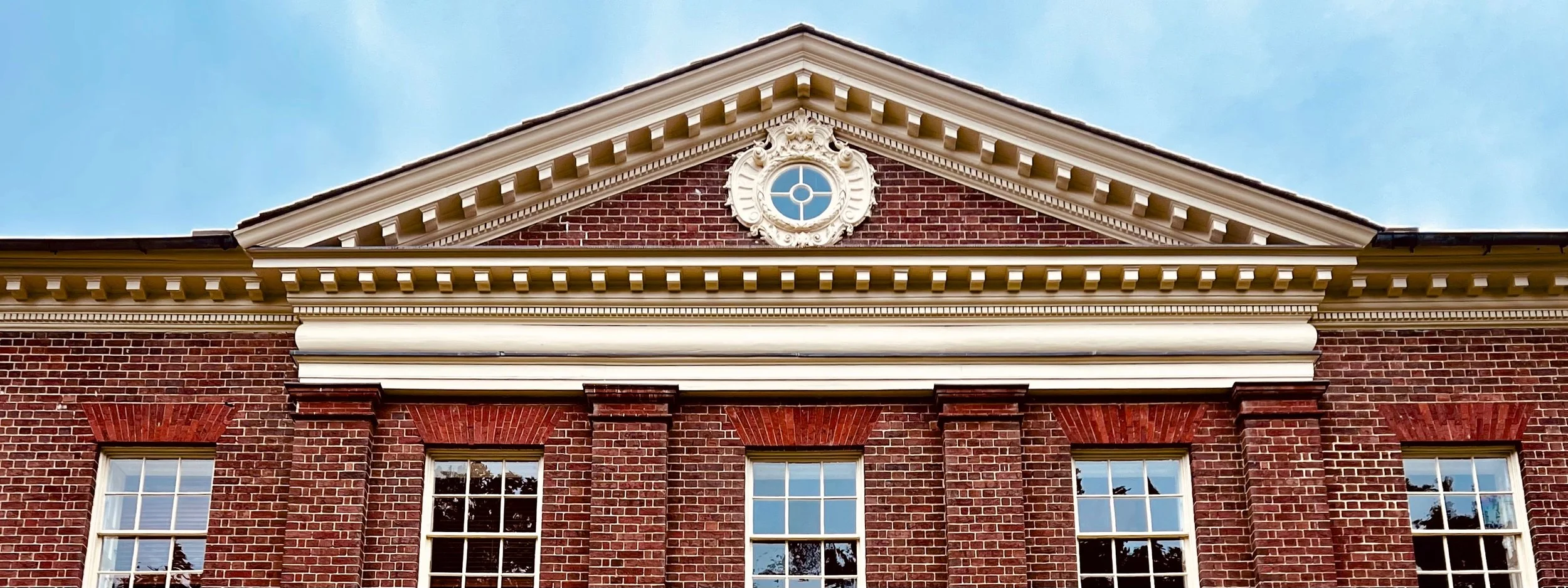
Hammond-Harwood House: Anglo-Palladian Architecture, built in 1774 — Designed by Architect William Buckland, Annapolis, Maryland
William Buckland, the architect for the Hammond-Harwood House, started his work in America as an indentured craftsman in Virginia. He worked on George Mason's Gunston Hall. Buckland's indenture expired in 1759. He married and remained in Virginia for almost twenty years before moving his family and workshop to Annapolis in 1771. Buckland was drawn to Annapolis by work on several fine homes going up with a thriving social scene. Buckland would first work for Edward Lloyd IV, who had bought the unfinished house directly across from what would become the Hammond-Harwood House.
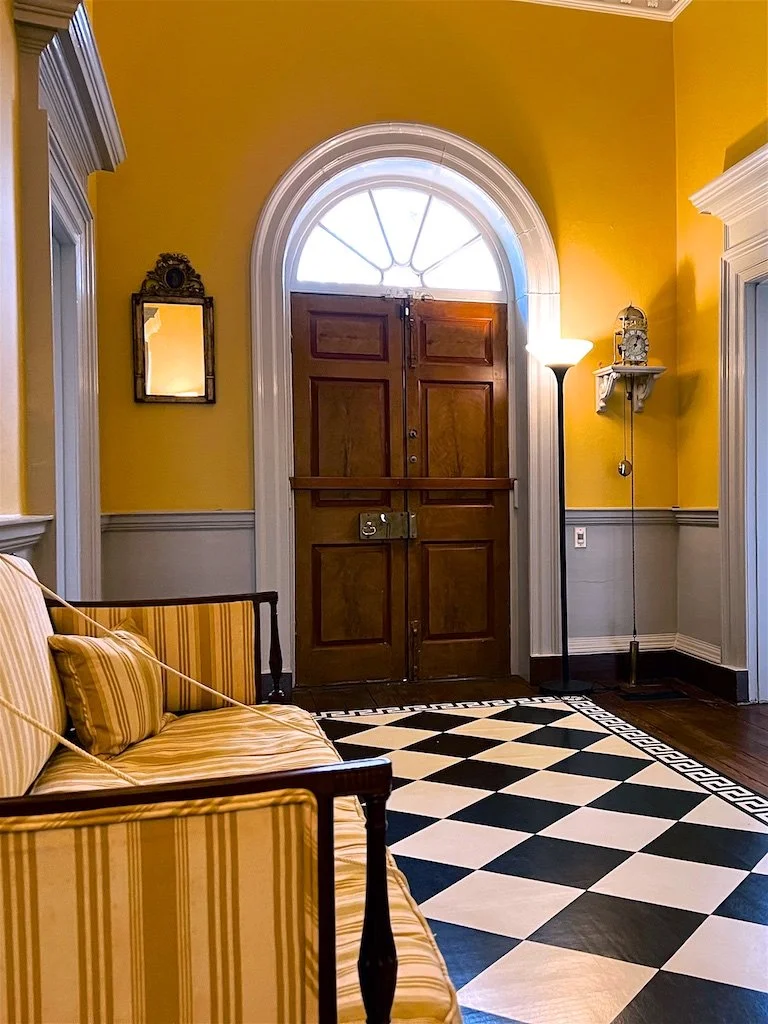
Central Passage: Guests to the house would have entered here in the central passage. Depending on your social status and the purpose of your visit, you might be asked to take a seat here or be invited into the parlor or dining rooms at the back of the house.
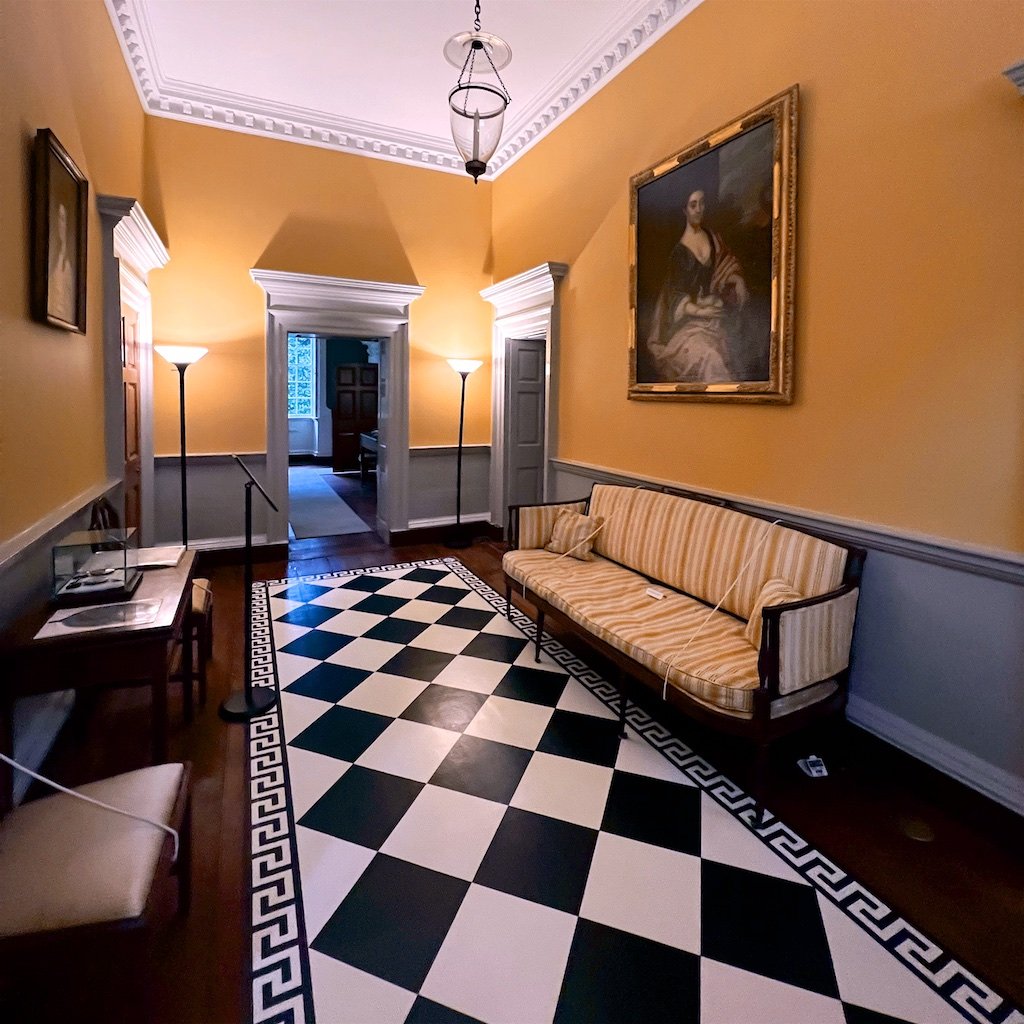
William Buckland used the Annapolis plan - the front door opens onto a central passage that does not run the full depth of the house. The stairs are moved from the central entrance to one side of the house. This allows for the creation of a larger room on the back of the house.
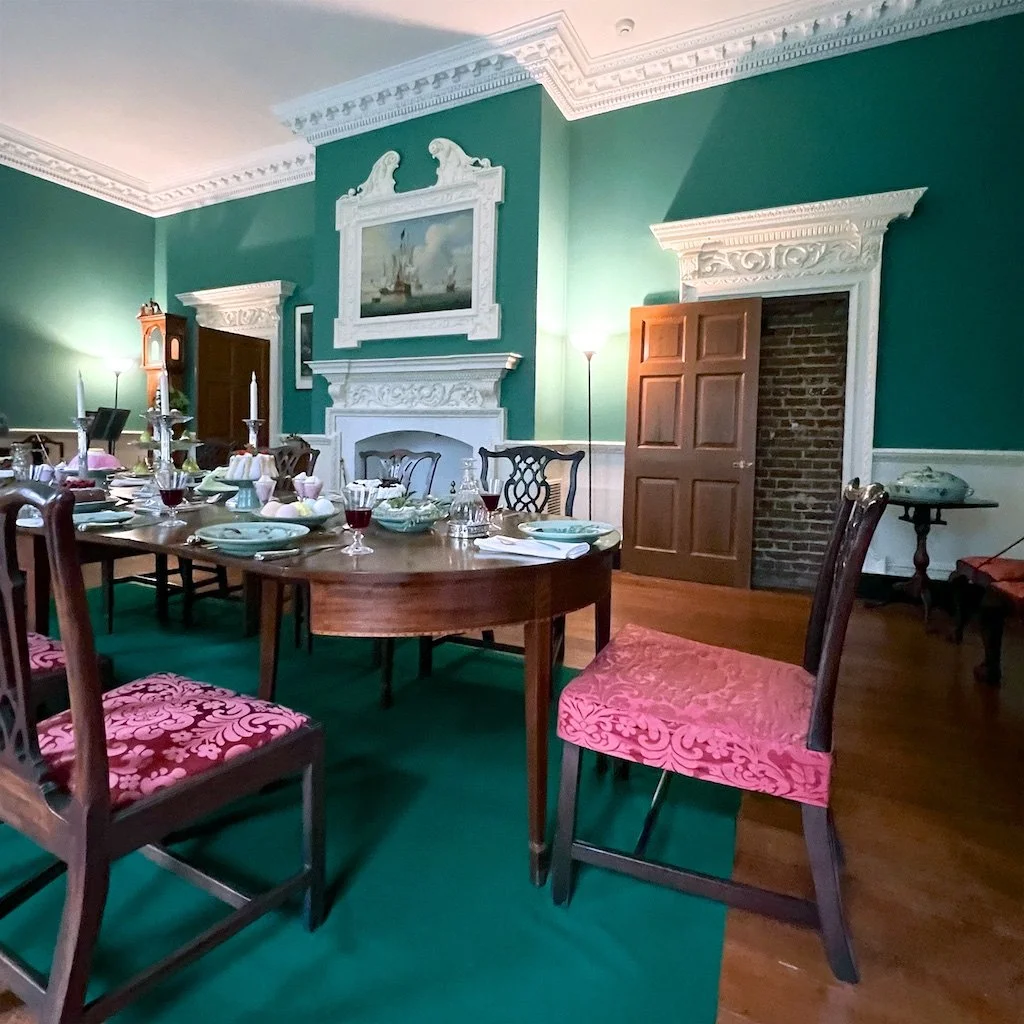
Dining Room: The faux door to the right is open and shows the brick walls used for the house. The same Rococo influence can be seen in Buckman's designs for James Mason's Gunston Hall.
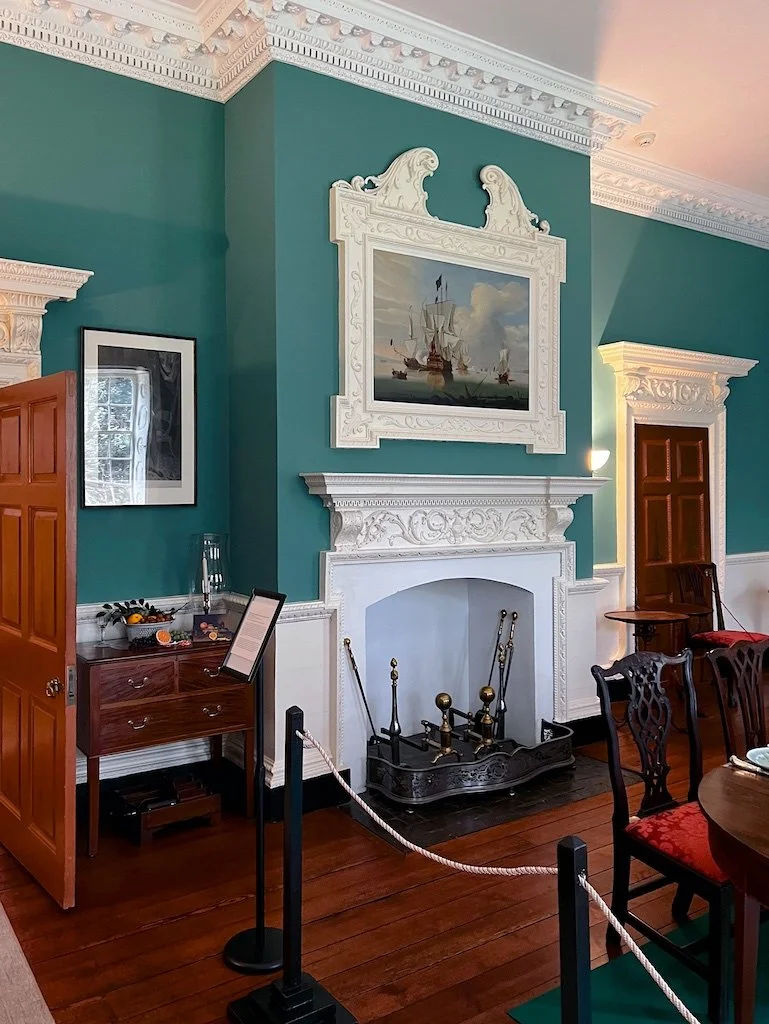
Dining Room: This room has the house's most elaborate wood and stucco decoration. The faux door to the right continues the symmetrical design of the era.
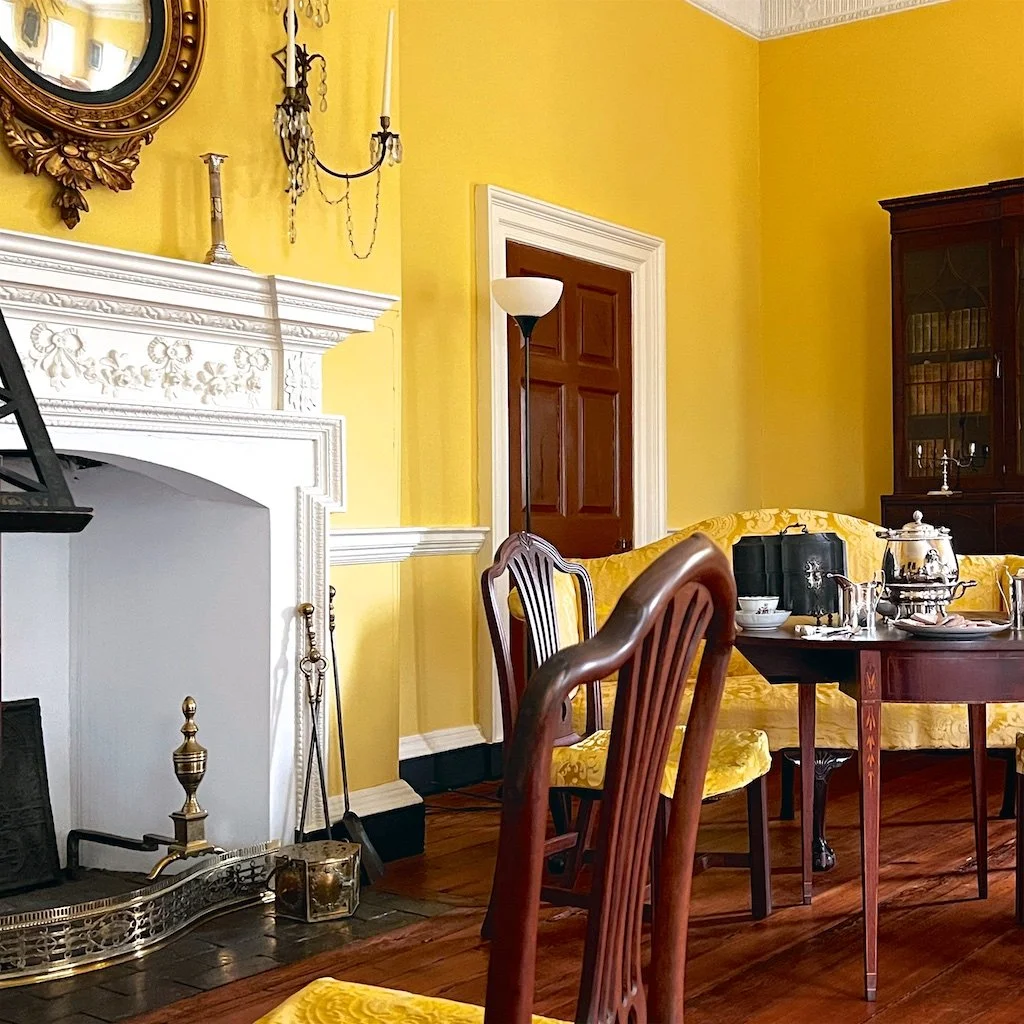
Ballroom/Withdrawing Room: After dining together, men might remain at the table to smoke while women retire to this room to pursue separate conversations - a transplanted English tradition. The room's scale allowed it to function as a ballroom as well.
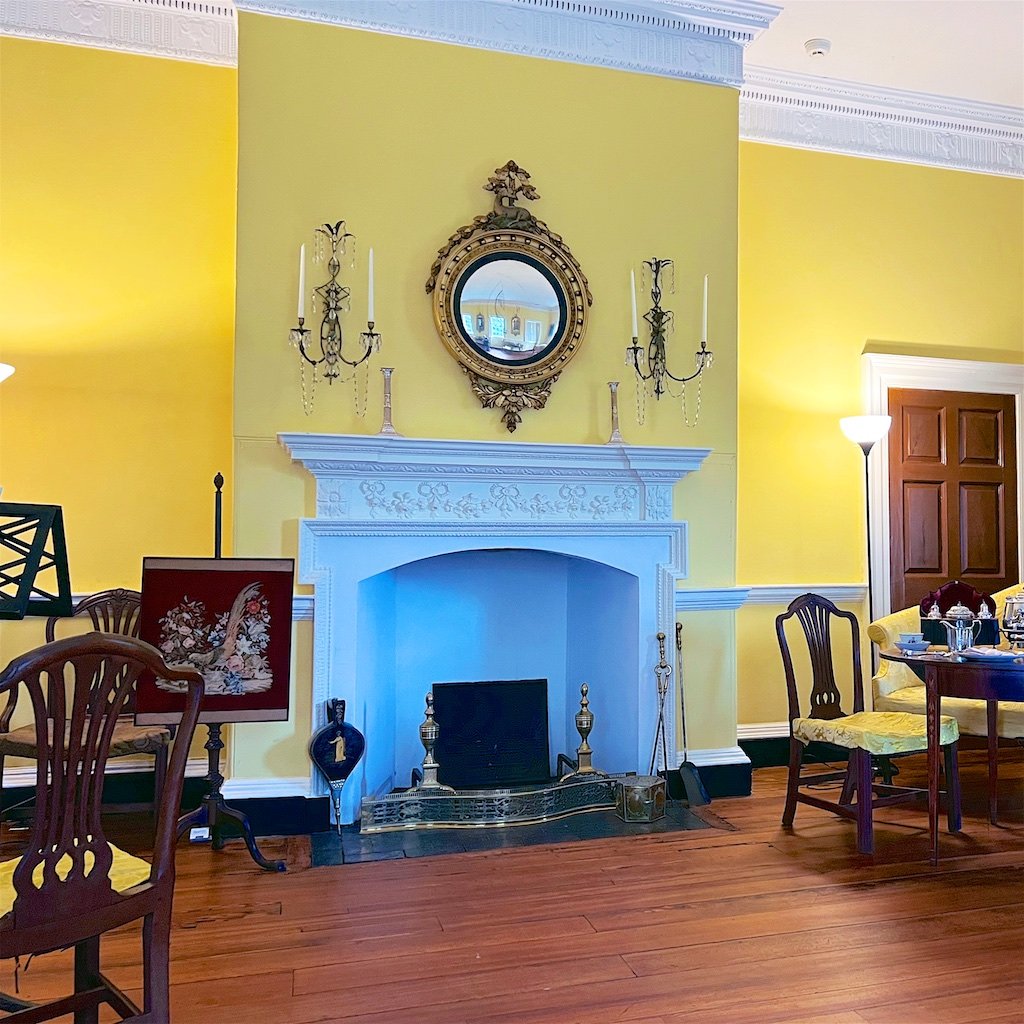
The style of the Withdrawing Room/Ballroom is neoclassical - a simpler and more linear version of classicism than the Rococo detailed dining room. There is a faux door to the right to maintain the design symmetry of the fireplace wall.
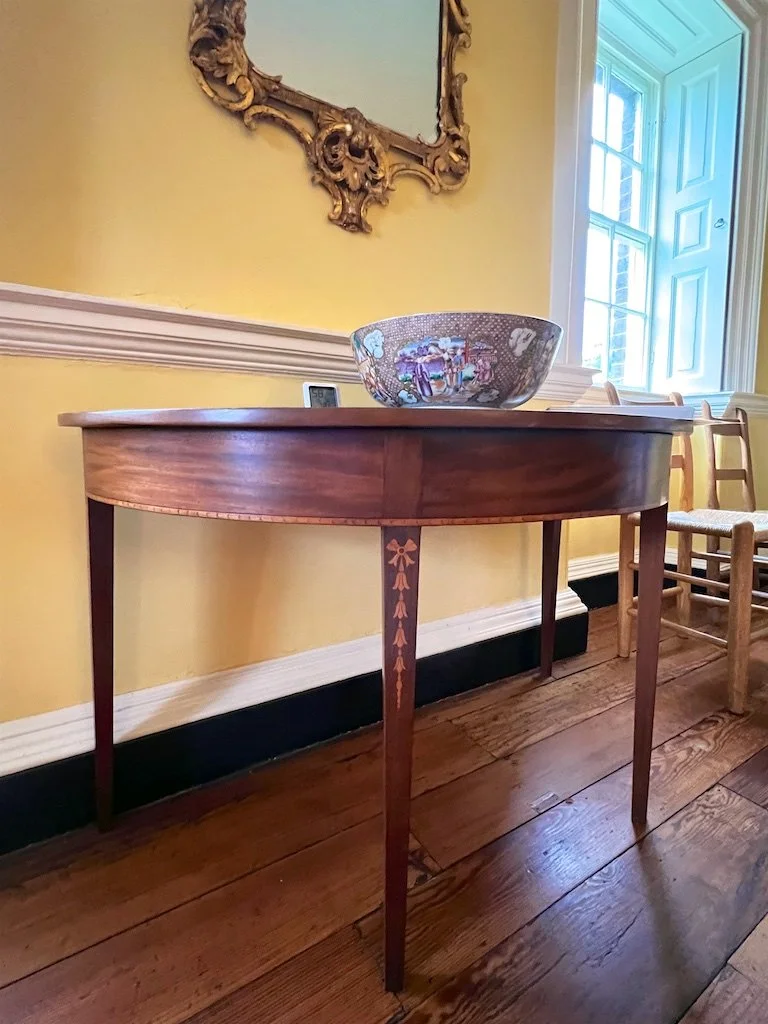
Some of the furniture in the house is from renowned Annapolis cabinetmaker John Shaw (1745–1829). He was considered the foremost cabinetmaker in Annapolis during the late 18th century.
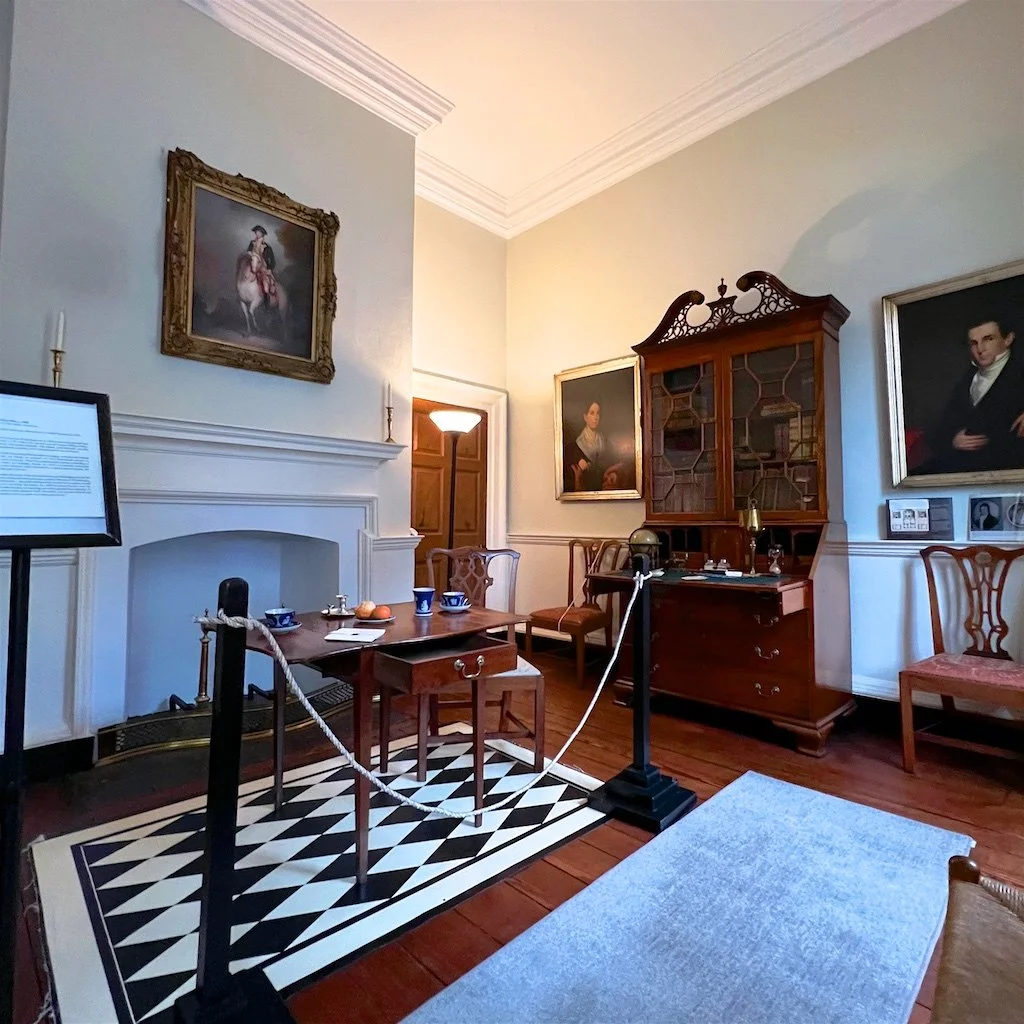
First Floor Study Chamber: Desk-and-bookcase attributed to John Shaw, Annapolis, Maryland, ca. 1797.
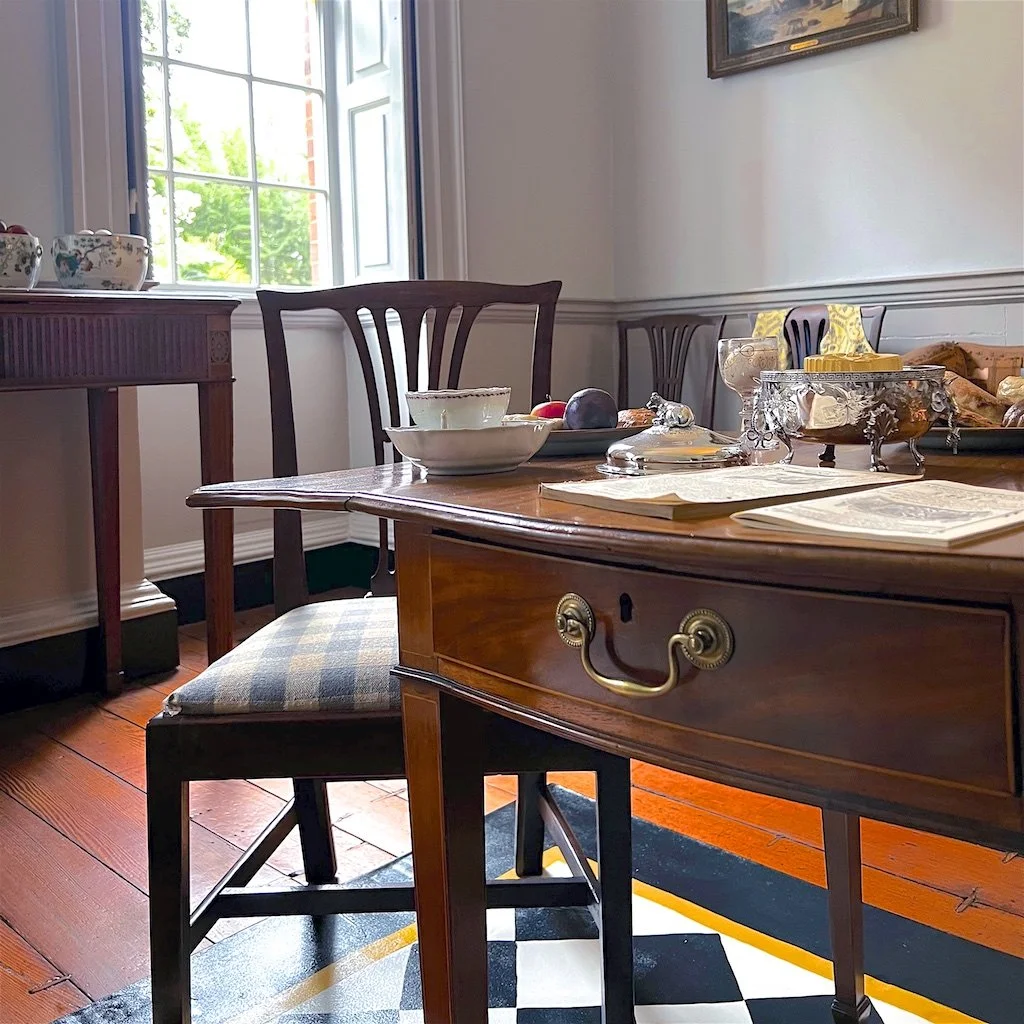
Game Room: The sash windows looking onto the garden are a main feature of this room. Glass was very expensive and heavily taxed., After 1740, glass started coming from Philadelphia.
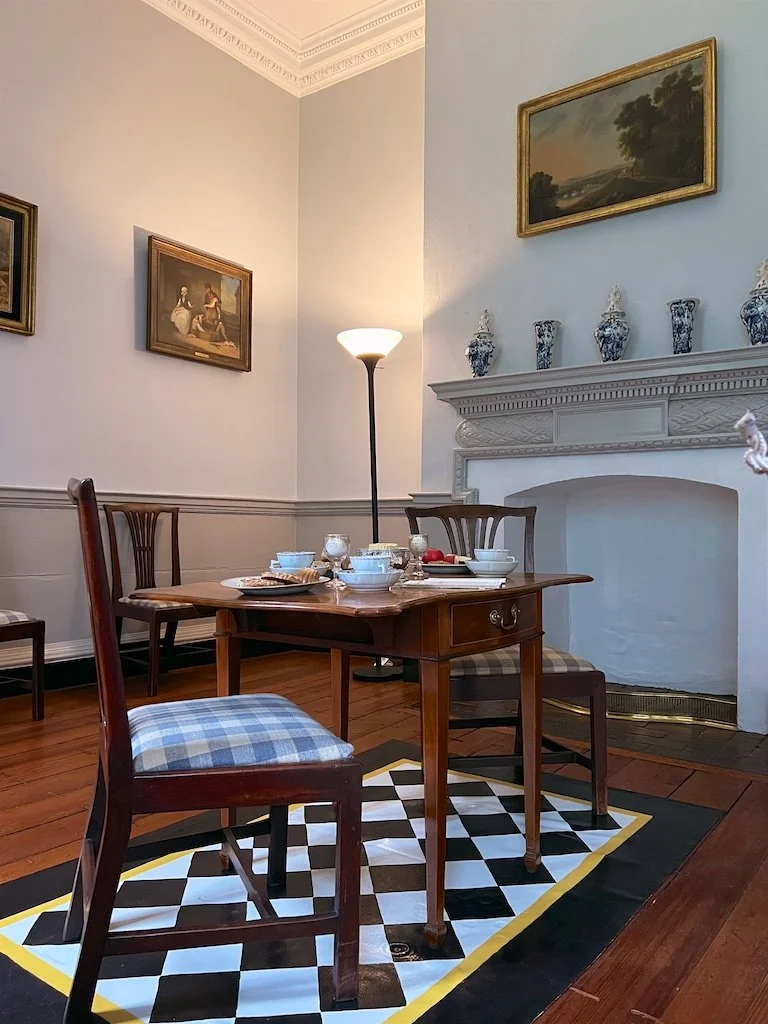
Game Room: A feature of the English country house. "The brilliance of William Buckland lies in his ability to take a country house structure and recreate it in an urban setting with limited acreage."
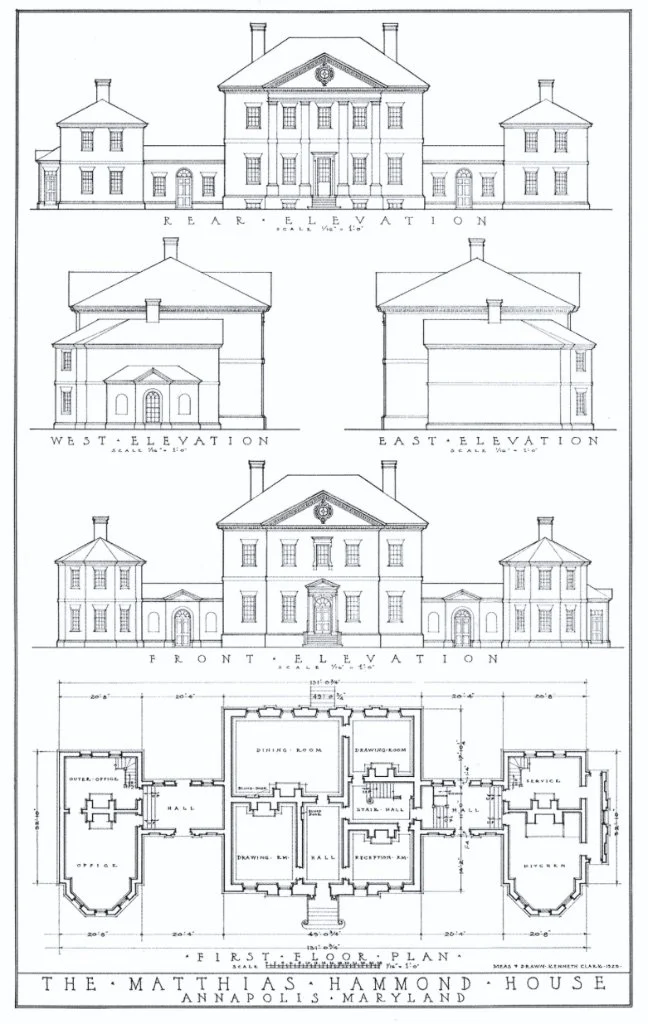
The house was begun in 1774 for MATTHIAS HAMMOND, a wealthy planter who also served in the Maryland state legislature. The architect, British immigrant WILLIAM BUCKLAND, designed this house in the Anglo-Palladian style

Hammond-Harwood House - showing the gracefully curved railing detail and front door on the front facade.
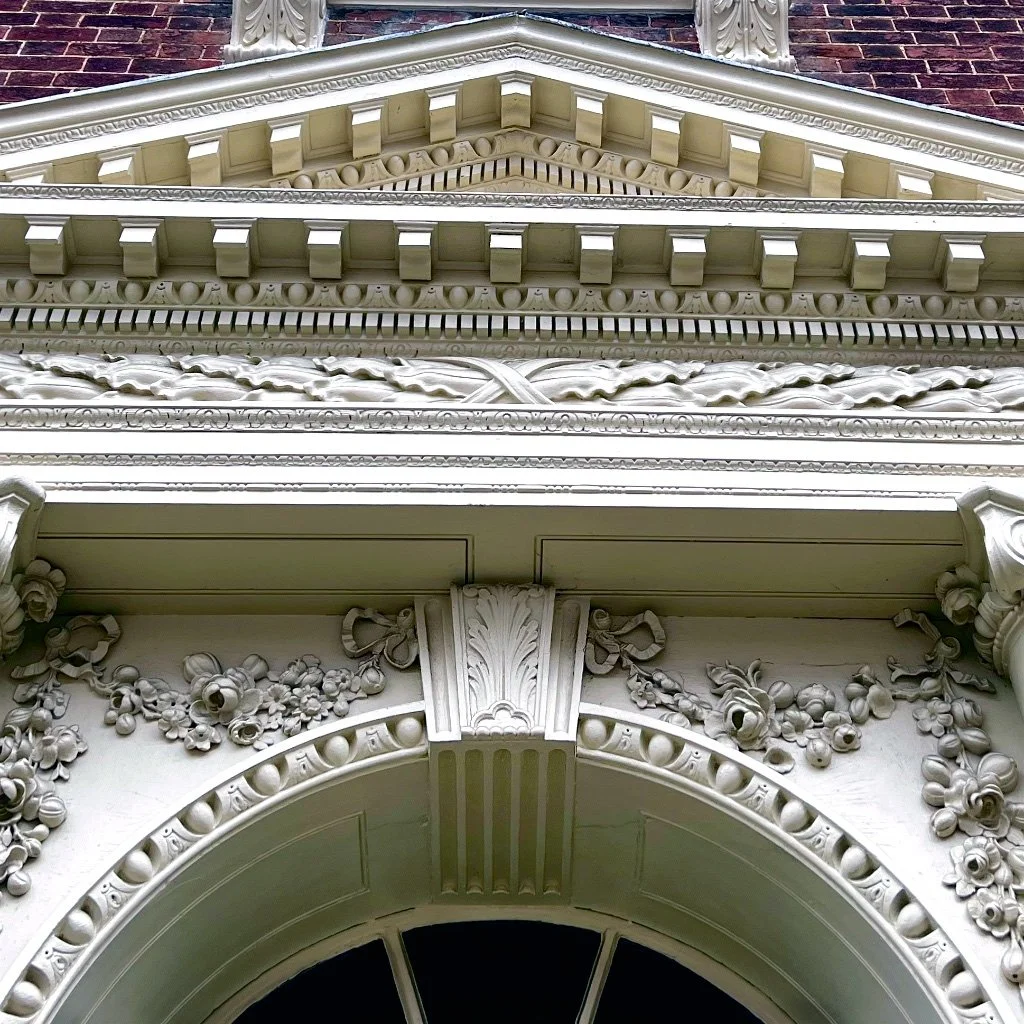
Front Door: The front door of Hammond-Harwood House by architect William Buckland makes an immediate impression. Oalled the "most beautiful doorway in America" by Thomas Jefferson - is all hand-carved wood and took great skill to execute.
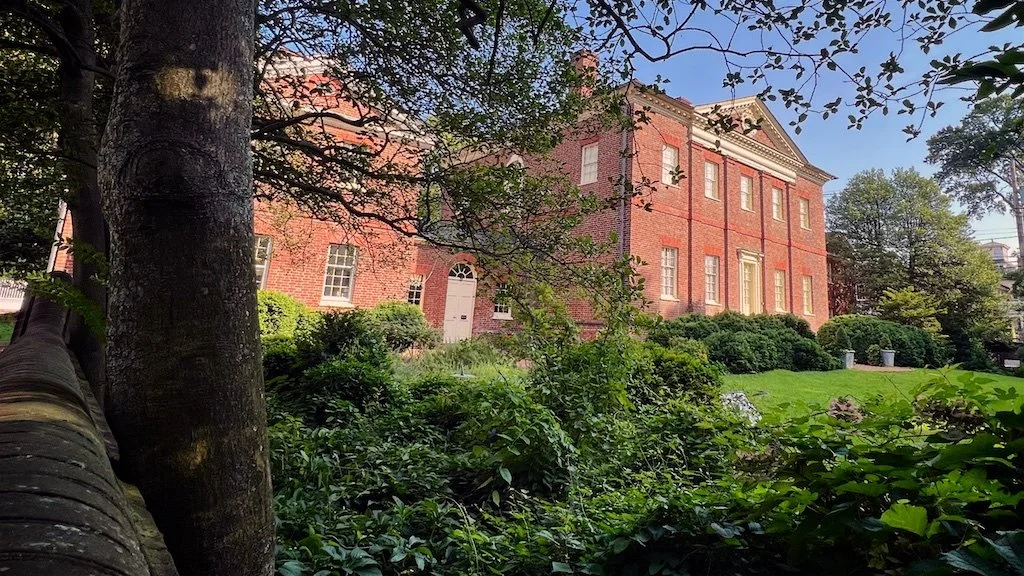
The entire house is laid in a brickwork pattern called FLEMISH BOND: a stretcher (or long side of brick) alternates with a HEADER (the short side of a brick). Flemish bond was prized for both its beauty and the strength created by the interlocking bricks