Photography by Bruce A deArmond
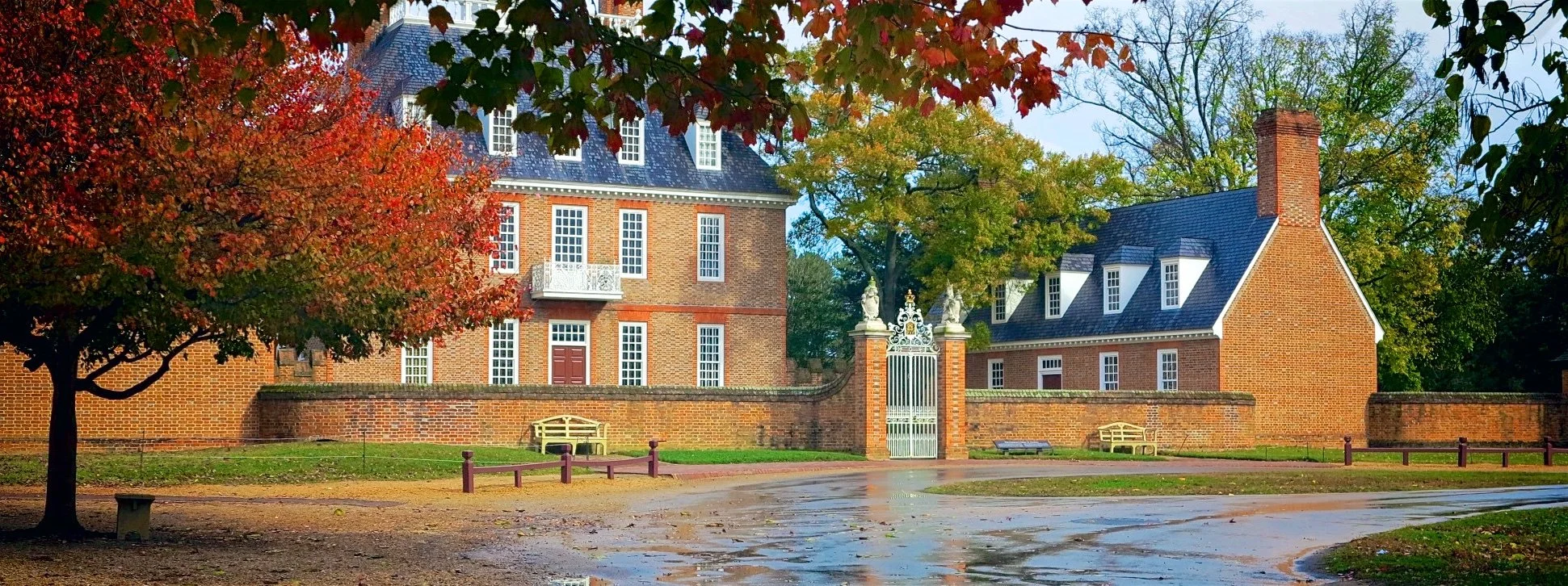
Governor’s Palace: Georgian (British Renaissance-Baroque style) Architecture, Completed in 1722 — Used by Royal and Post Colonial Virginia Governor’s until 1780, Williamsburg, Virginia
Started in 1705, the Governor's Palace was completed in 1722, after 16 years of fitful building and mounting expense. Henry Cary oversaw construction of the Virginia Governor's Mansion in Williamsburg, where he also supervised the first Virginia Capitol building. The exterior of the Governor’s Palace did not follow precedence to any Virginia architecture. The Palace is generally catagorized as Georgian, and it is best described as a “Dutch Palladianism” style.
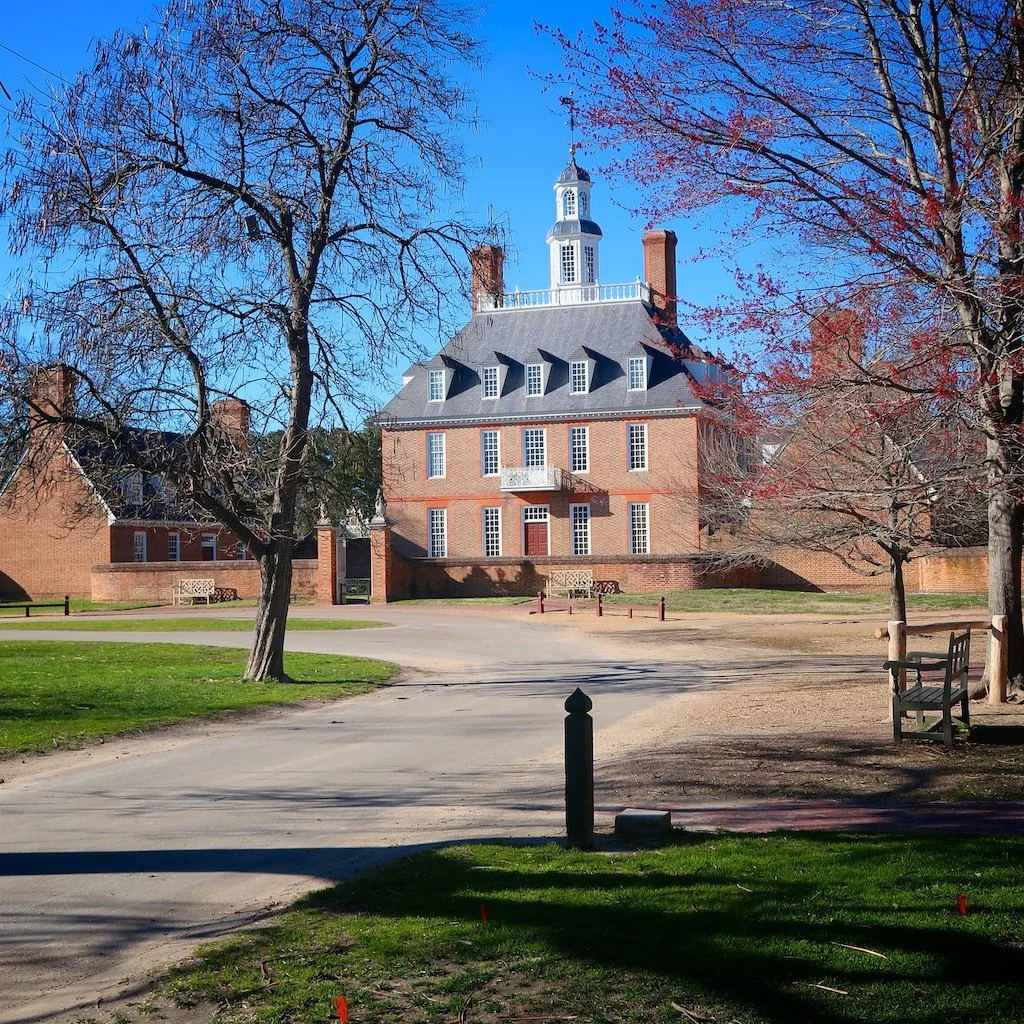
Govornor's Palace: Construction of the Governor's Palace began after Governor Edward Nott received authorization from the General Assembly on Oct. 23, 1705. Contractor Henry Cary was instructed to erect a two-story brick house with sash windows, a cellar, a vault, a kitchen, and a stable, on 63 acres of land.
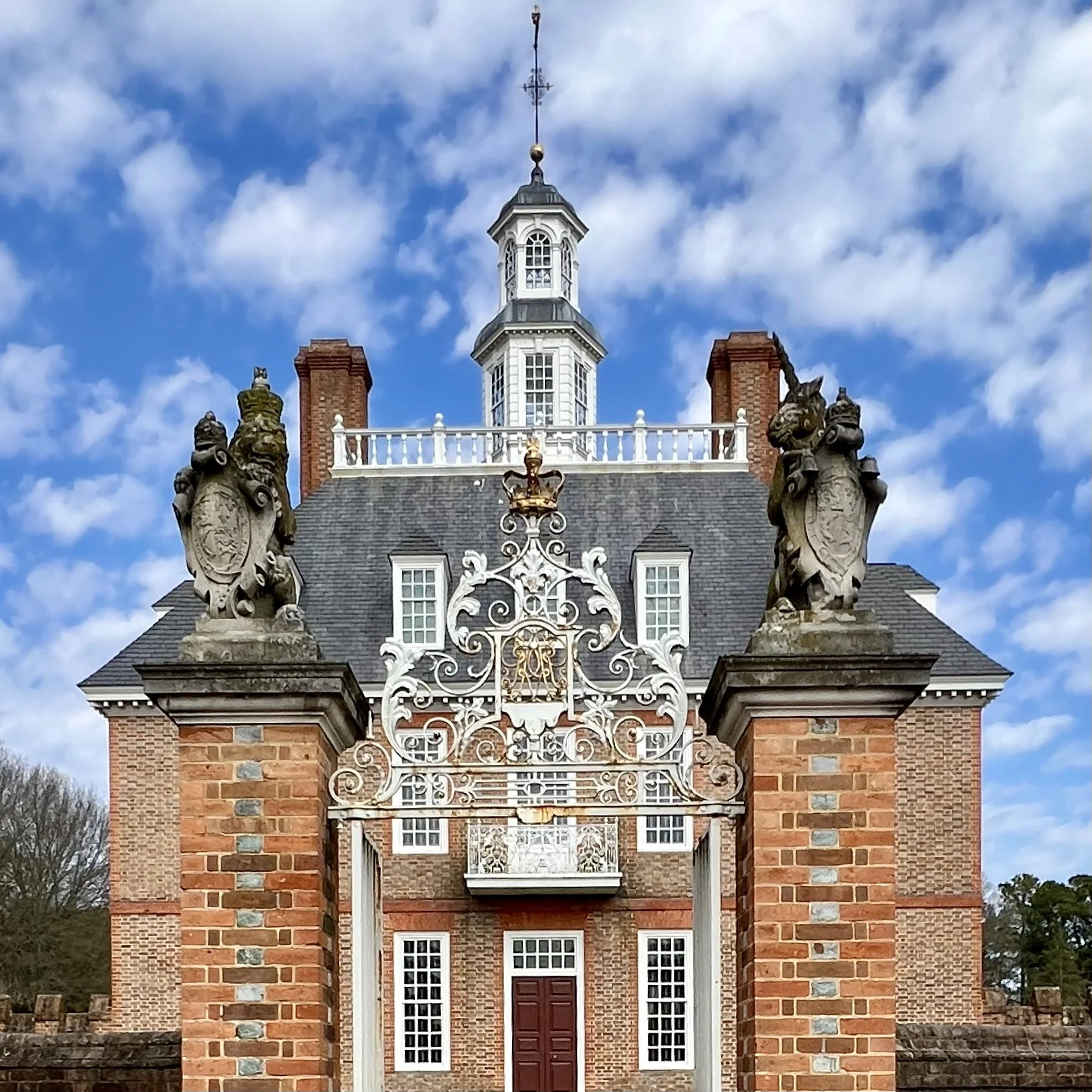
There is beautiful ironwork at the Governor's Palace, reflecting the governor's social status as a royal representative of that era.
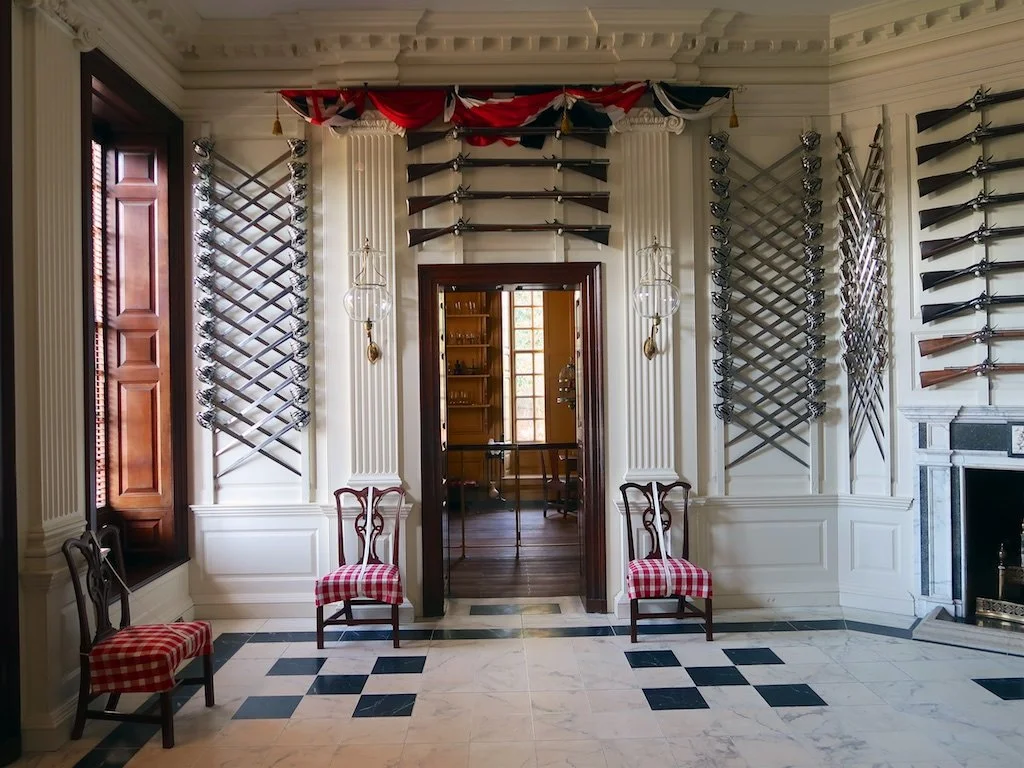
The decision to paint is based on a reevaluation of archaeological evidence. The floor of this "vestibule to the Palace" is of white Purbeck, alternating with black Belgian marble.
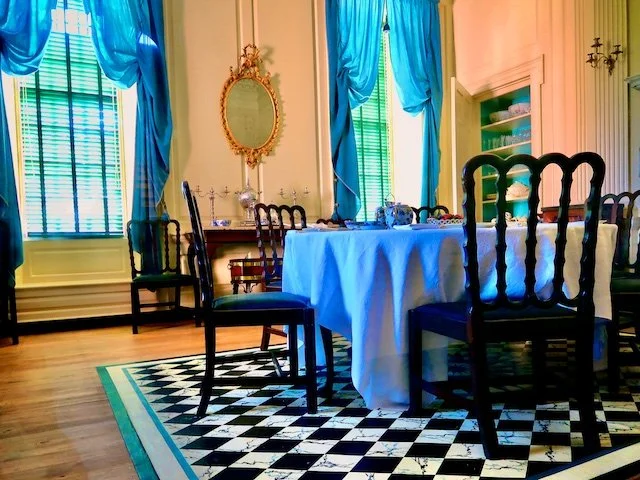
The beautiful early morning sunlight illuminates what is usually a dark dining room..
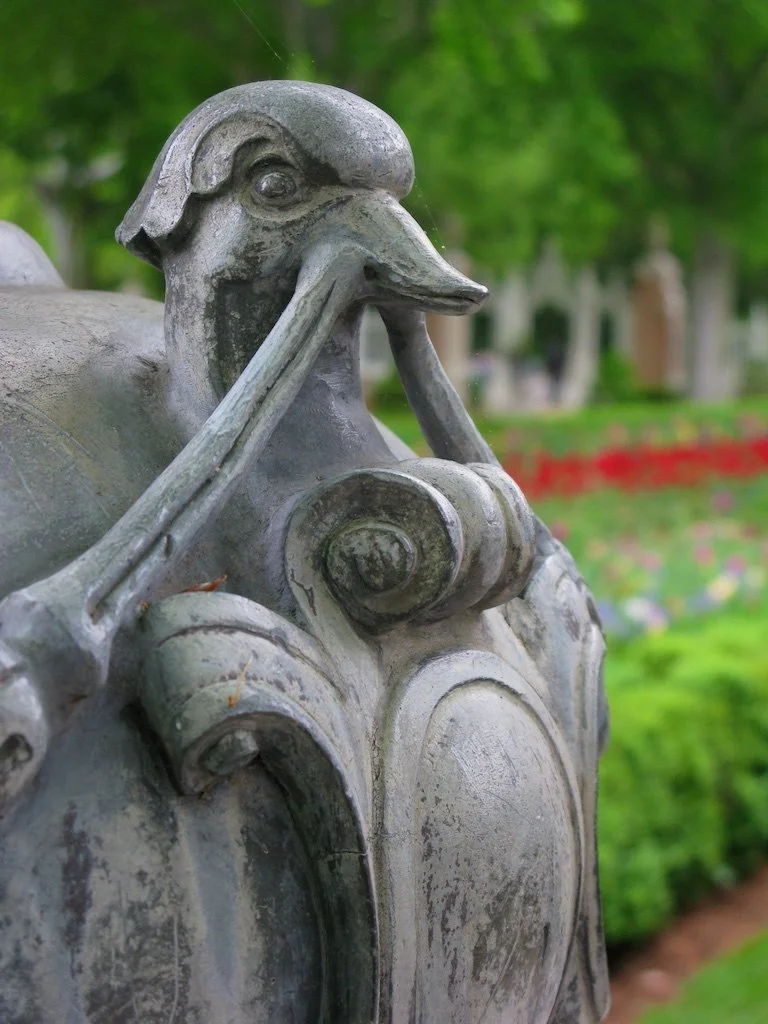
The formal gardens on the Governor's Palace grounds are part of the 90-acres of greens and gardens throughout Colonial Williamsburg.
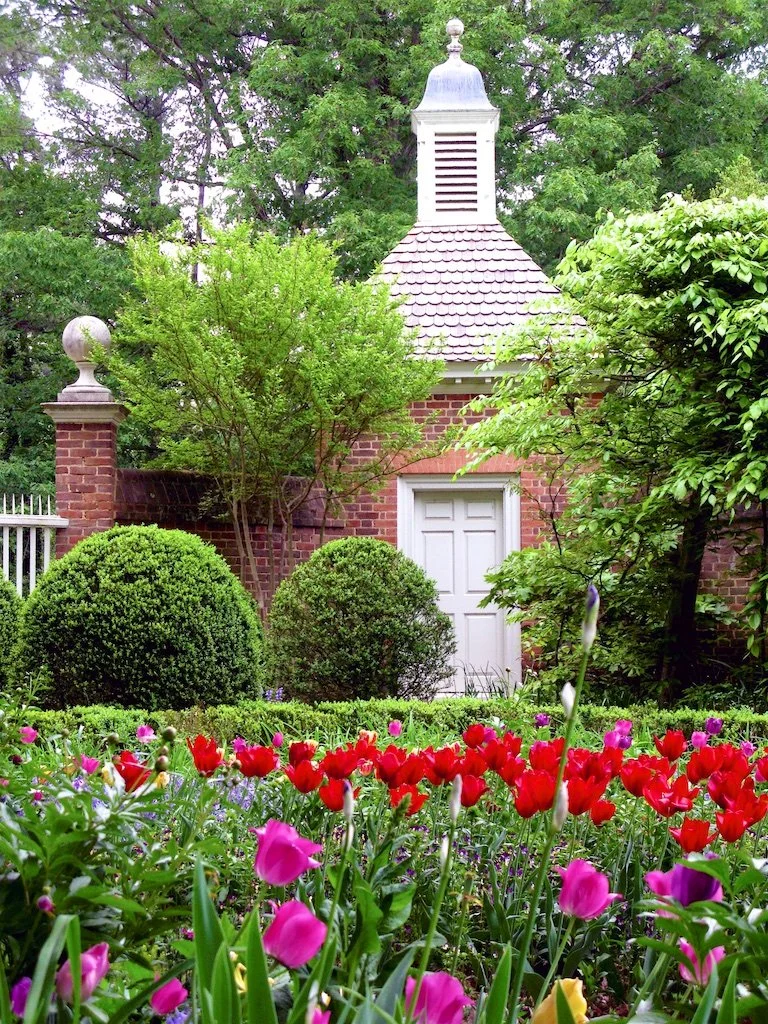
The gardens at the Governor's Palace draw influence from Dutch gardens in Holland blended with English garden fashion. They make extensive use of clipped hedges and rectangular parterres.
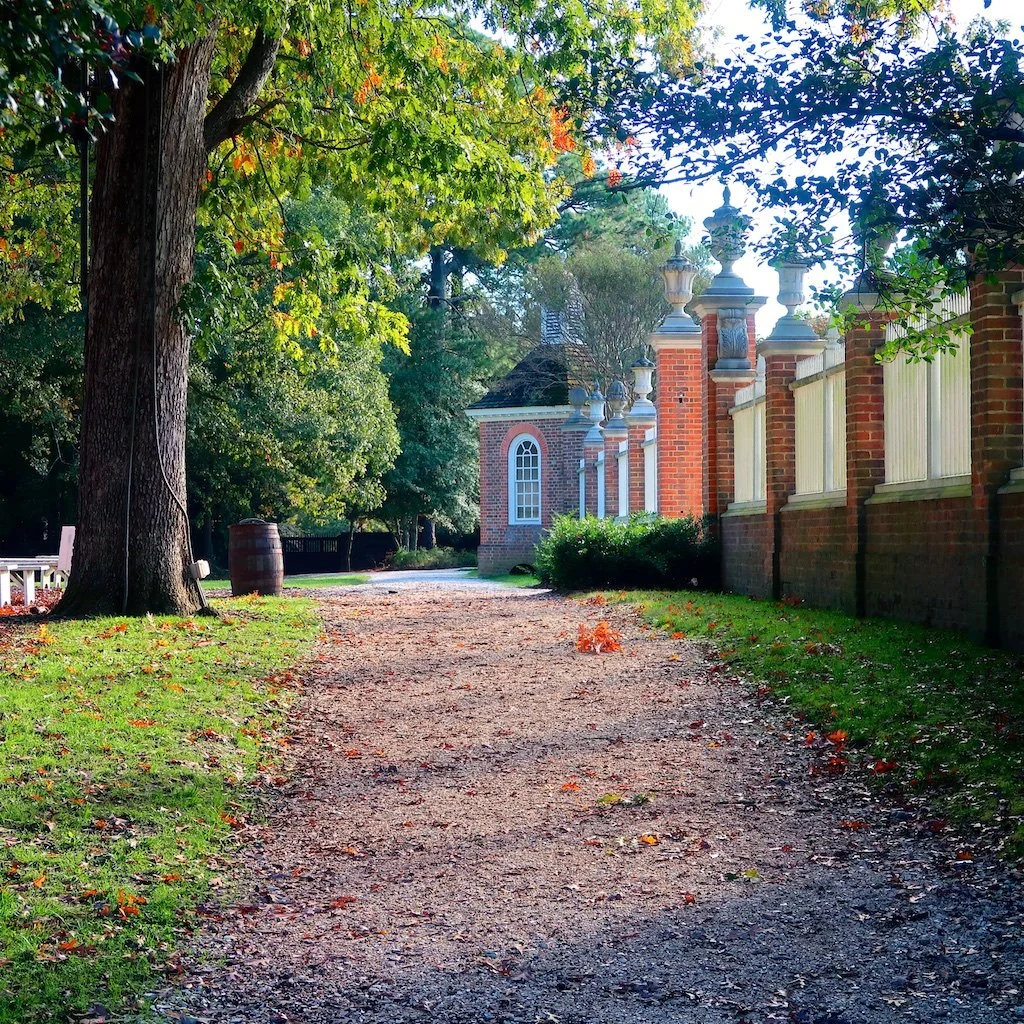
The north end of the formal gardens with open spaces beyond that is part of the long vista from the Governor's Palace.
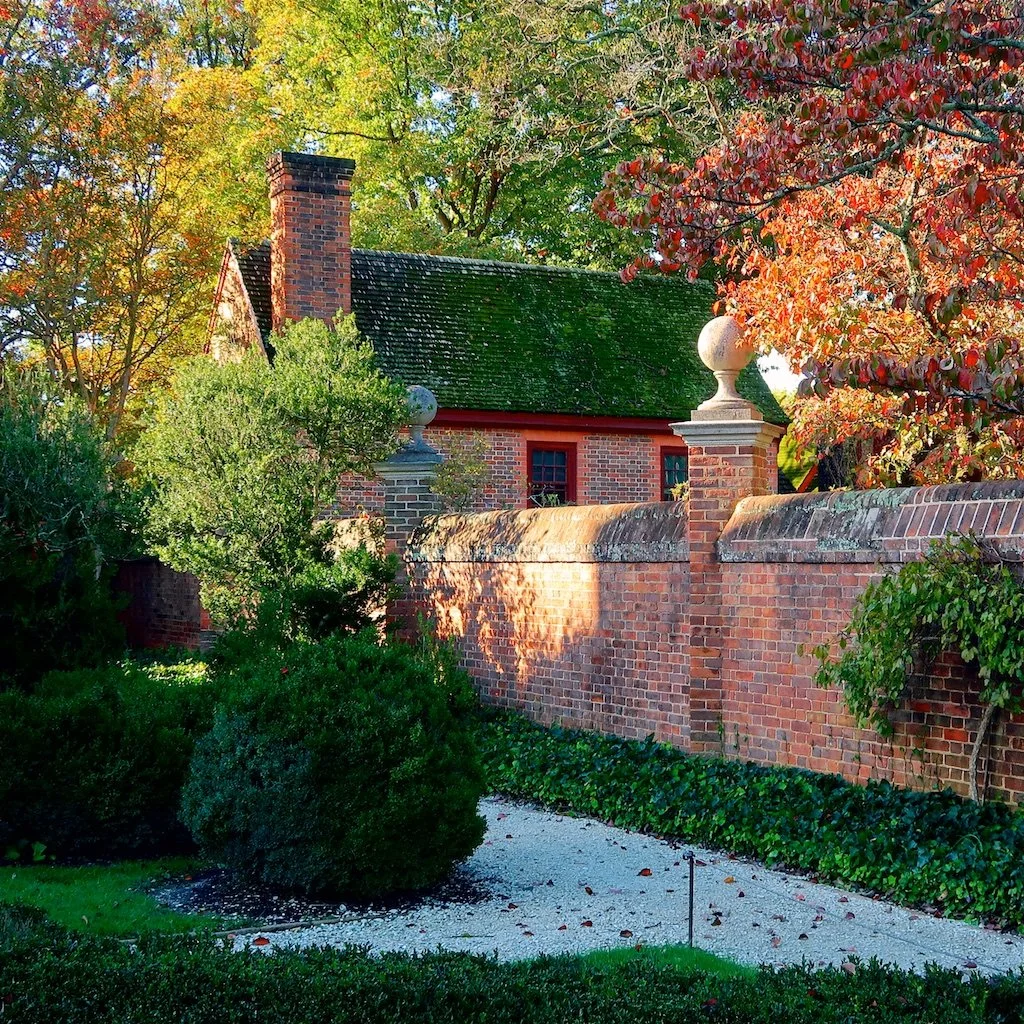
Looking from the formal gardens toward the Governor's Palace kitchen complex of buildings.
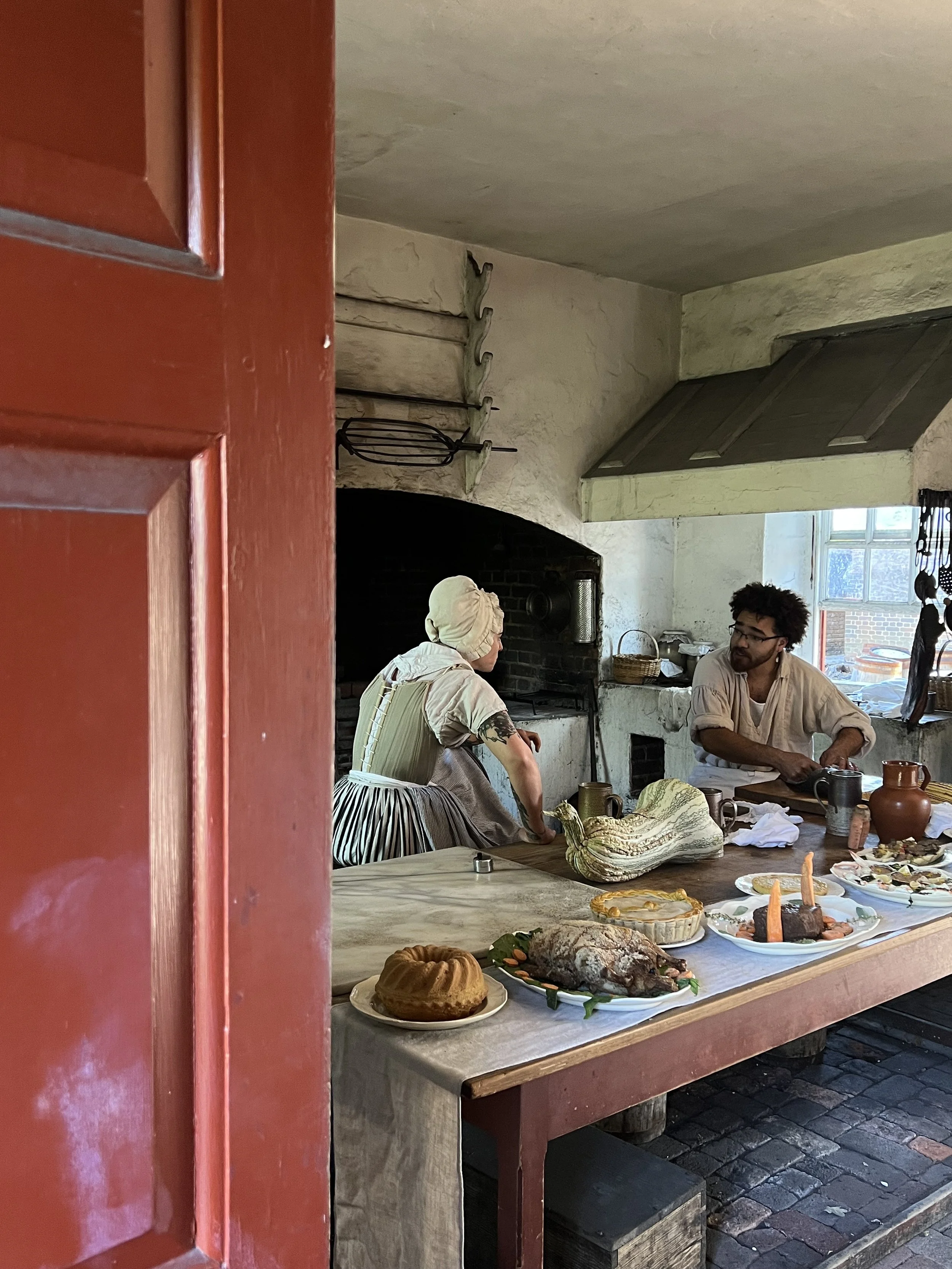
The kitchen at the Governor’s Palace is preparing and demonstrating its menu of the day.
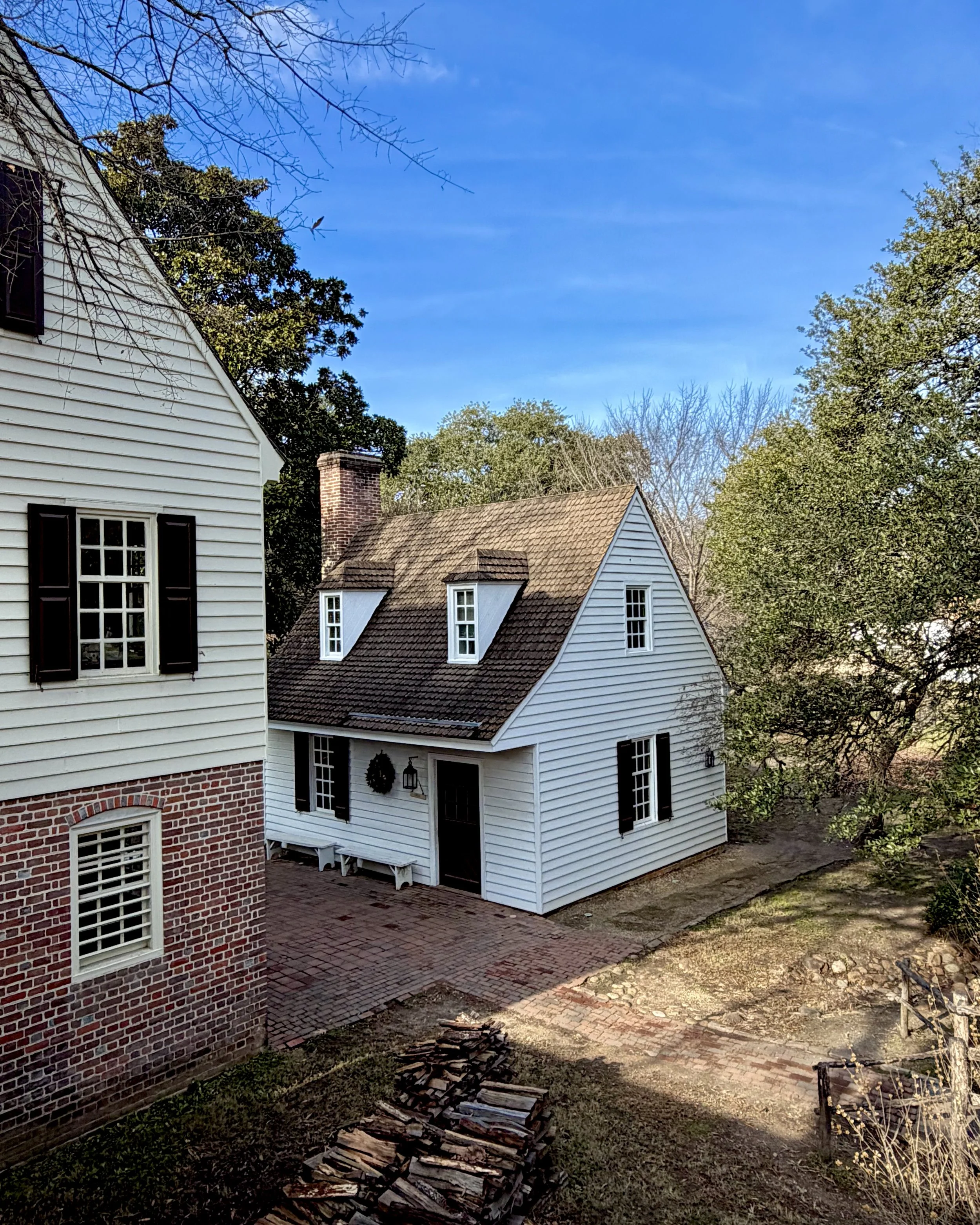
The geography of Colonial Williamsburg features hilly terrain, requiring adjustments in the planning of certain lots.
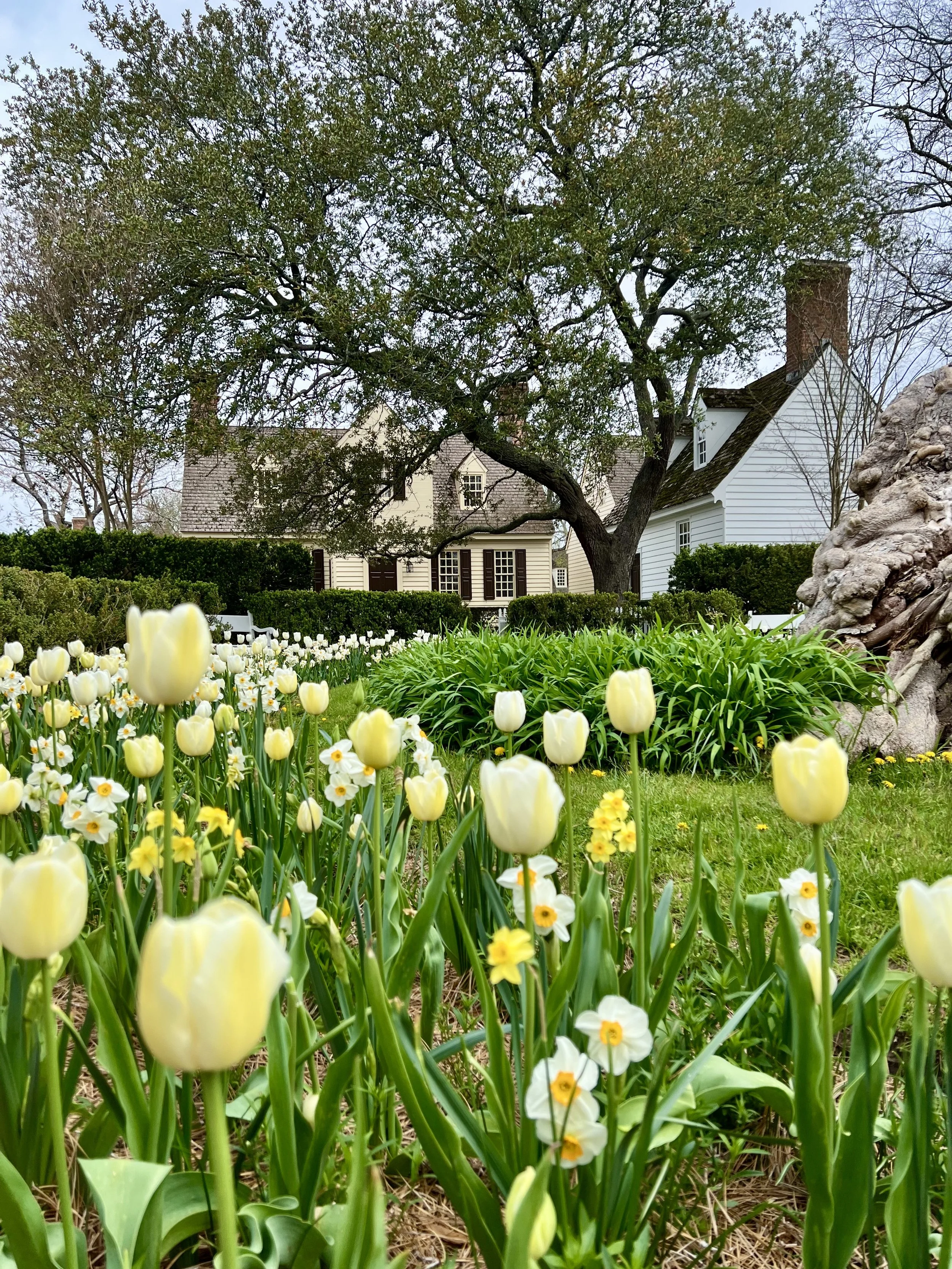
The seasonal beauty of Colonial Williamsburg reflects the hard work of its gardeners.
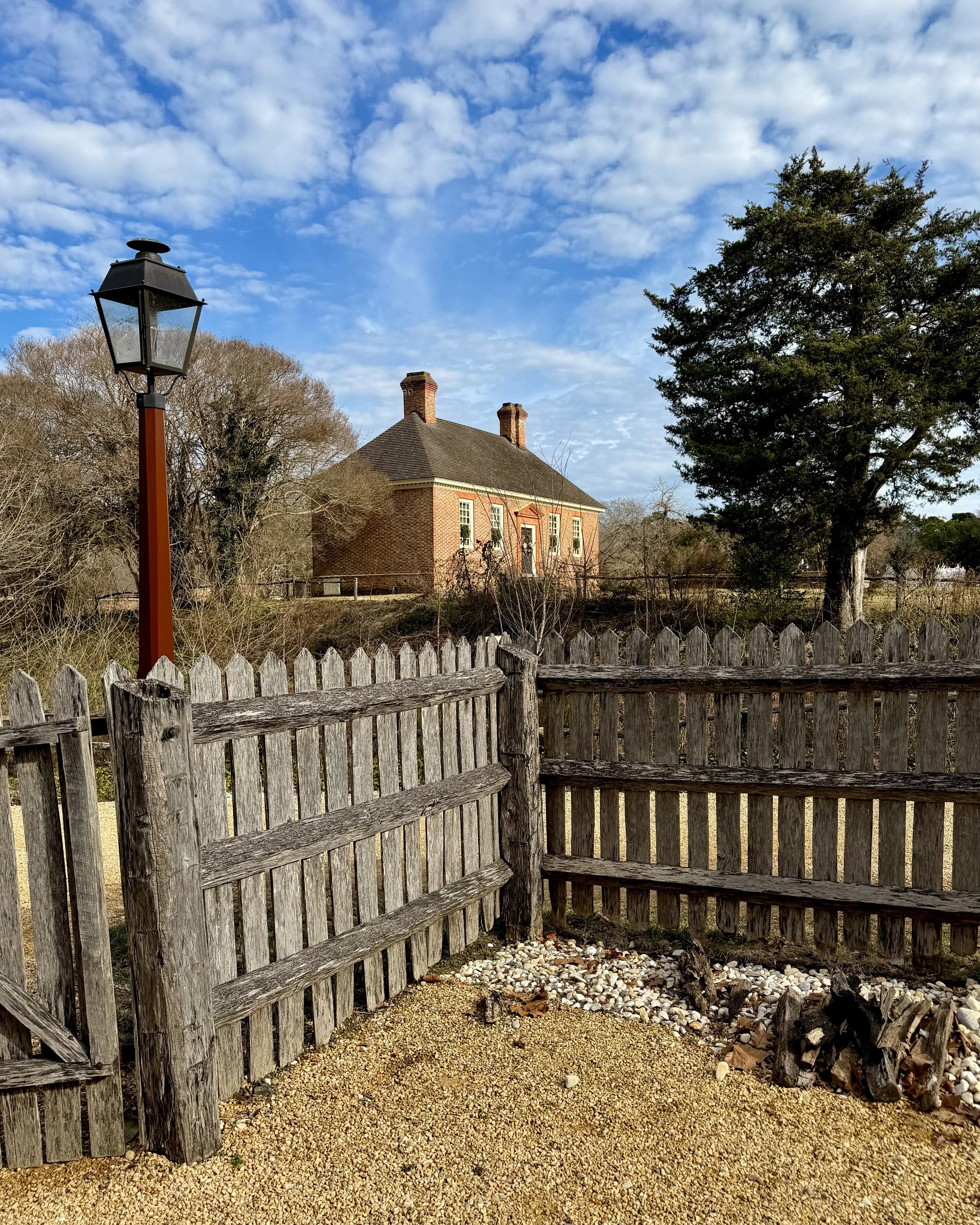
An unusual view of the Secretary's Office Building of the Capital from a back doorway in Colonial Williamsburg.
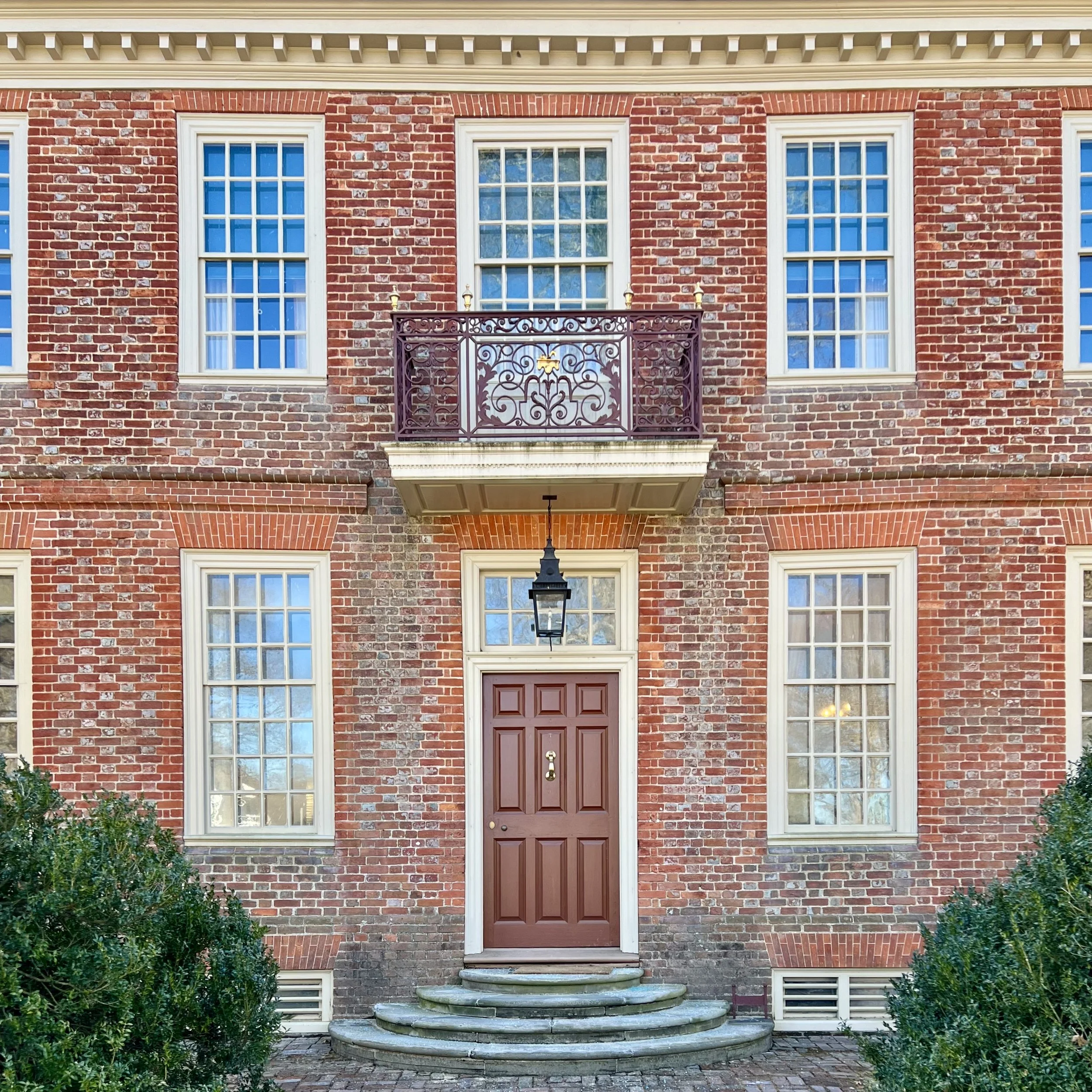
William Lightfoot Tenement (residential properties used for rental purposes), Colonial Williamsburg,
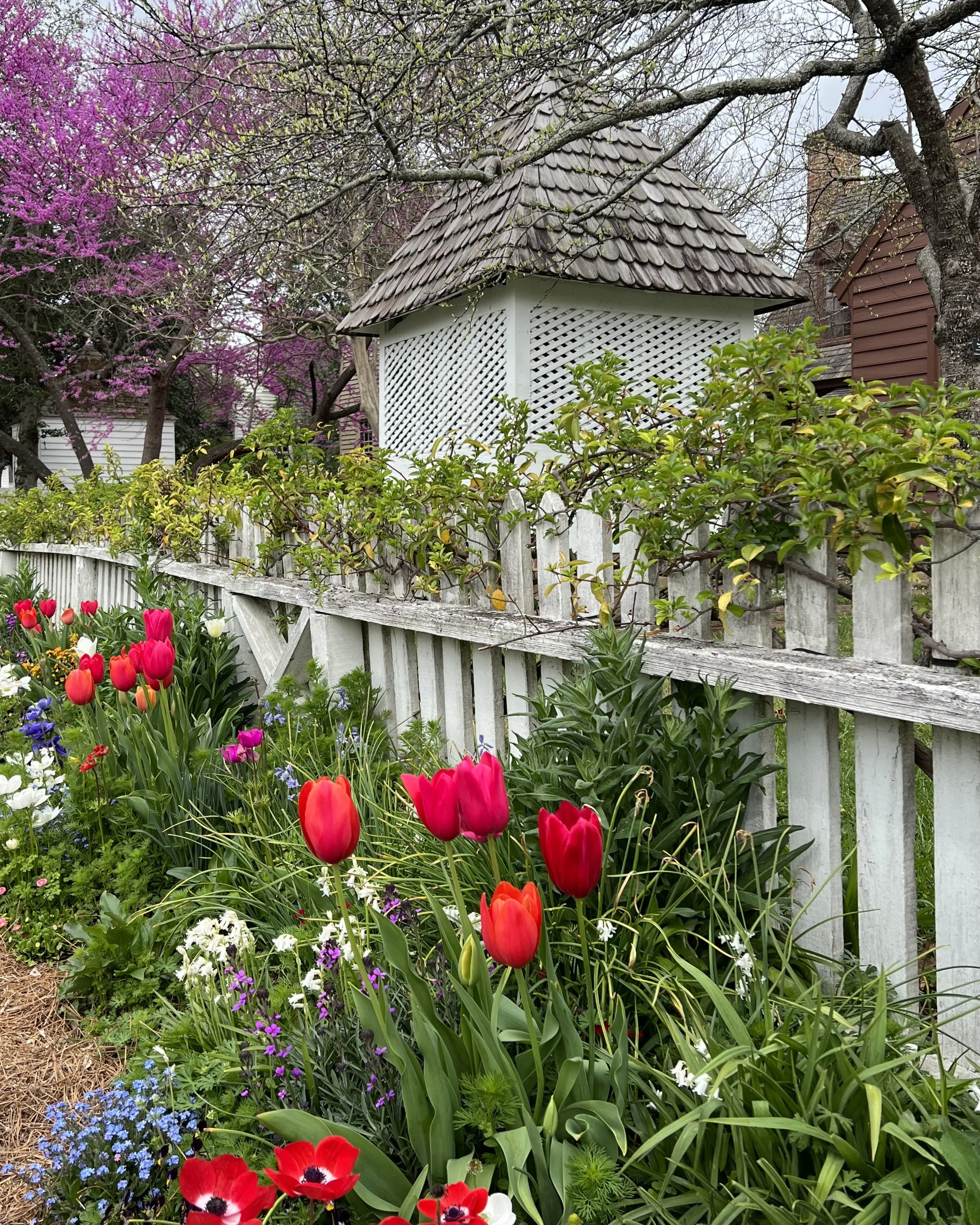
The seasonal evolution of gardens highlights the historic architecture of Colonial Williamsburg.
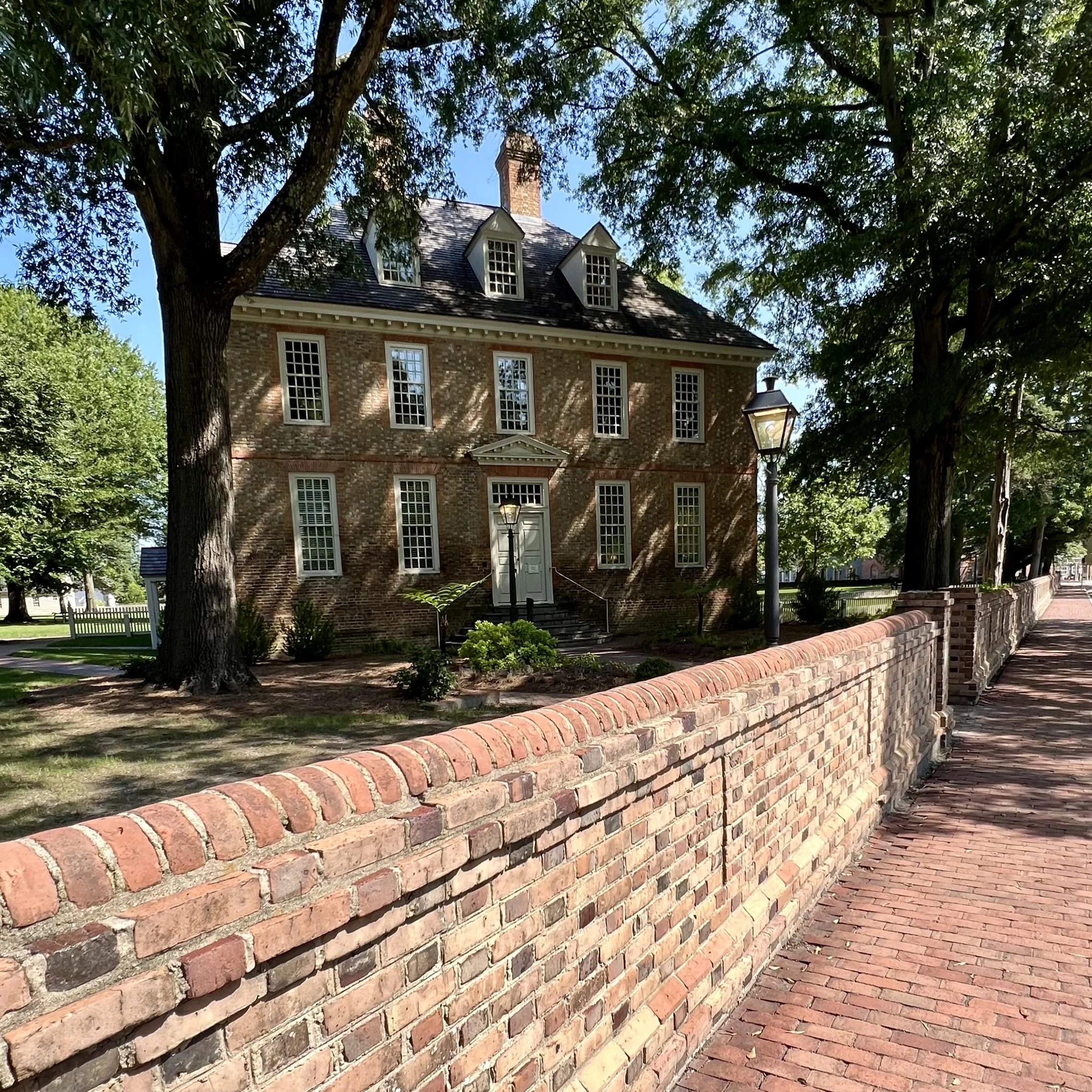
Completed in 1723, the Brafferton building is a Georgian structure that originally served as a school for Indian students. It remains an important part of William & Mary's historic campus. Beyond its architectural grace, the building is a testament to the interactions between Indigenous peoples and British colonists in the contested landscape of the eighteenth century.
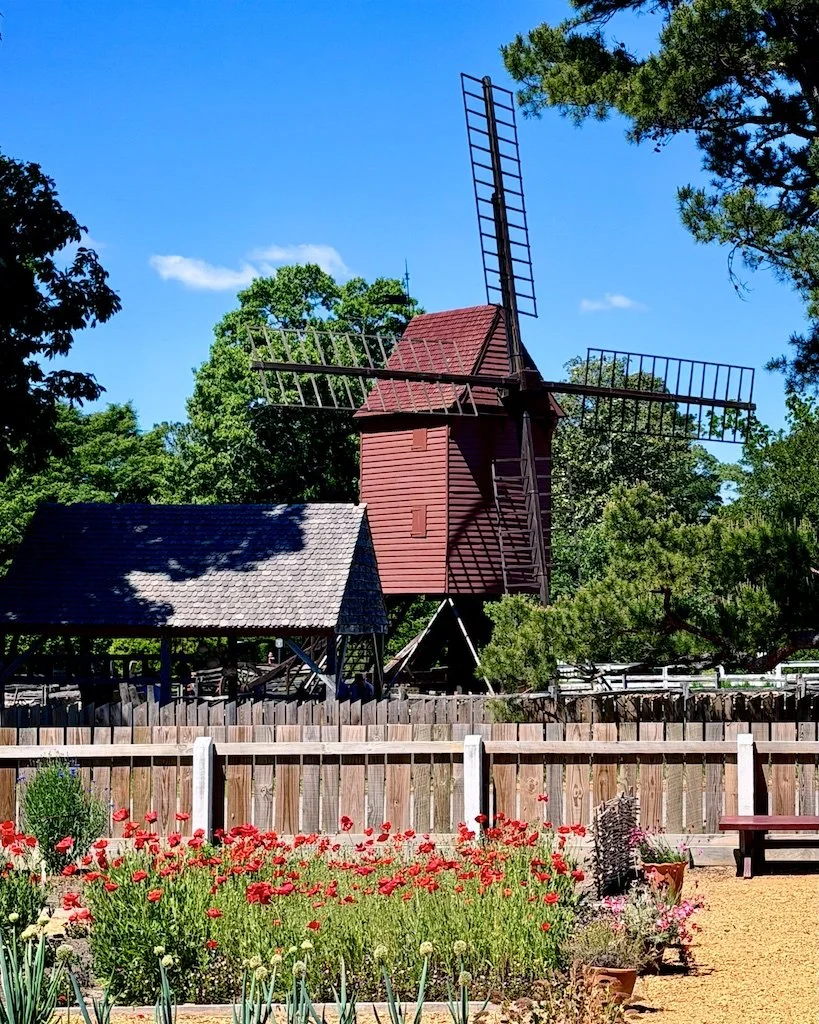
The Colonial Williamsburg windmill is a historic replica that has been relocated several times. Originally built in 1957, it is modeled after the Bourn windmill from Cambridgeshire, England, which dates back to 1636.
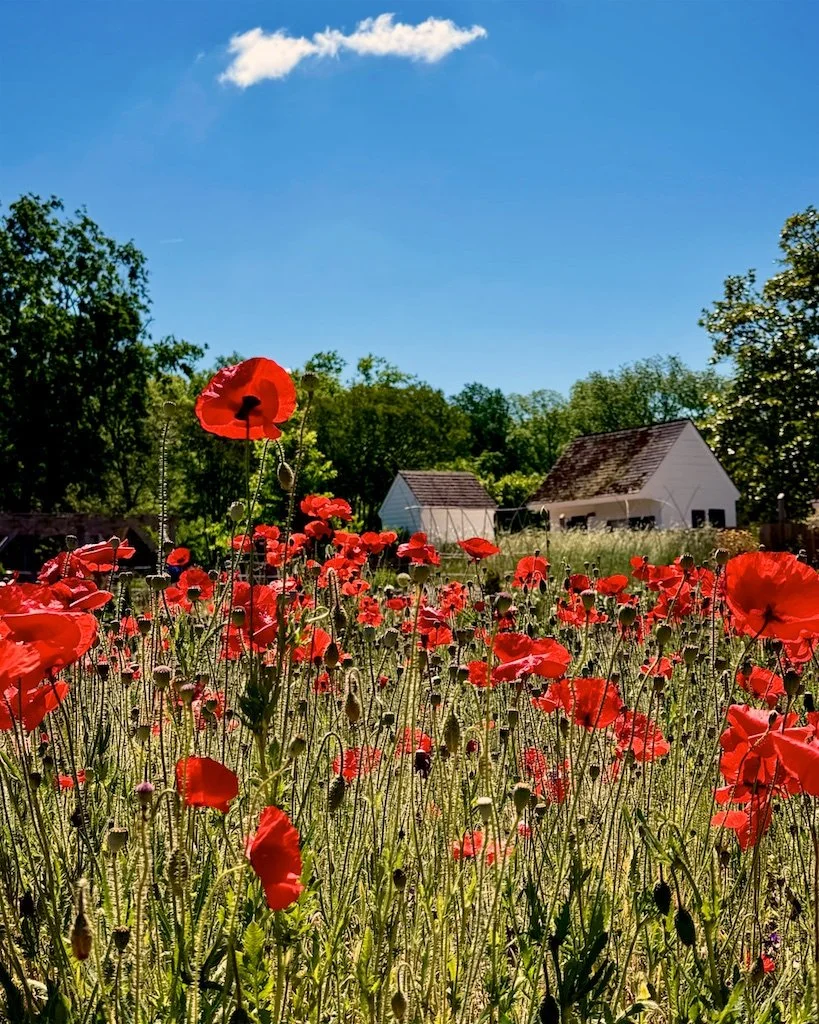
Colonial Williamsburg's seasonal flowering charm includes the element of organic wildness that contrasts beautifully with its formal gardens.
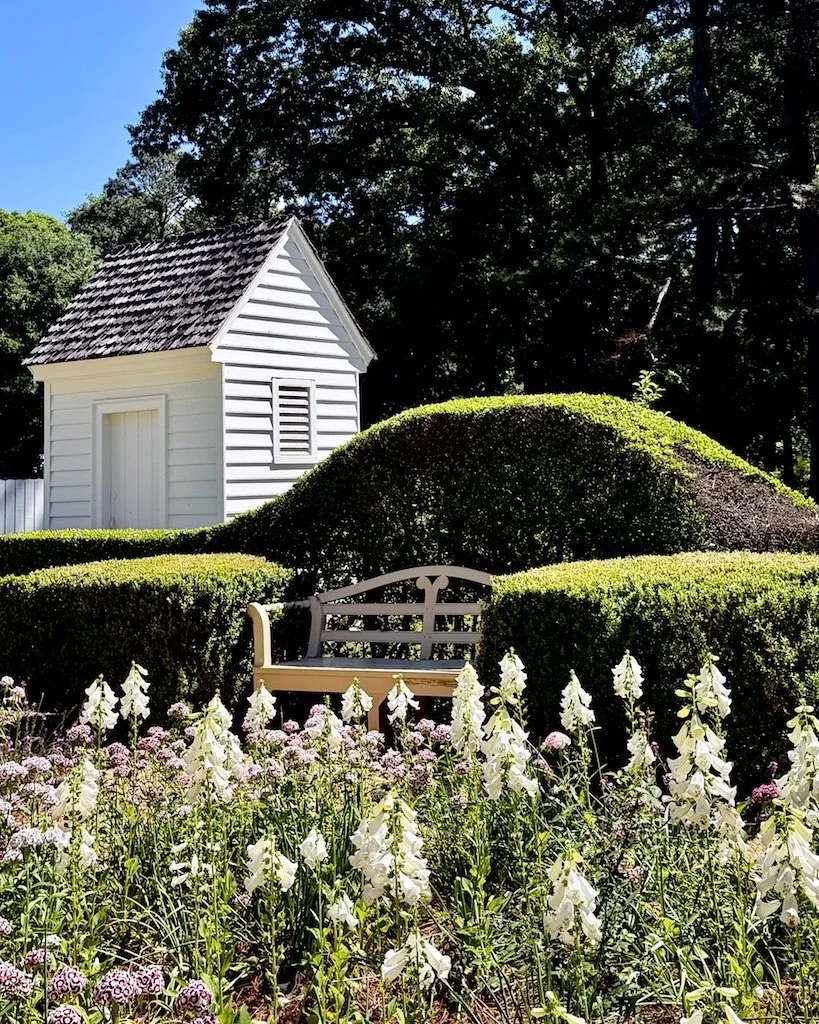
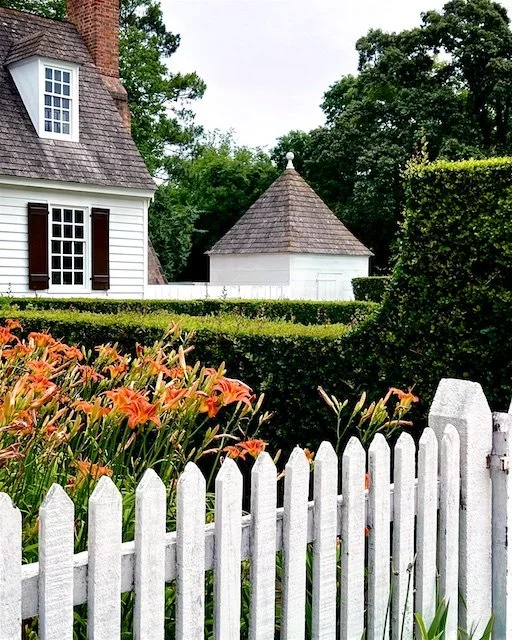
A captivating blend of geometric shapes, architectural designs, and garden textures with floral colors contrasting against a stark white background.
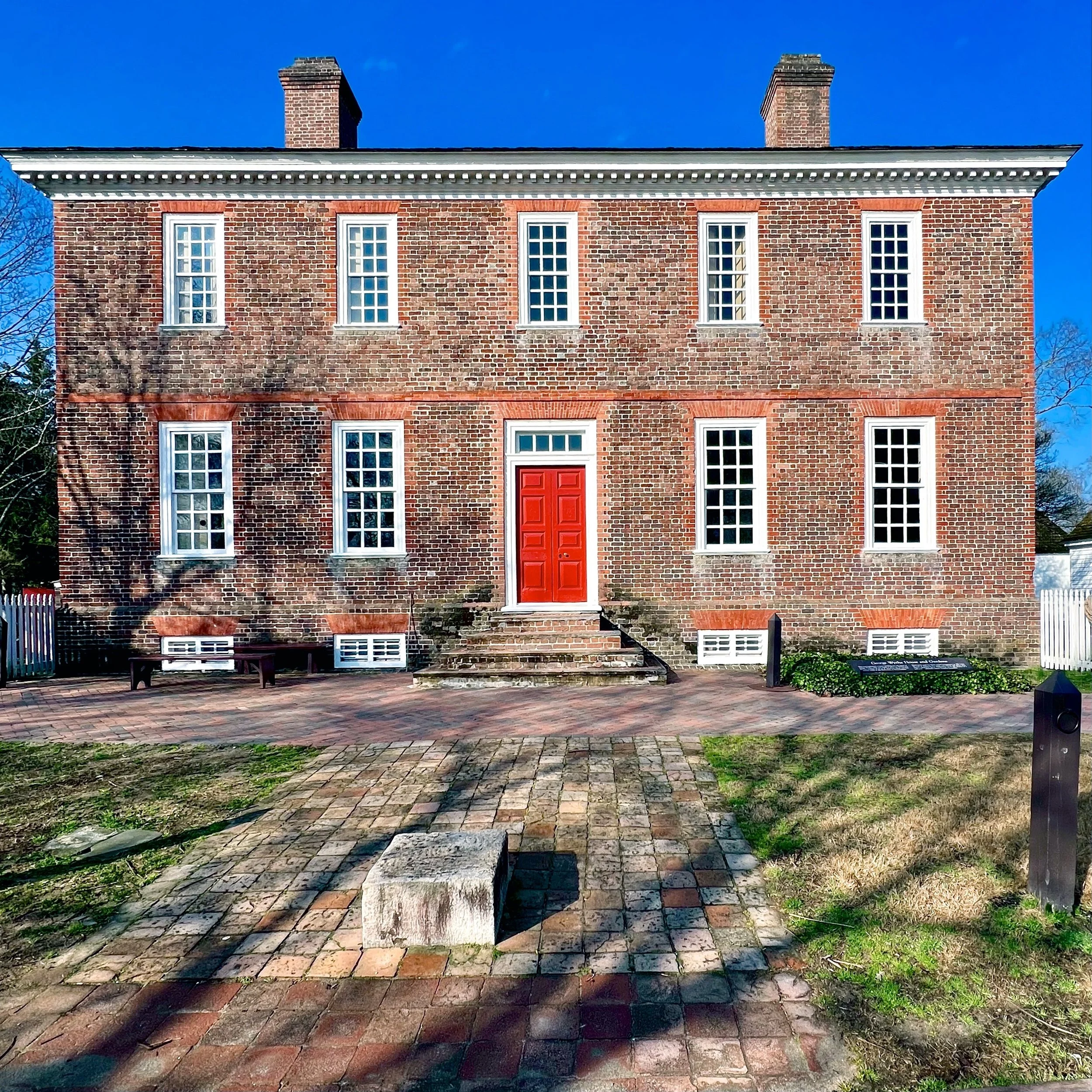
The Wythe House is a prime example of the understated elegance of Georgian architecture. Constructed between 1752 and 1754, it showcases a classic Georgian design characterized by its symmetrical layout and precise proportions. The house demonstrates a harmonious balance between functionality and aesthetics.