Photography by Bruce A deArmond
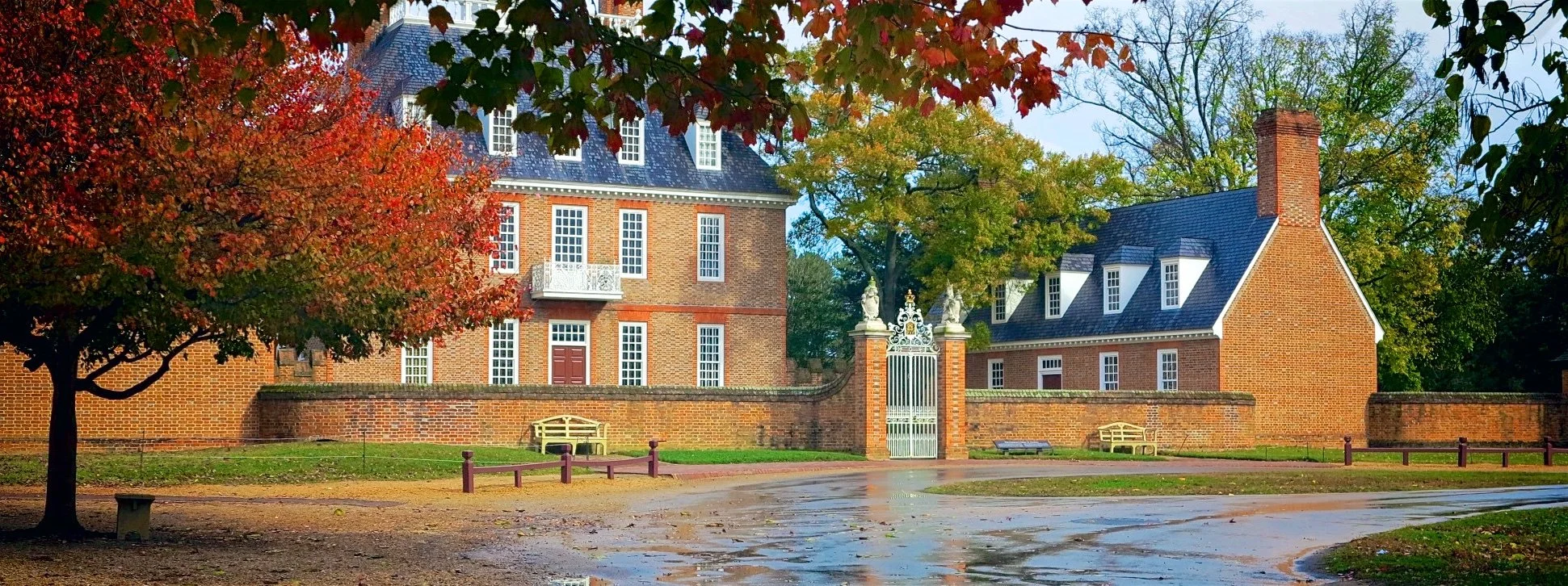
Governor’s Palace: Georgian (British Renaissance-Baroque style) Architecture, Completed in 1722 — Used by Royal and Post Colonial Virginia Governor’s until 1780, Williamsburg, Virginia
Started in 1705, the Governor's Palace was completed in 1722, after 16 years of fitful building and mounting expense. Henry Cary oversaw construction of the Virginia Governor's Mansion in Williamsburg, where he also supervised the first Virginia Capitol building. The exterior of the Governor’s Palace did not follow precedence to any Virginia architecture. The Palace is generally catagorized as Georgian, and it is best described as a “Dutch Palladianism” style.
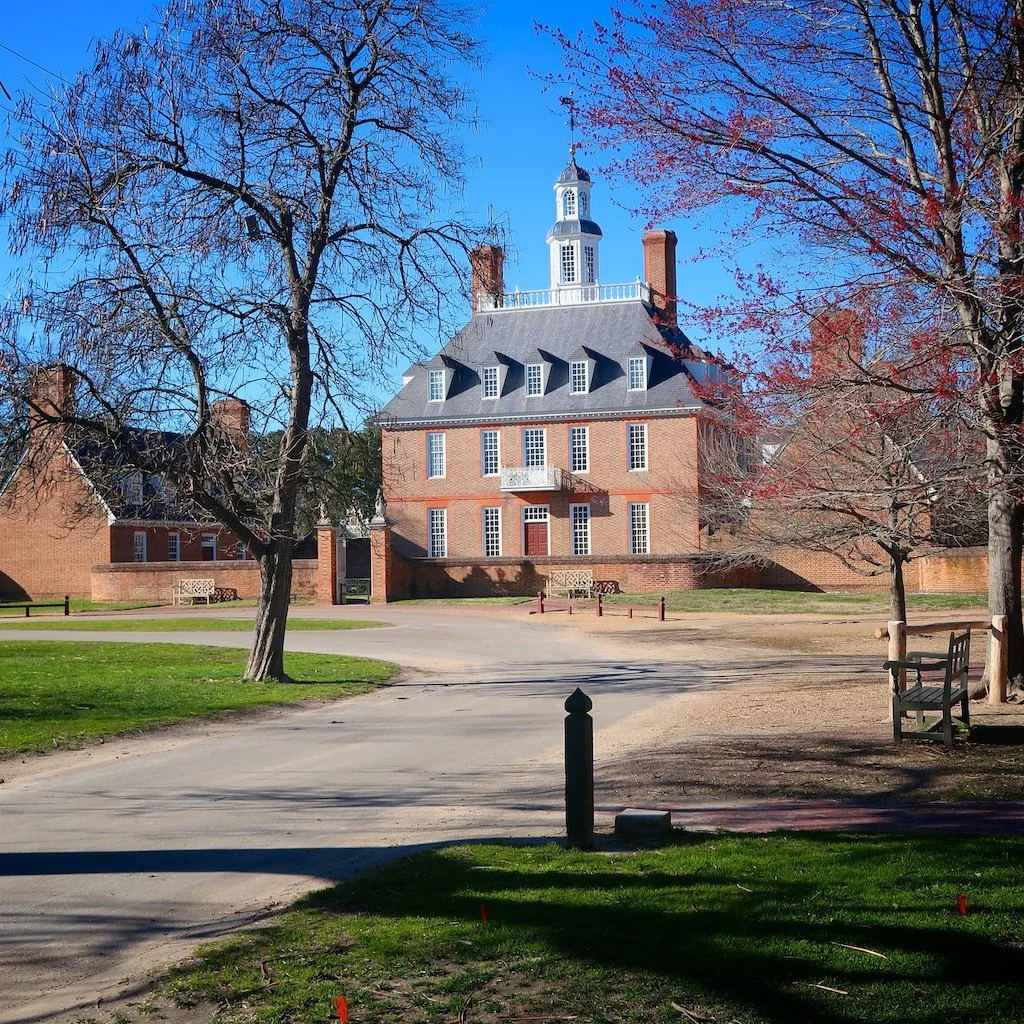
Govornor's Palace: Construction of the Governor's Palace began after Governor Edward Nott received authorization from the General Assembly on Oct. 23, 1705. Contractor Henry Cary was instructed to erect a two-story brick house with sash windows, a cellar, a vault, a kitchen, and a stable, on 63 acres of land.
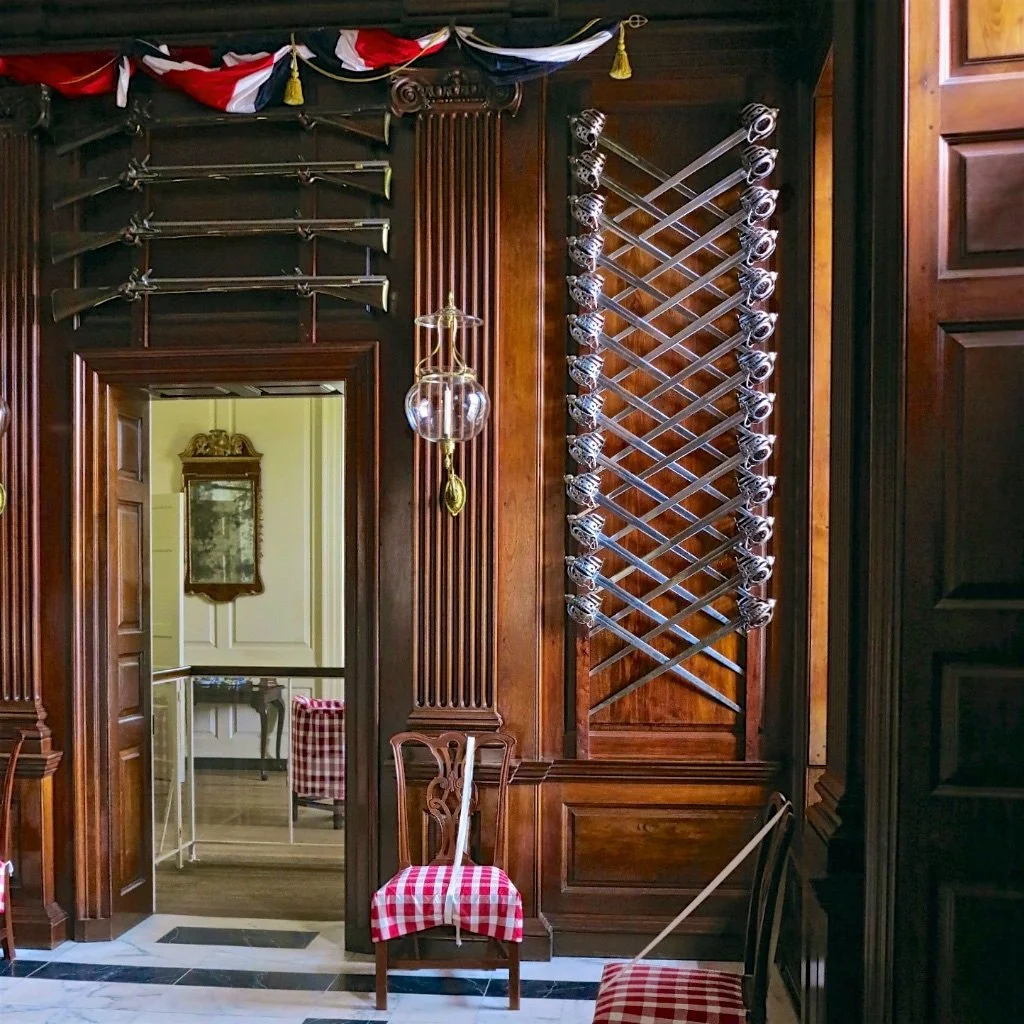
Entrance Hall: This room is recorded as completed in October of 1711. Then Governor Spotswood decorated it with a display of bayonet-tipped muskets. Colonial Williamsburg changed their original presentation of American walnut paneling to a white painted paneling in 2019.
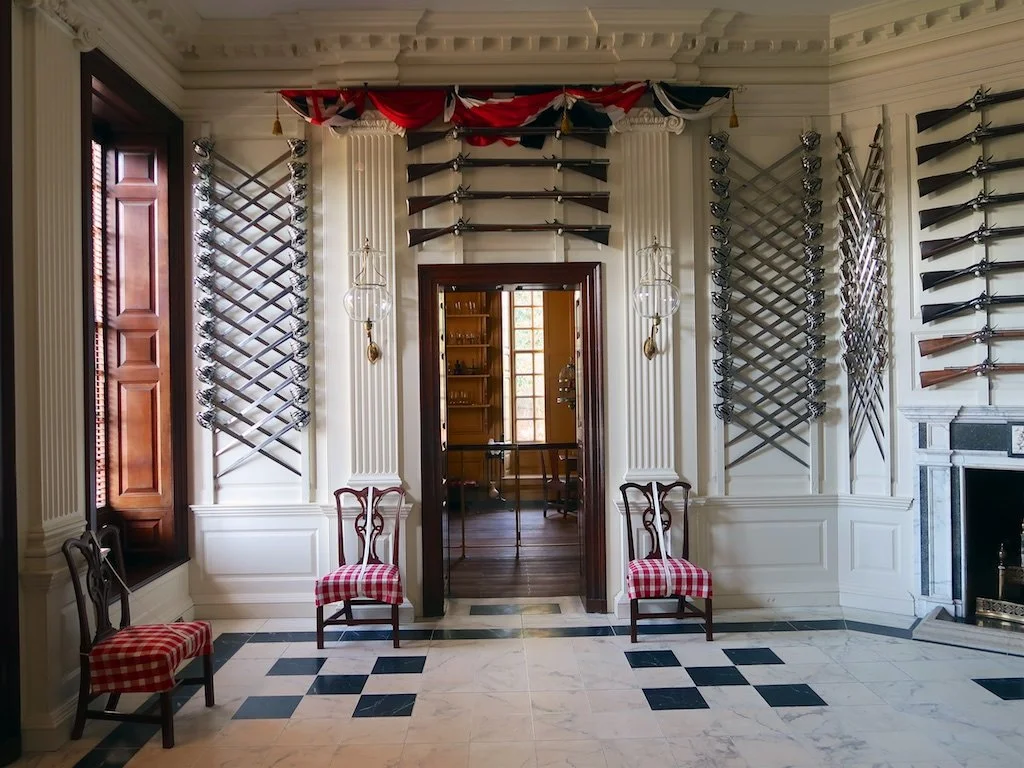
The decision to paint is based on a reevaluation of archaeological evidence. The floor of this "vestibule to the Palace" is of white Purbeck, alternating with black Belgian marble.
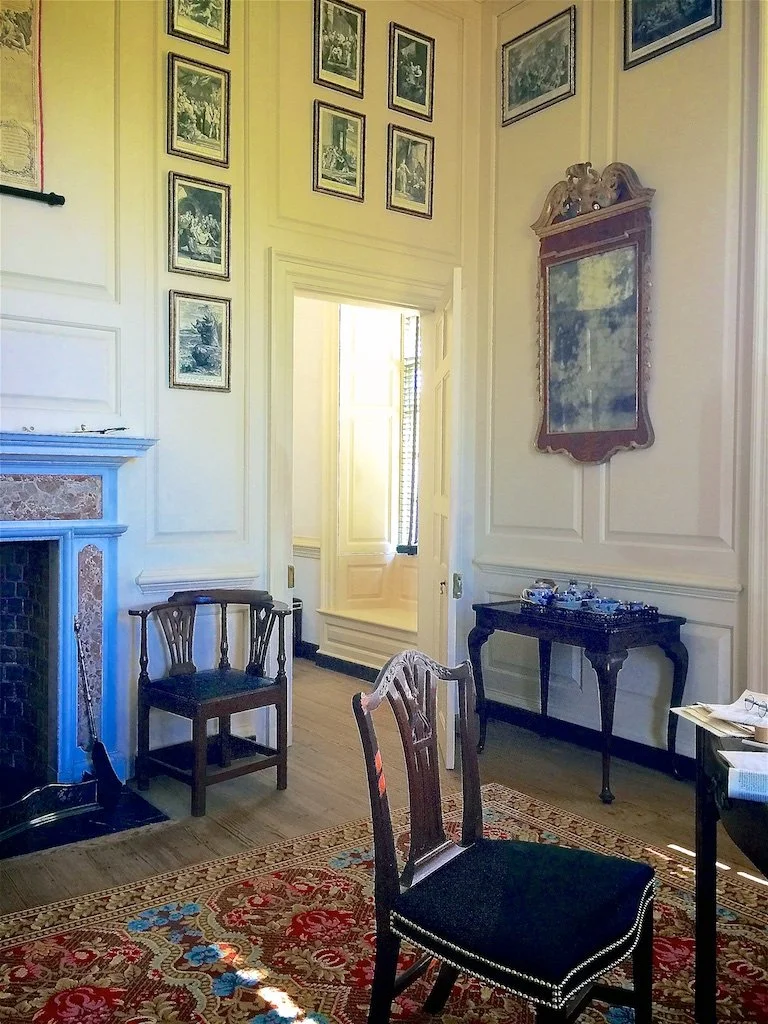
The Parlor: The treatment was intended to recall the trends in rooms of England early in the eighteenth century. Virginia, as a colony of England, strived to keep in step with the trends and architecture of London.
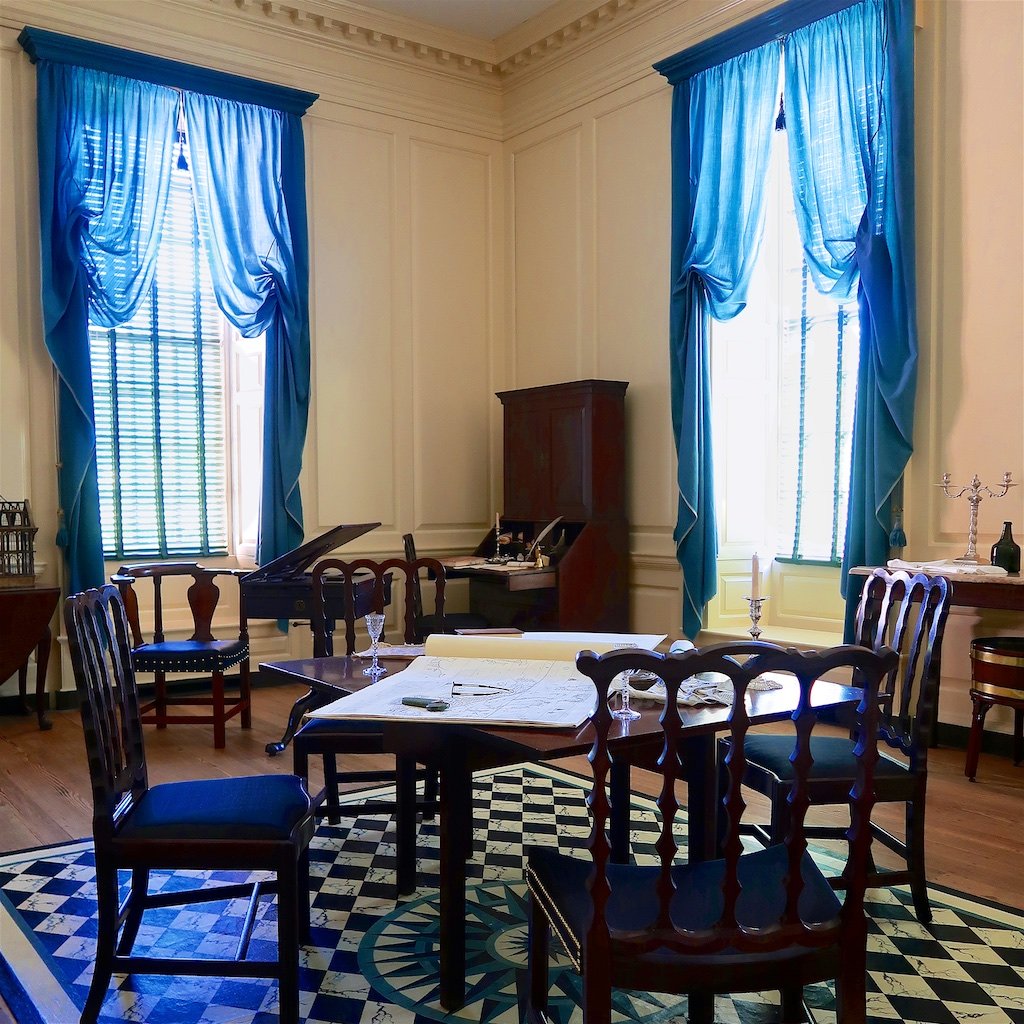
Dining Room: How the room was used varied as to what was needed. This presentation shows the room used for a meeting. This is one of the outstanding examples of reconstructed paneling in the Palace.

Ballroom: The large Prussian blue Ballroom in the Governor's Palace opens to the Supper Room. Both were added to the palace in 1752, following the new fashion among English aristocrats to build unique rooms onto their houses dedicated to dancing and socializing.
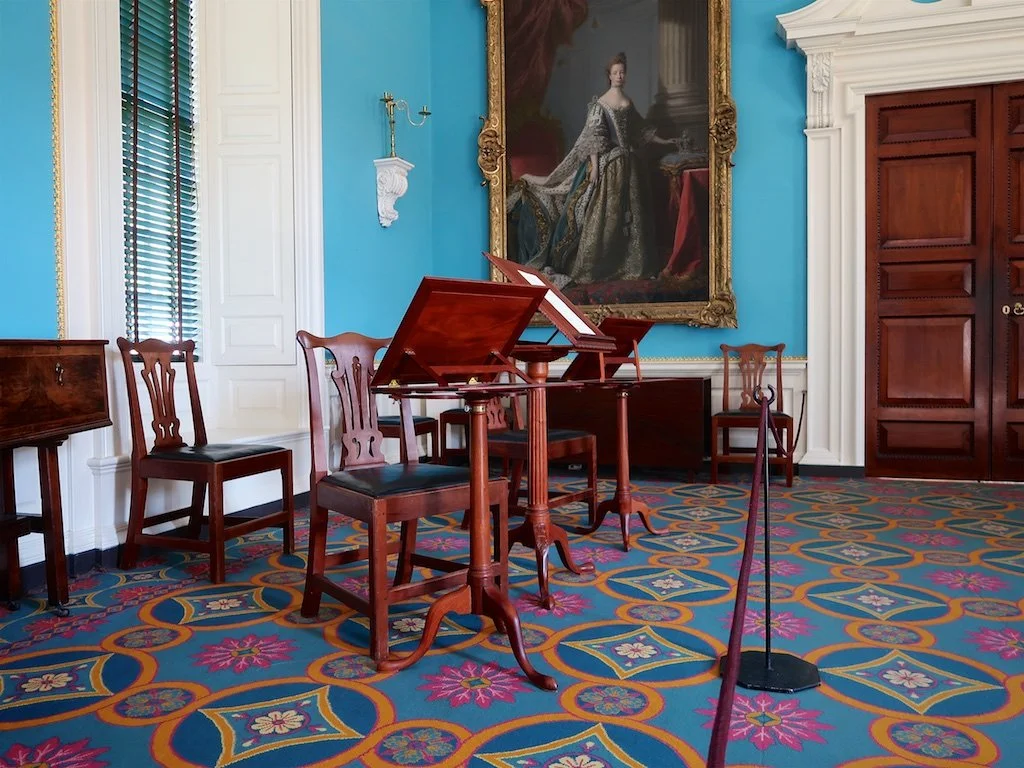
Ballroom: The carpeting is inspired by a 1770 detailed inventory that had been prepared after the death of Lord Botetourt, Virginia's royal governor. It is indicated as rolled up on the third floor. These rooms are interpreted as used by the last Royal Governor, Lord Dunmore, 1771–1775.
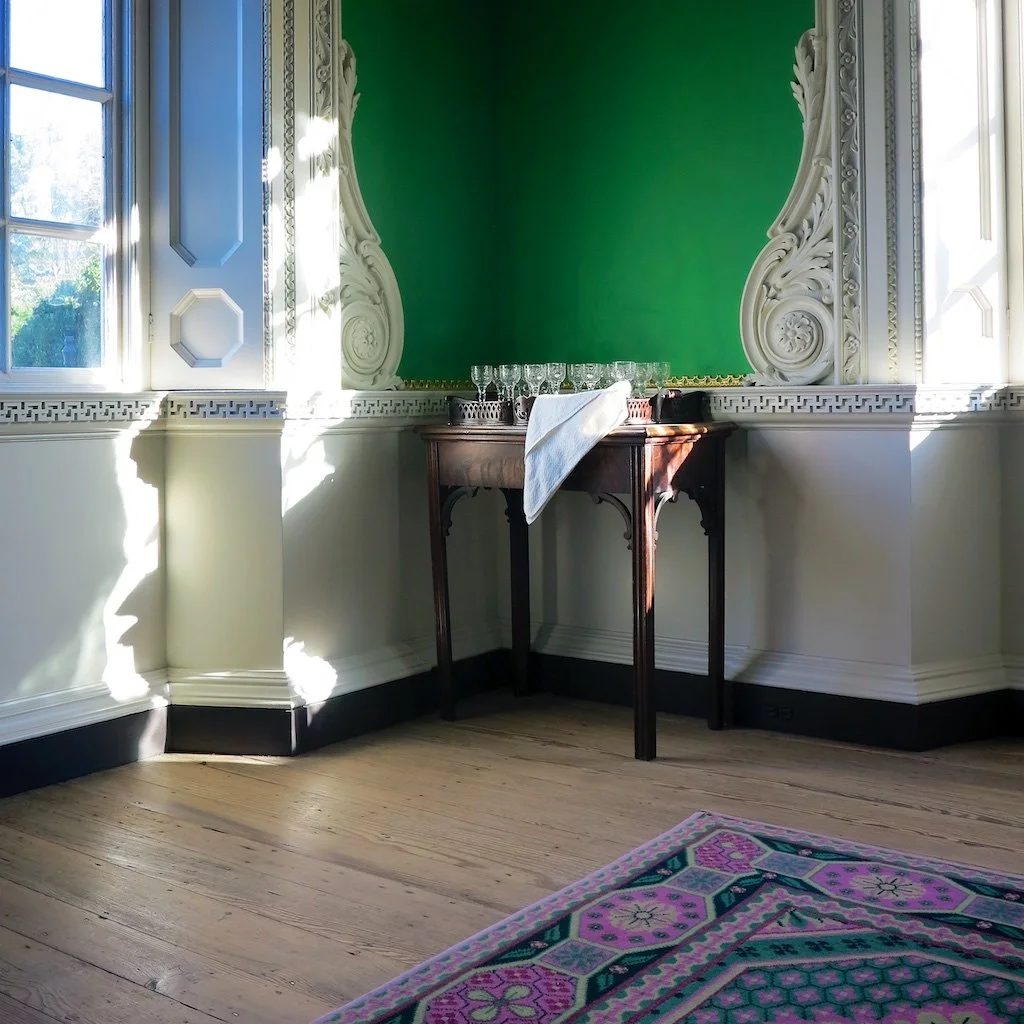
Supper Room: The adjoining Supper Room features Chinese-inspired woodwork, "Green verditer" walls, and patterned wool carpet.
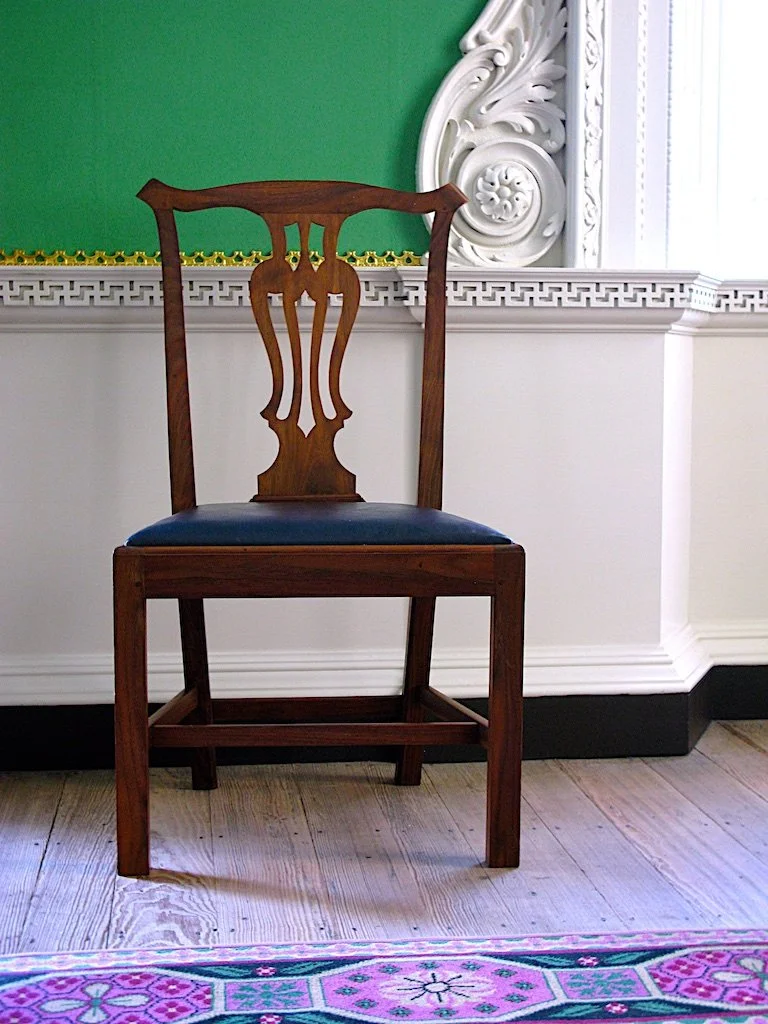
The Supper Room and the Ballroom have papered walls painted to get a more brilliant effect rather than painting directly on the walls - and finished with narrow gold paper-maché borders.
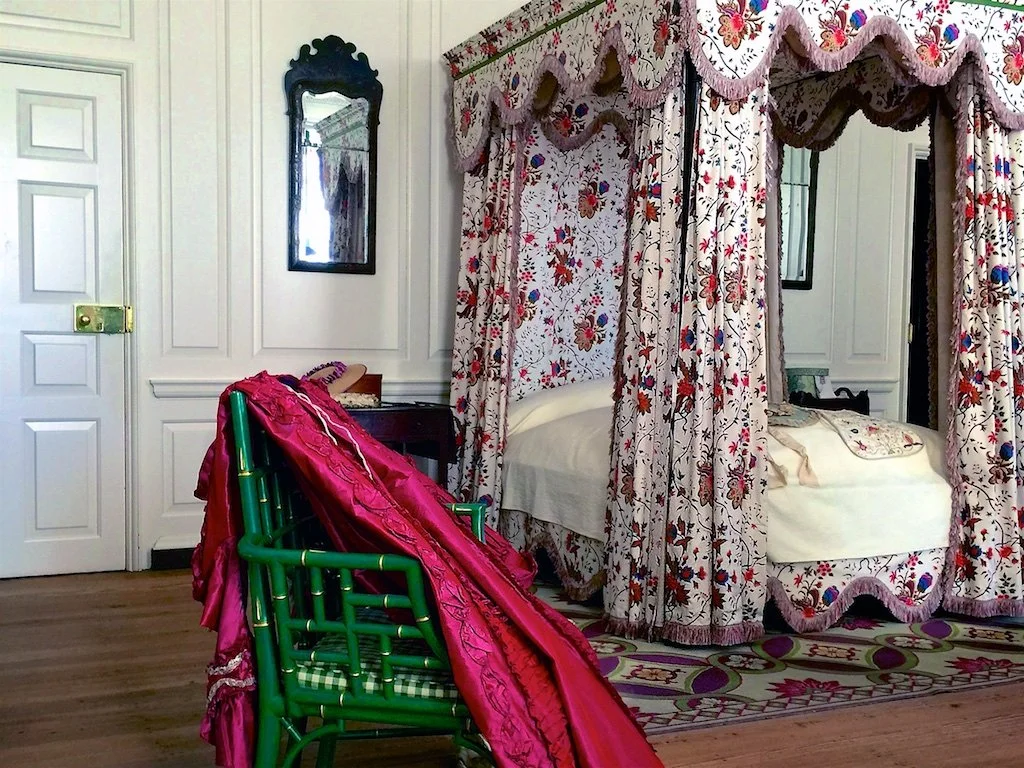
The largest bedroom was used as a state guest bedroom for important guests or as a bedroom for the family. The bedhangings use 42 yards of fabric and 50 yards of fringe.
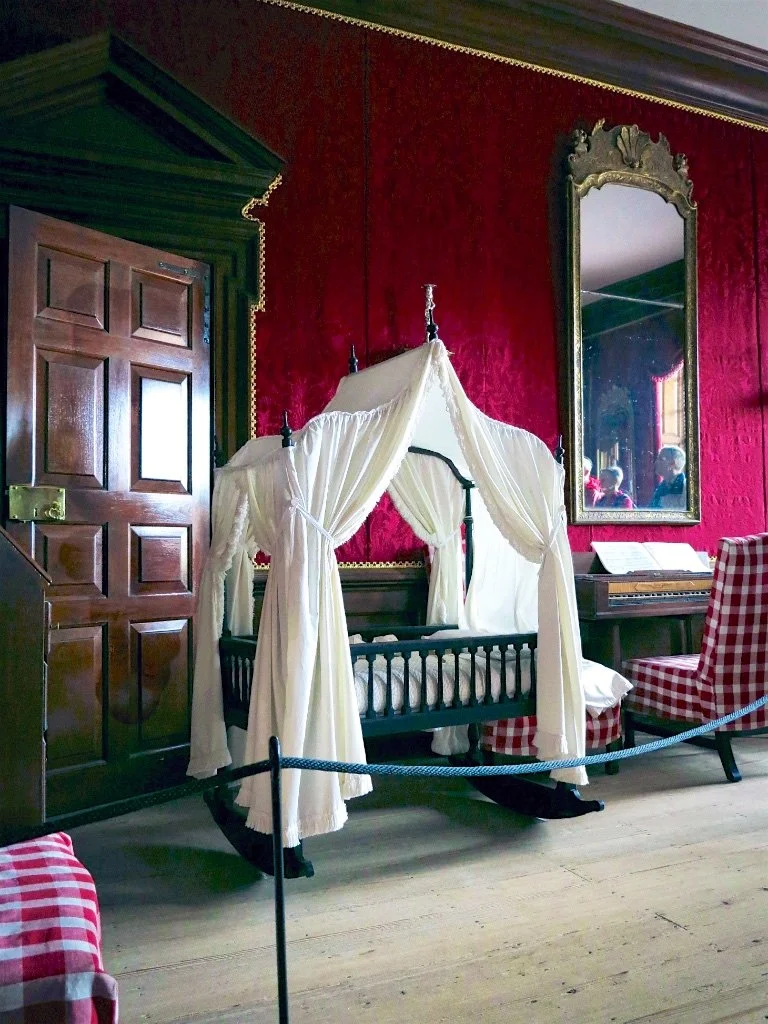
Upper Middle Room: Lord Botetourt's audience room, where he met with people. Lady Dunmore used this as her dressing/sitting room in Lord Dunmore's household.
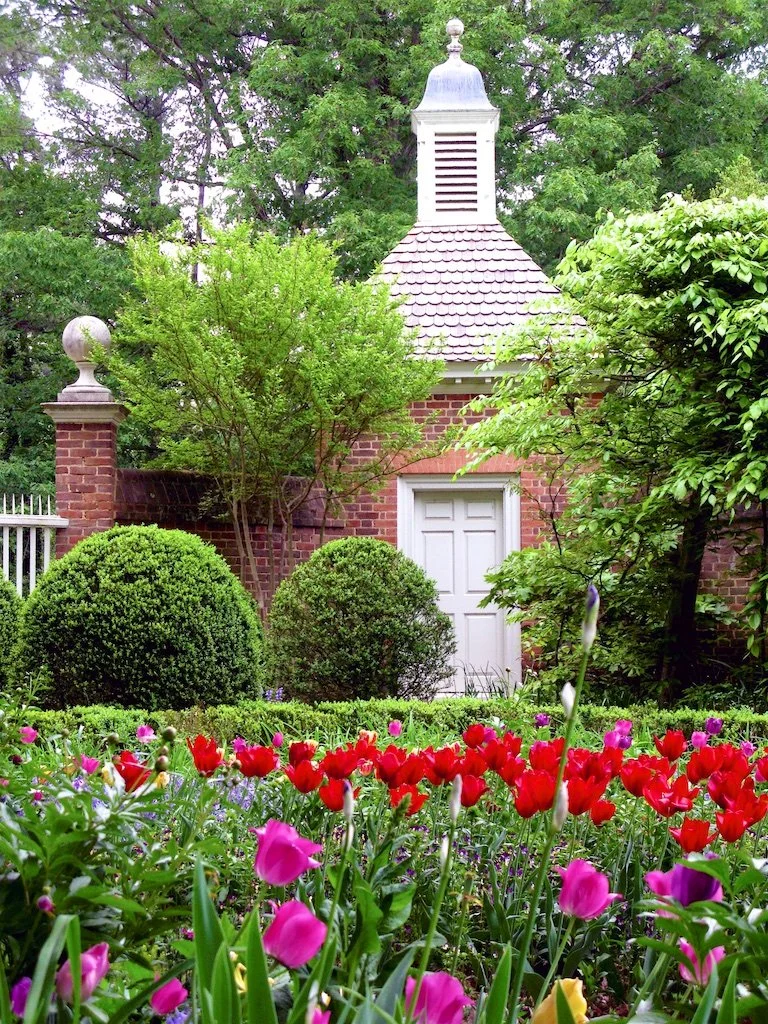
The gardens at the Governor's Palace draw influence from Dutch gardens in Holland blended with English garden fashion. They make extensive use of clipped hedges and rectangular parterres.
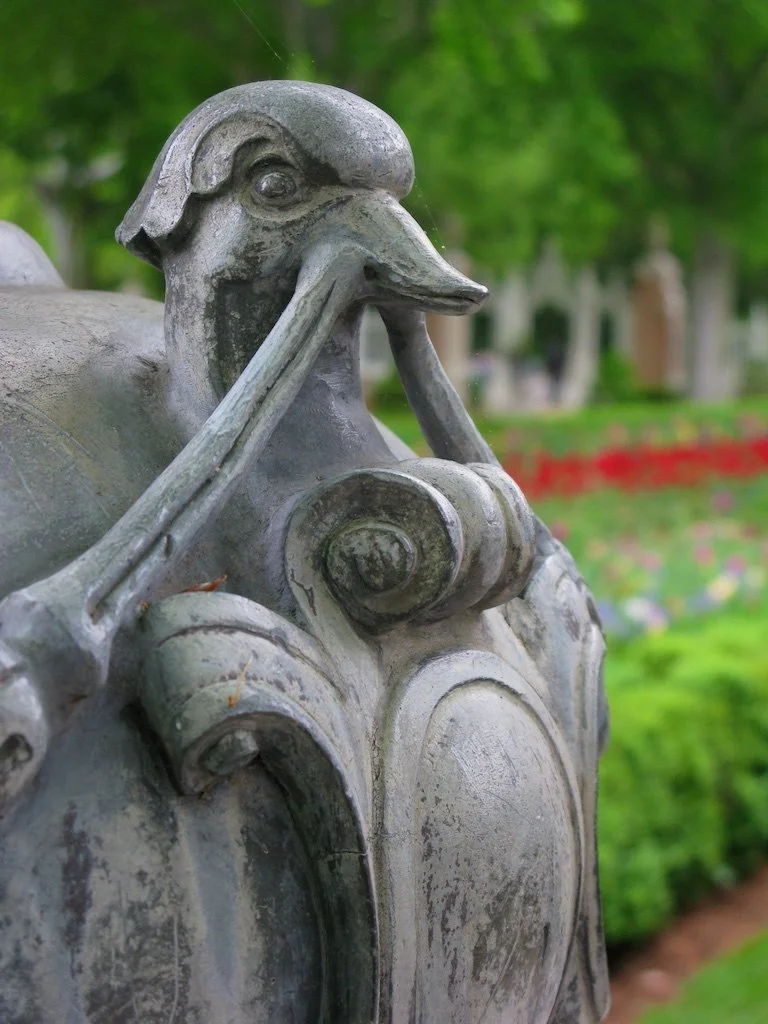
The formal gardens on the Governor's Palace grounds are part of the 90-acres of greens and gardens throughout Colonial Williamsburg.
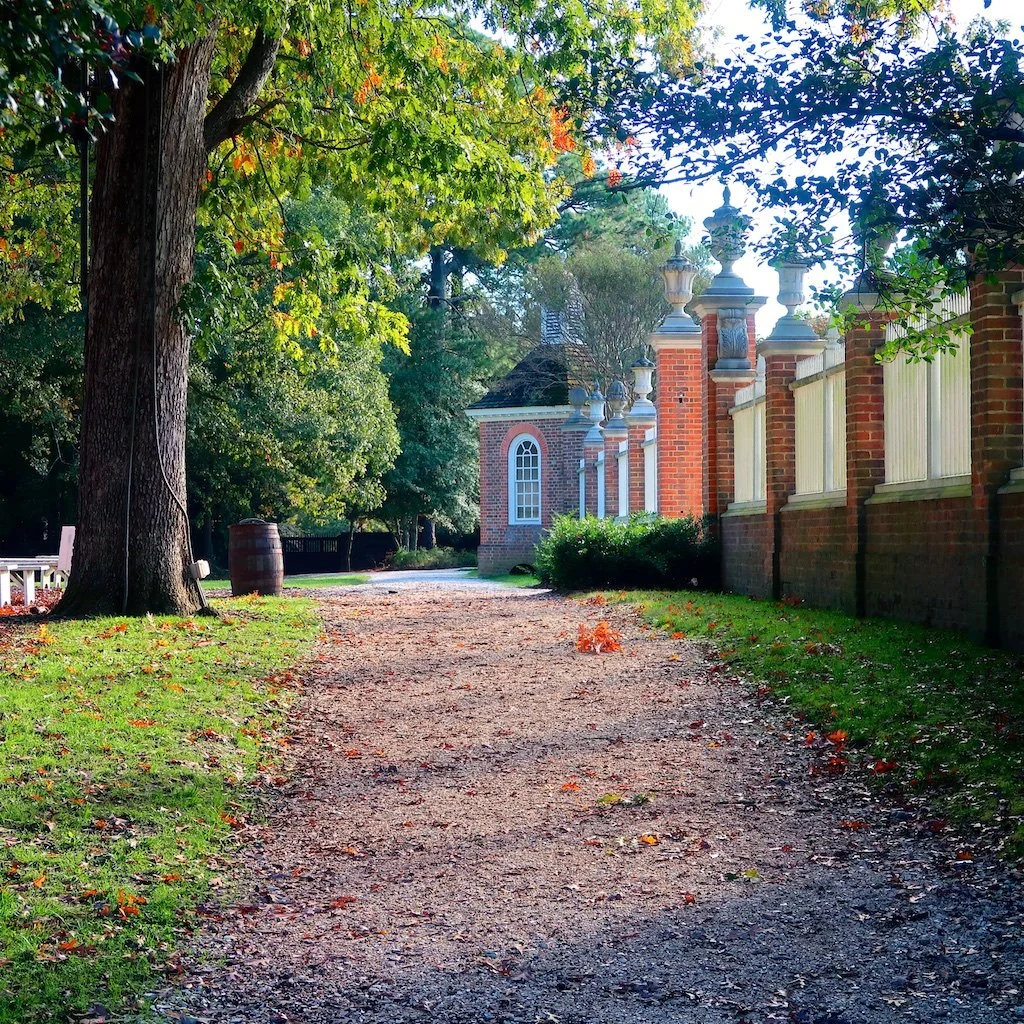
The north end of the formal gardens with open spaces beyond that is part of the long vista from the Governor's Palace.
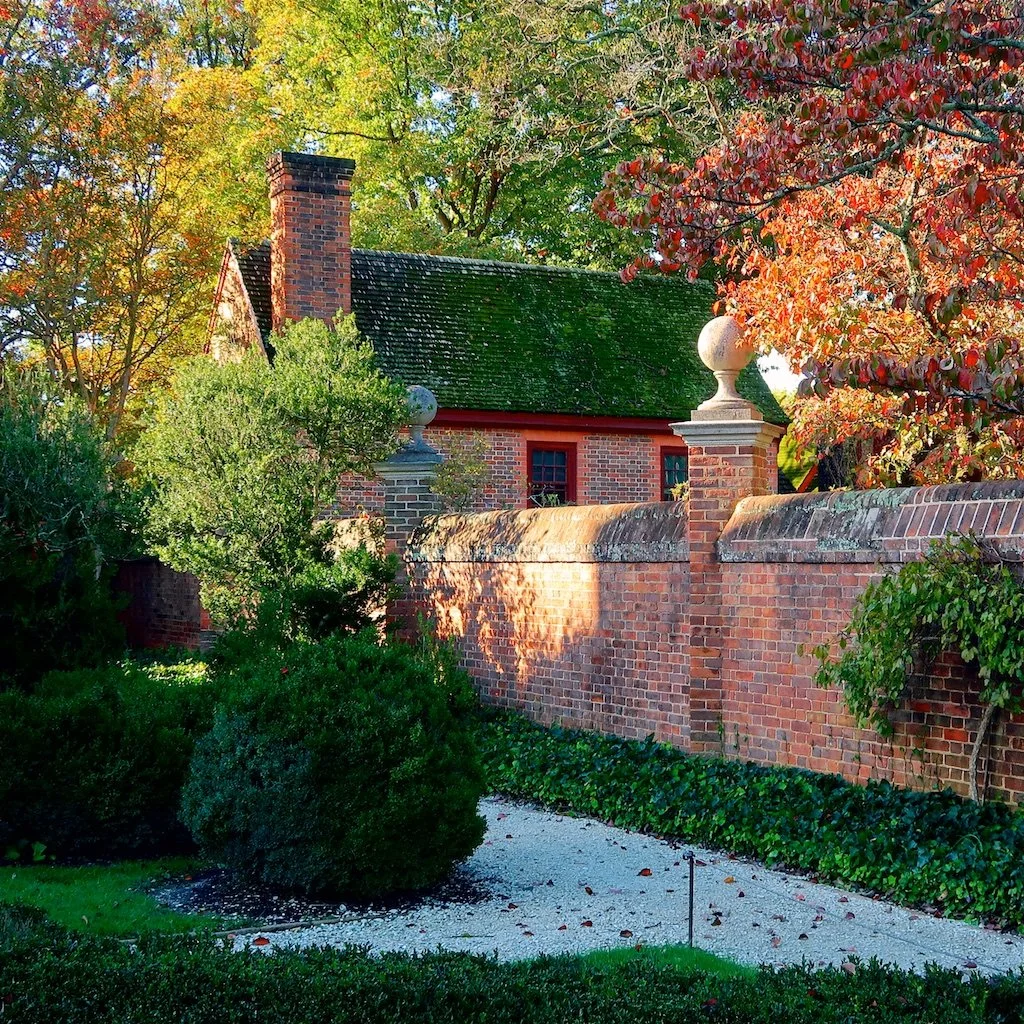
Looking from the formal gardens toward the Governor's Palace kitchen complex of buildings.
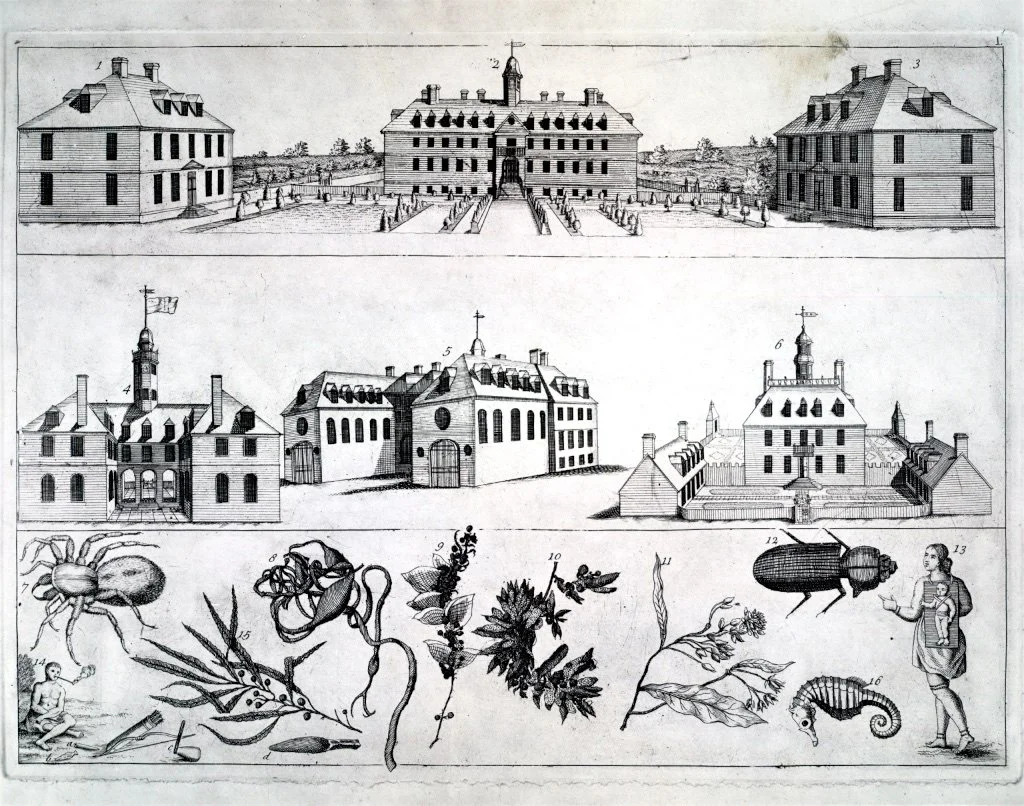
The 1755 Bodleian Plate is a copperplate depicting the Governor's Palace and several colonial buildings of eighteenth-century Williamsburg, Virginia