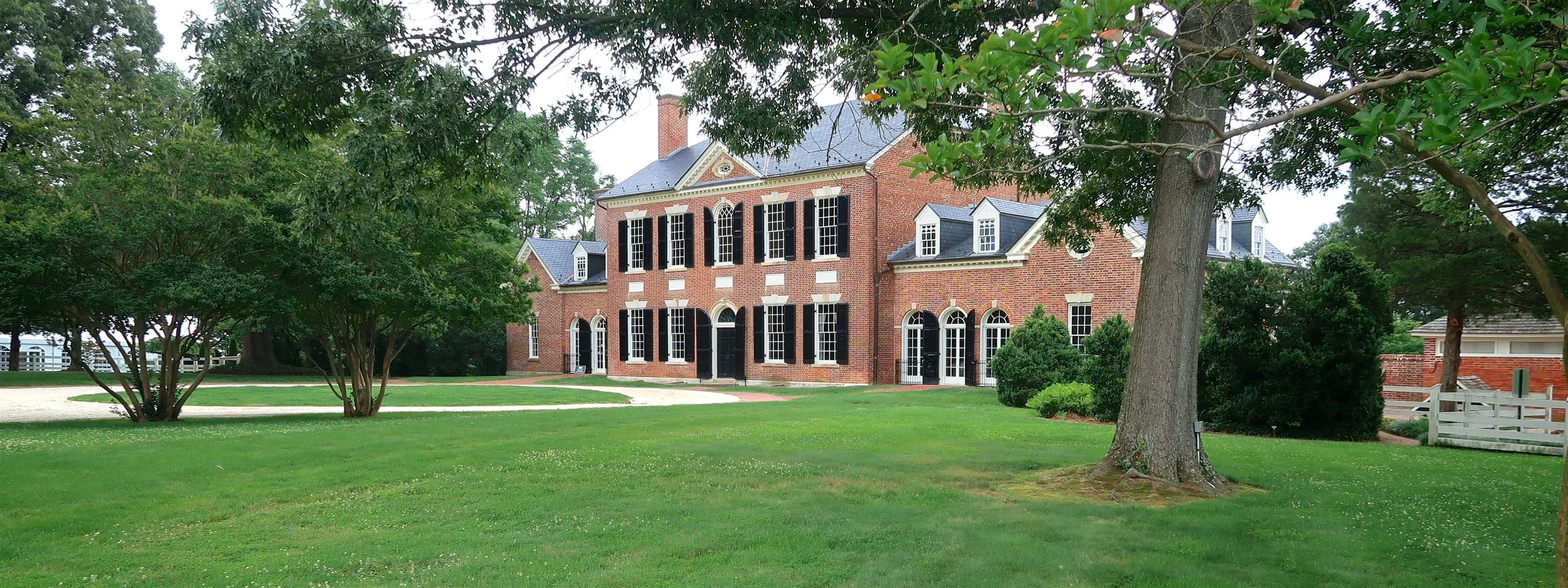
Photography by Bruce A deArmond
Woodlawn Plantation: The land for building Woodlawn was a wedding gift from George Washington to his nephew, Lawrence Lewis, and Nelly Parke Custis - granddaughter of Martha Washington. The property, three miles away, could be seen from Mount Vernon.
Woodlawn Plantation, intended to be viewed from Mount Vernon, was a 1799 gift by George Washington of 2,000 acres to his nephew, Lawrence Lewis, and his new bride Nelly Parke Custis - granddaughter of Martha Washington. Capitol architect William Thornton designed the Federal-style house at the request of Washington. Built between 1800 and 1805, Woodlawn is a high-style five-part house with elaborate brickwork and molding with a jerkinhead roof and is flanked symmetrically by hyphens, wings, and dependencies. Woodlawn is the first house to be operated by the National Trust. More modestly funded, Woodlawn has had to come along slowly but surely, over the decades. Nevertheless, the house is an example of the then ideal of disciplined symmetry admired in Georgian/Federal architecture.
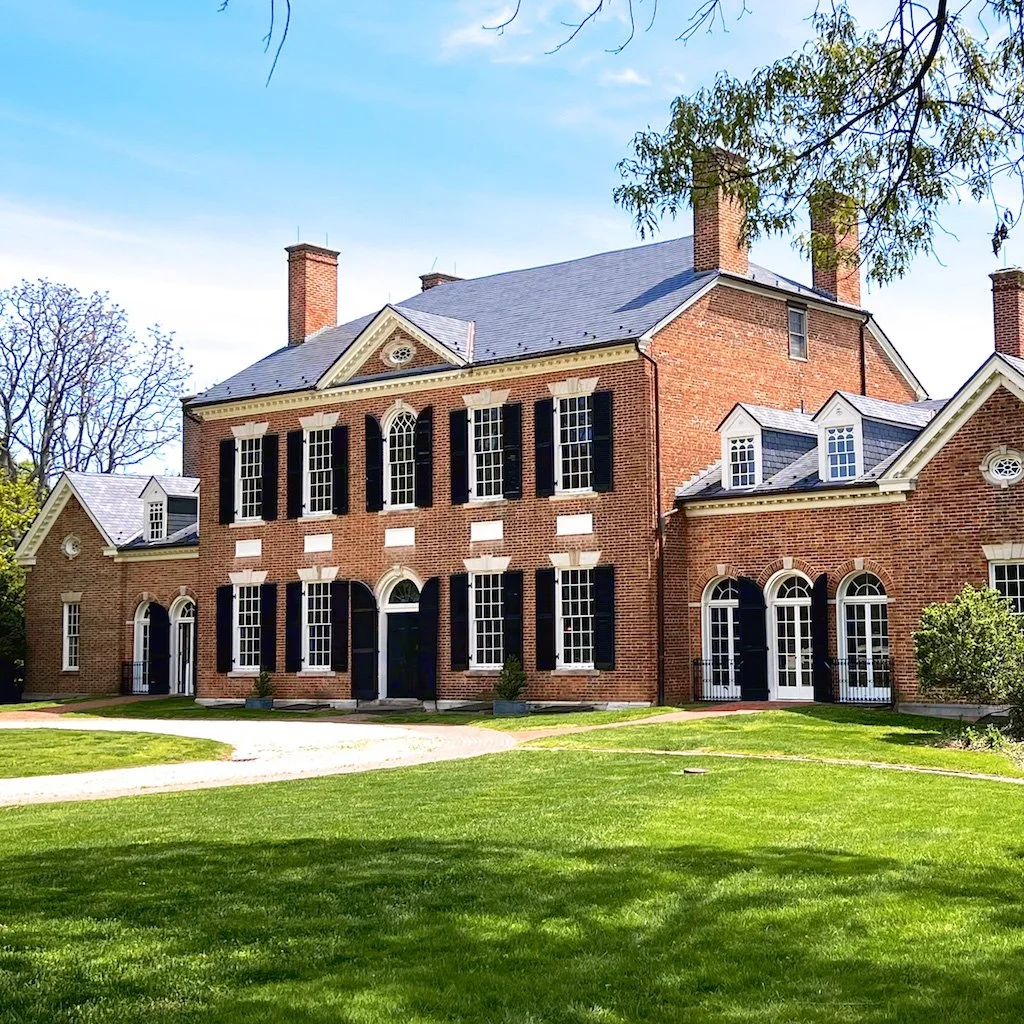
Woodlawn West (Carriage) Facade: Built c. 1800-1805, Woodlawn is a 5-part brick house in Georgian/Federal style. The influence coming from Robert Adam is growing in America. His British dominance in architecture and interiors crossed the Atlantic to the new Republic. As a result, the Federal/Adam style translates regionally up and down the East Coast from 1780-1840.
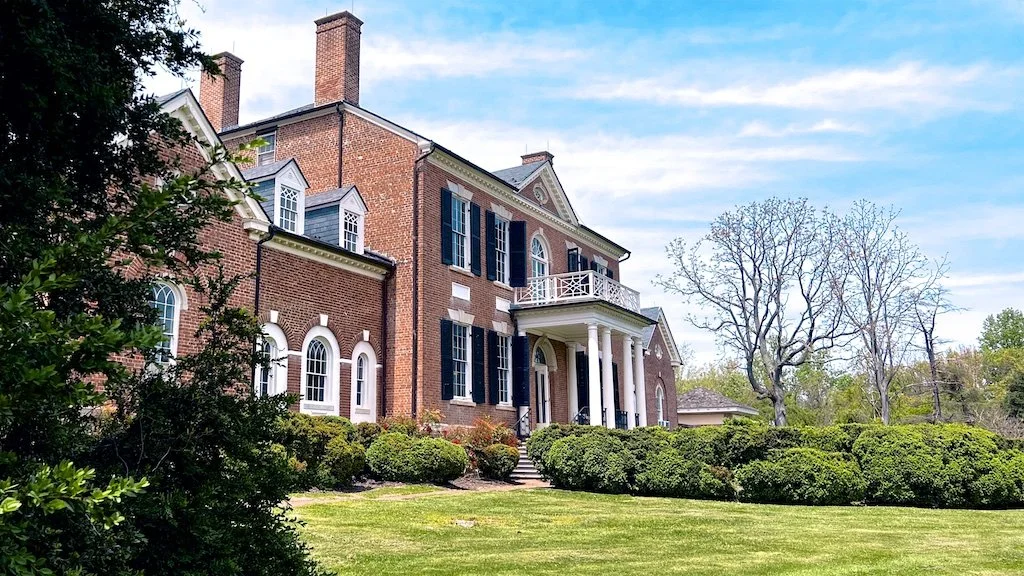
Woodlawn East Facade: The east facade of Woodlawn faces Mount Vernon and is the view Washington would have seen if he had lived long enough. At the time, from Woodlawn, you could see to the Potomac River.
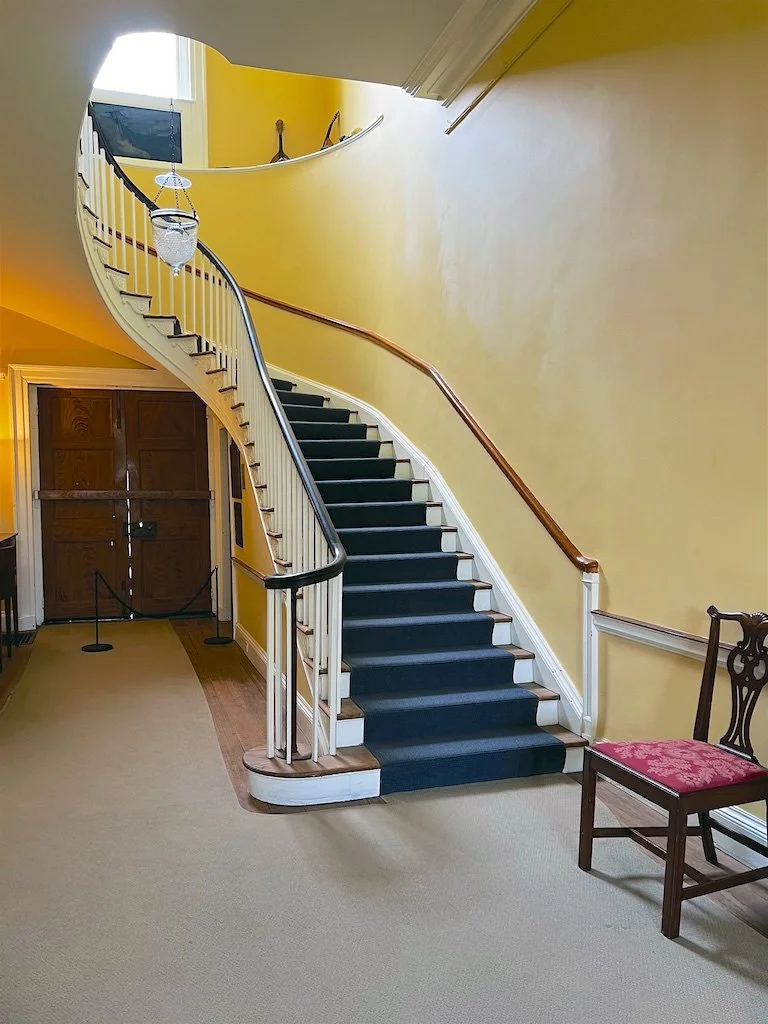
Central Hall: An elliptical curving staircase is the focal point of the Central Hall and a trademark of architect William Thornton.
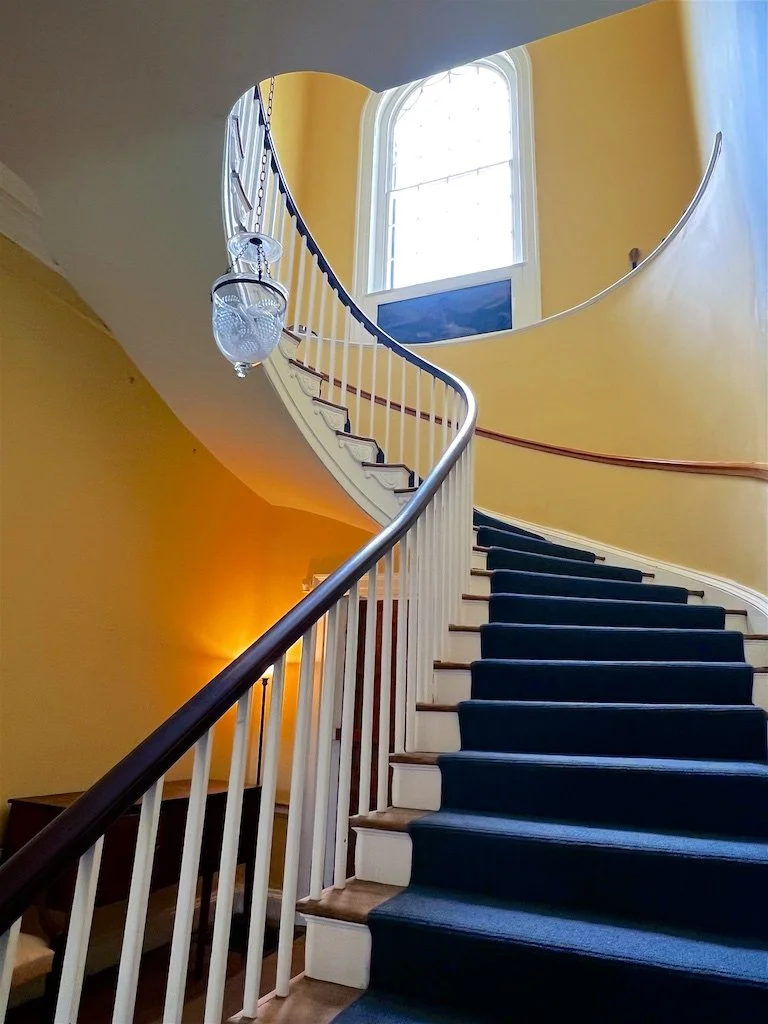
Central Hall: The floor plan is formally arranged in a central hall plan with an elliptical curving staircase and four rooms, two on each side of the hall.
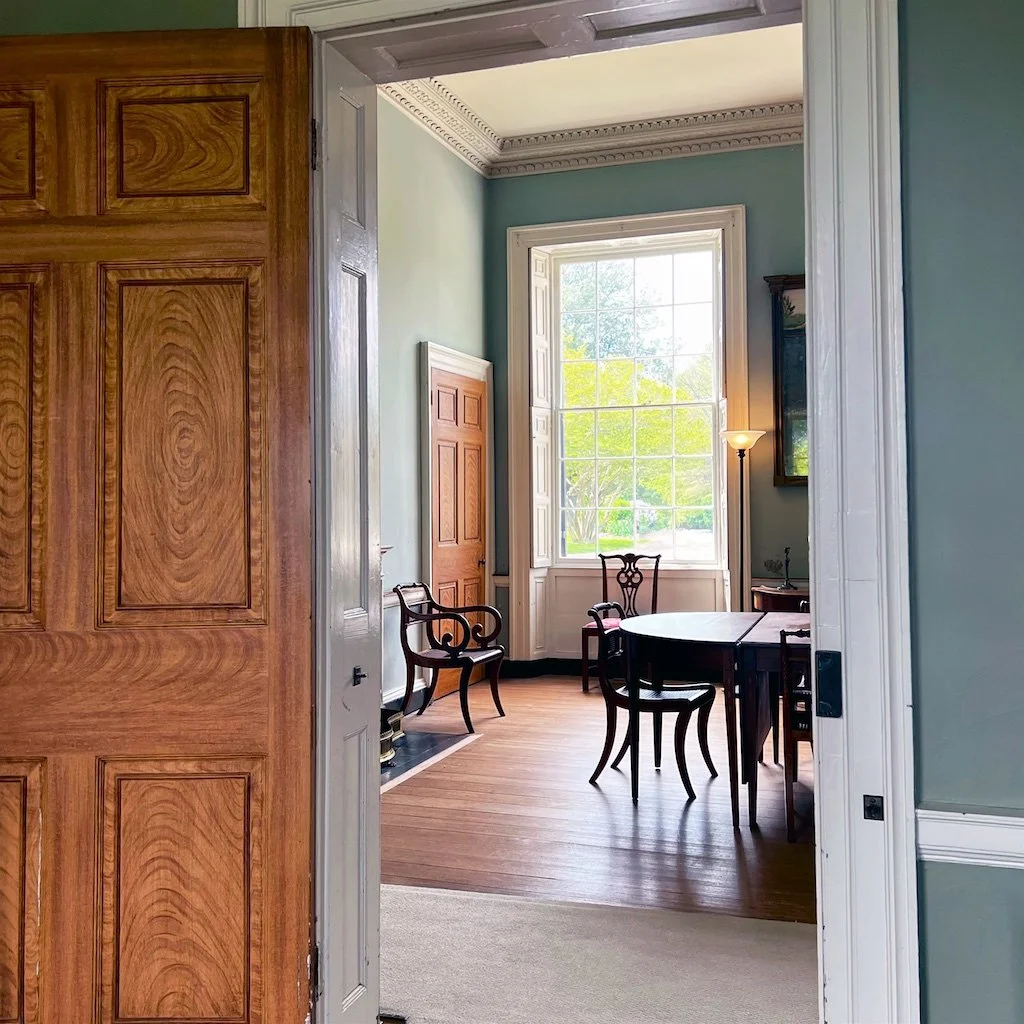
Formal Dining Room: The mansion was an important social center, visited by Lafayette, Robert E. Lee, President Andrew Jackson, and other prominent guests of the era.
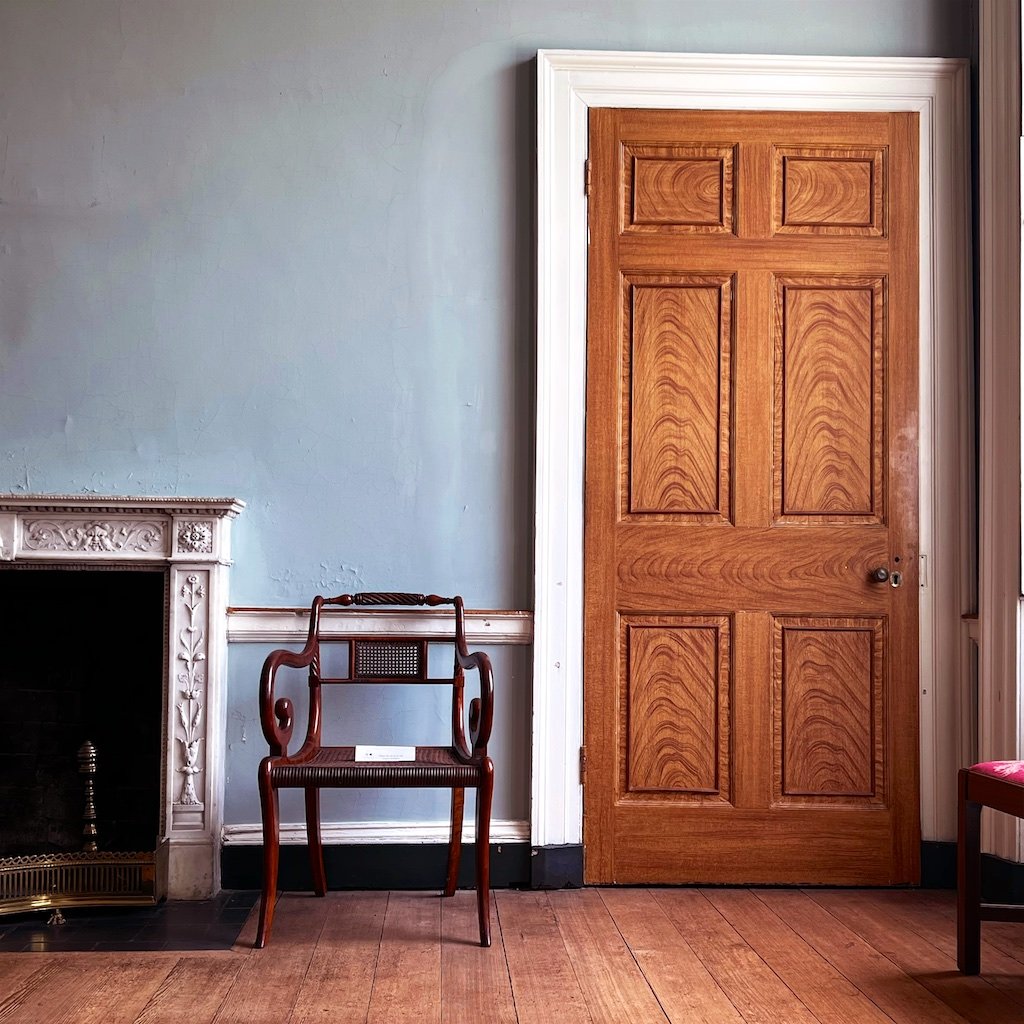
Formal Dining Room: Details of Woodlawn's Federal style details evolving into the 1800s.
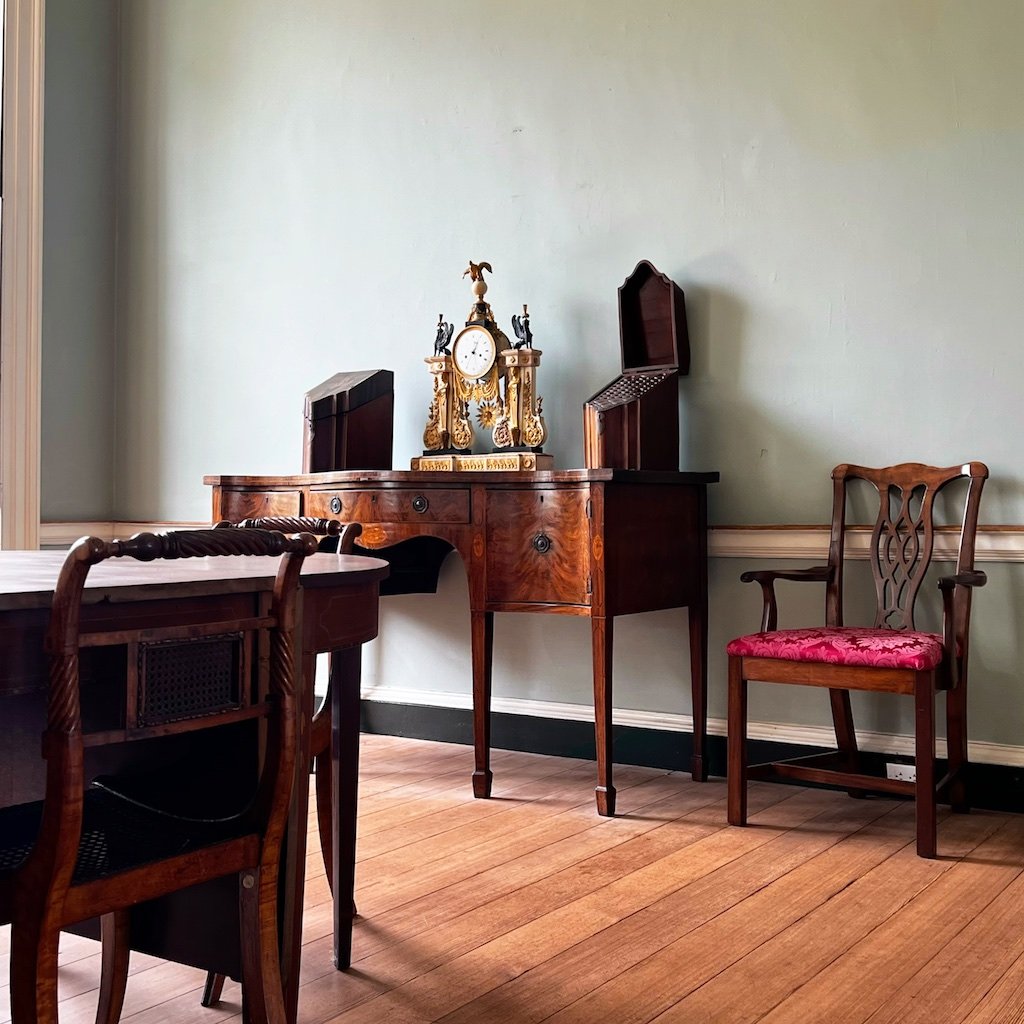
Formal Dining Room: The formal Dining Room at Woodlawn reflects the Federal interior trend of muted wall colors, minimal trim work painted white, and delicately carved or inlaid decoration.
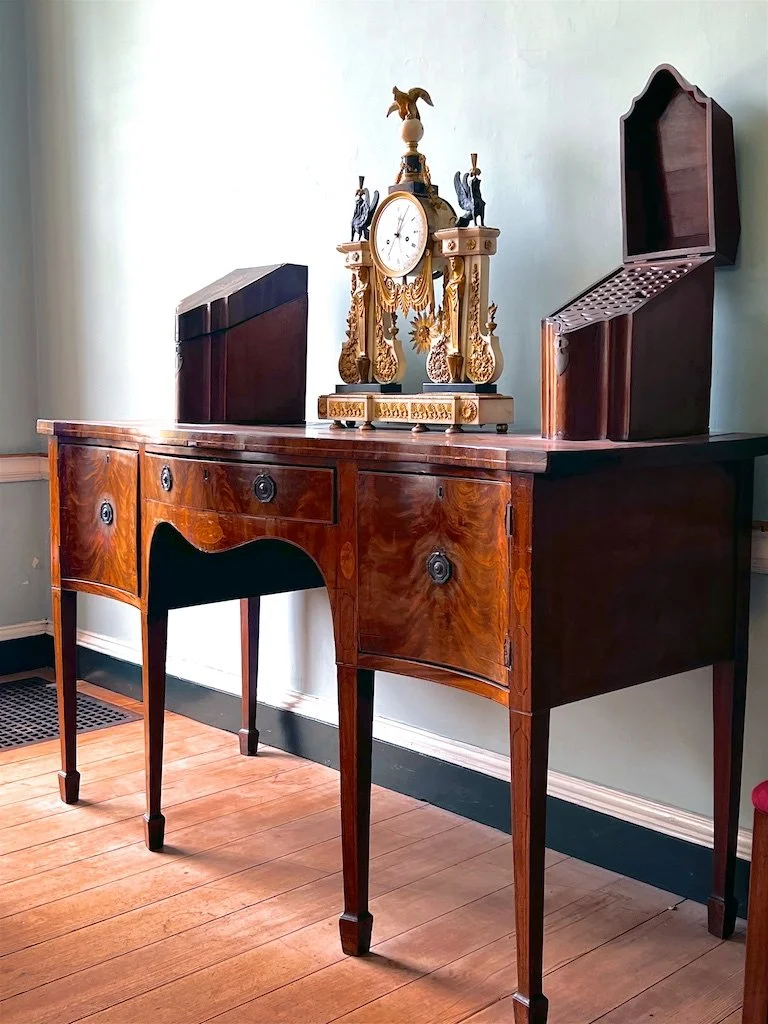
Formal Dining Room: French bronze and ormolu mantel clock with George III mahogany knife boxes on a Hepplewhite sideboard are displayed prominently in Woodlawn's formal dining room.
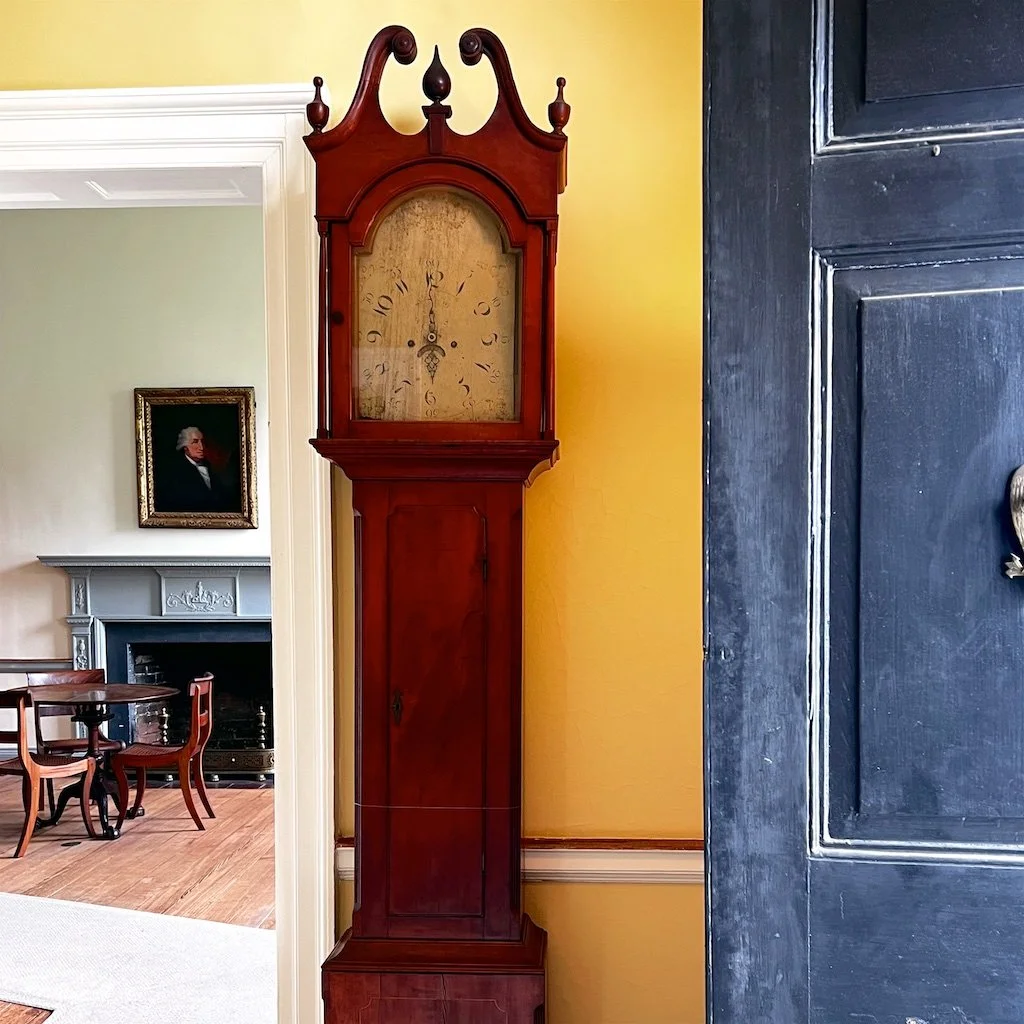
Central Hall Front Entry: At the front entry, a Philadelphia tall case Federal mahogany grandfather's clock looking into the Family Parlor at Woodlawn.
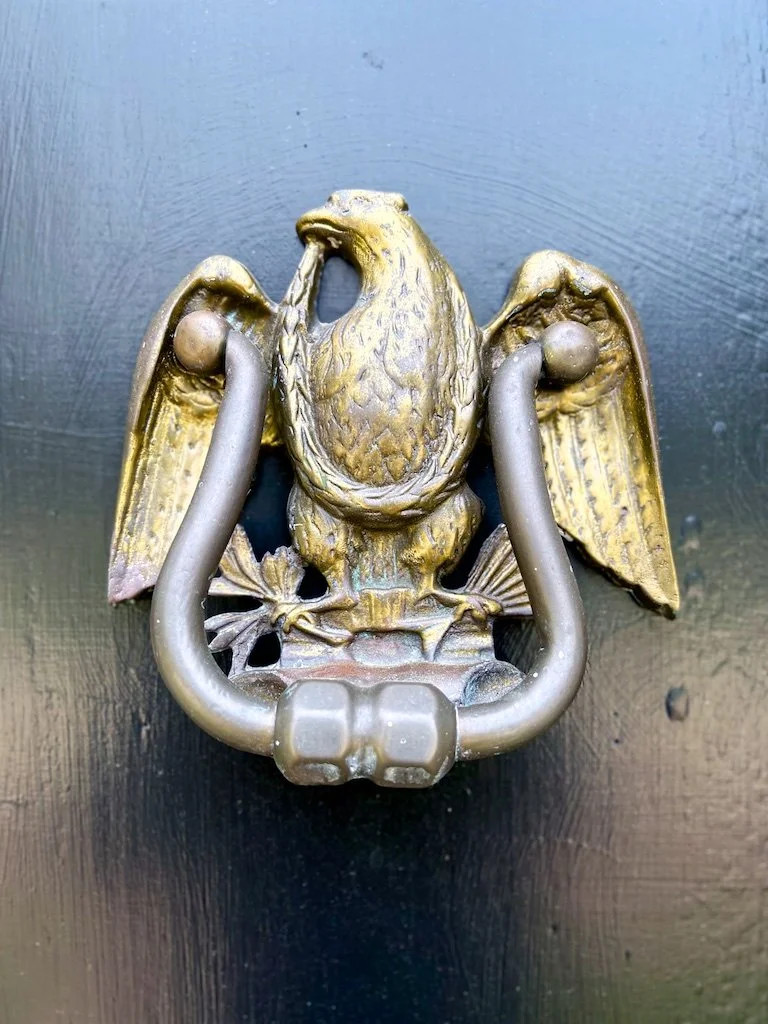
Central Hall Front Door: A brass eagle door knocker at the front entry reflects the strong Washington family connection to Woodlawn.
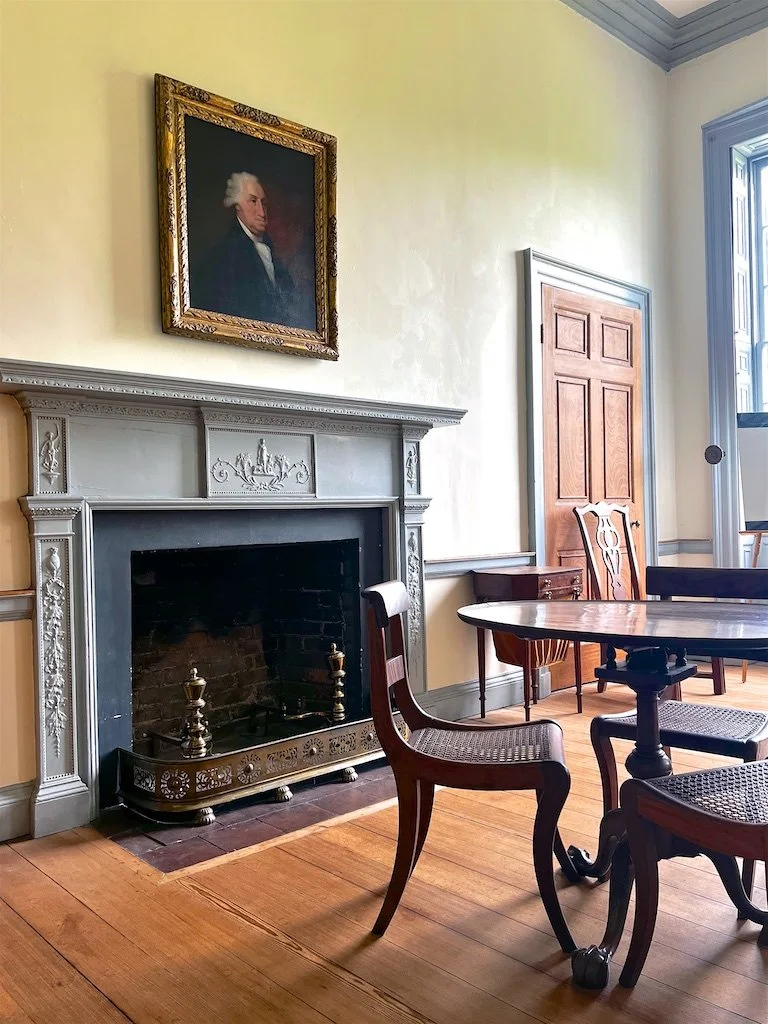
Family Parlor: Less formal, the family took their meals and afternoon tea here at Woodlawn.
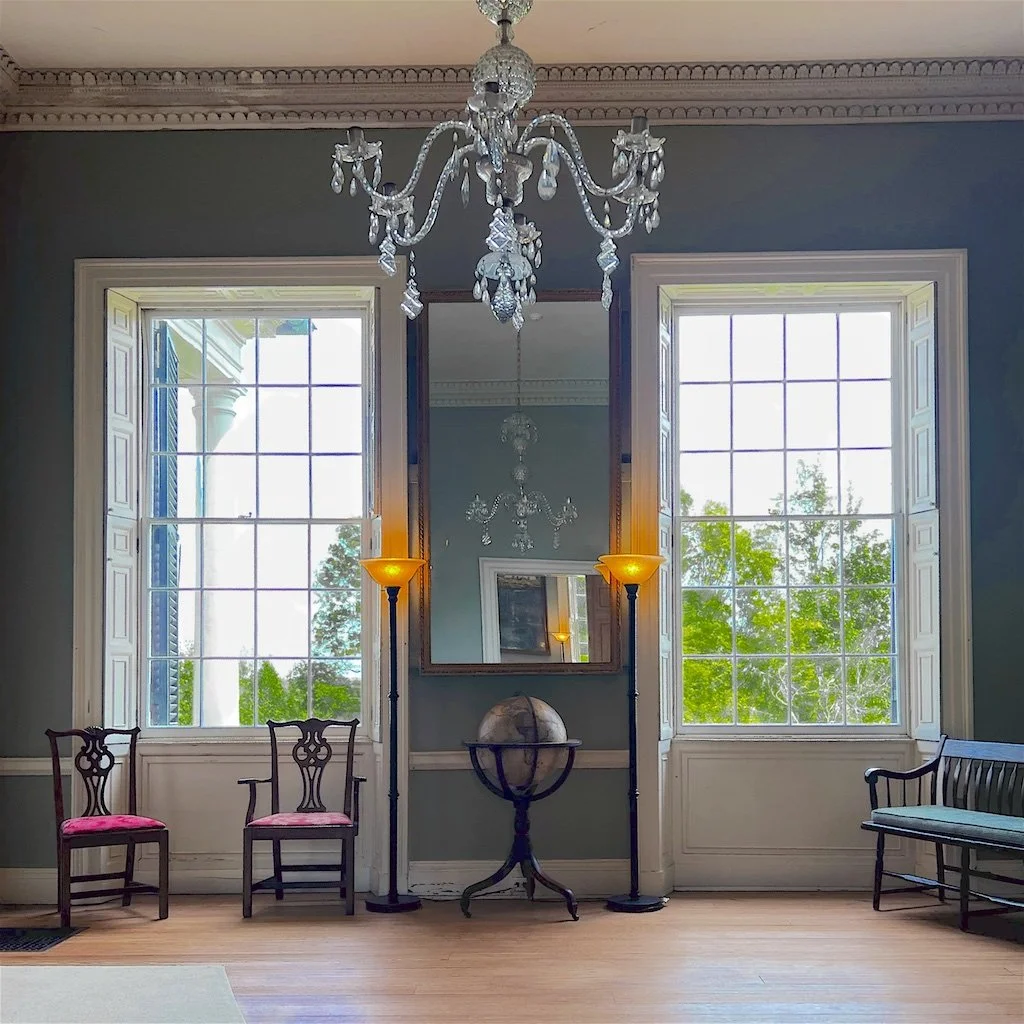
The Parlor: Trust experts have researched the many layers of paint, discovering the original bluish green of the parlor walls and the dove gray of its woodwork.
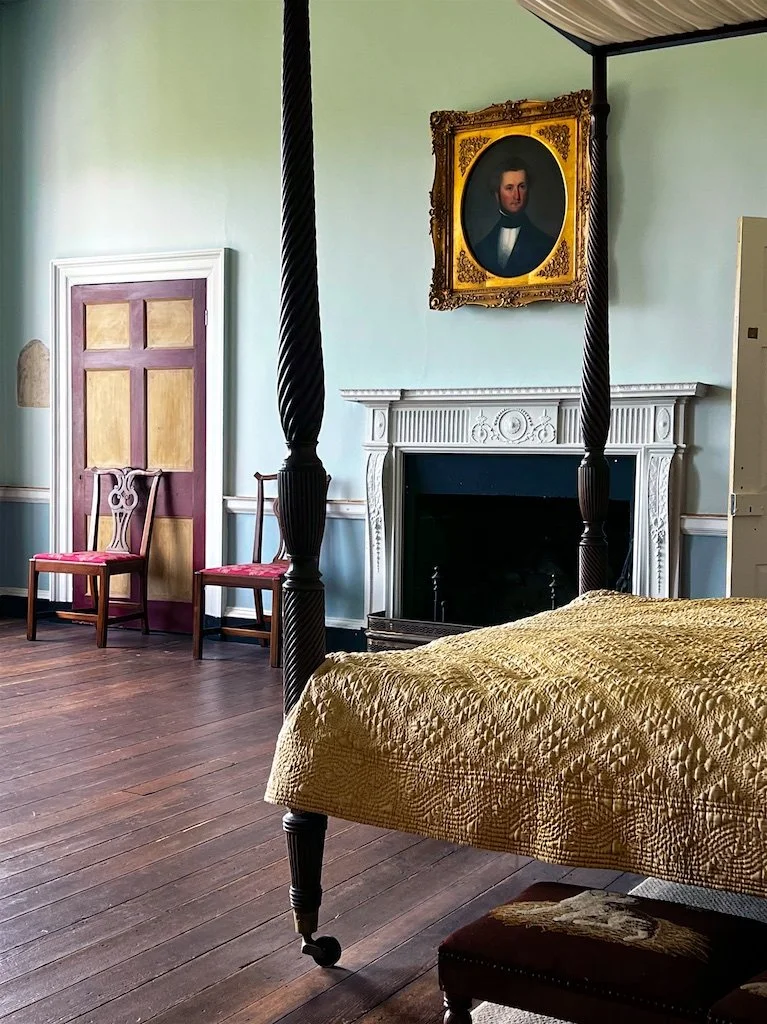
Lafayette Bedroom - Woodlawn Plantation
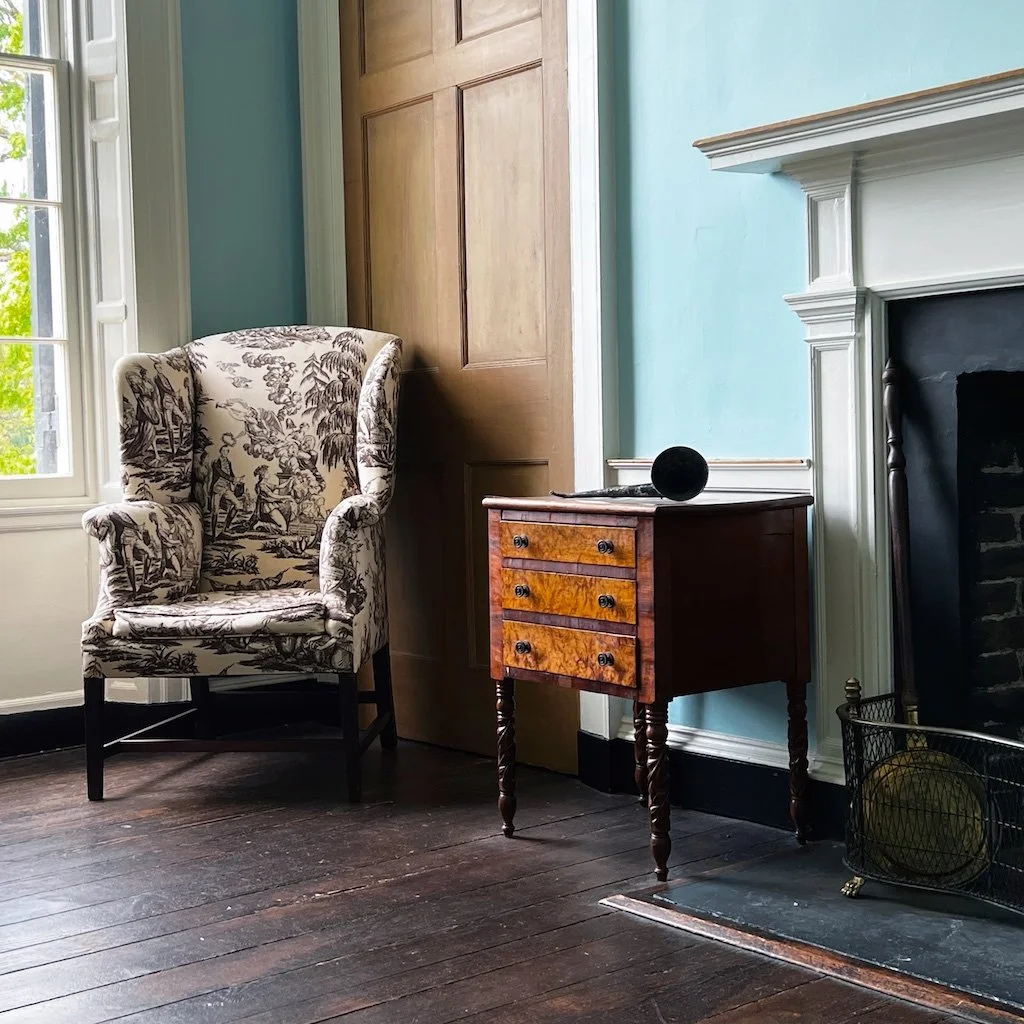
The Lewis Bedroom - Woodlawn Plantation
Second Floor Landing - Woodlawn Plantation
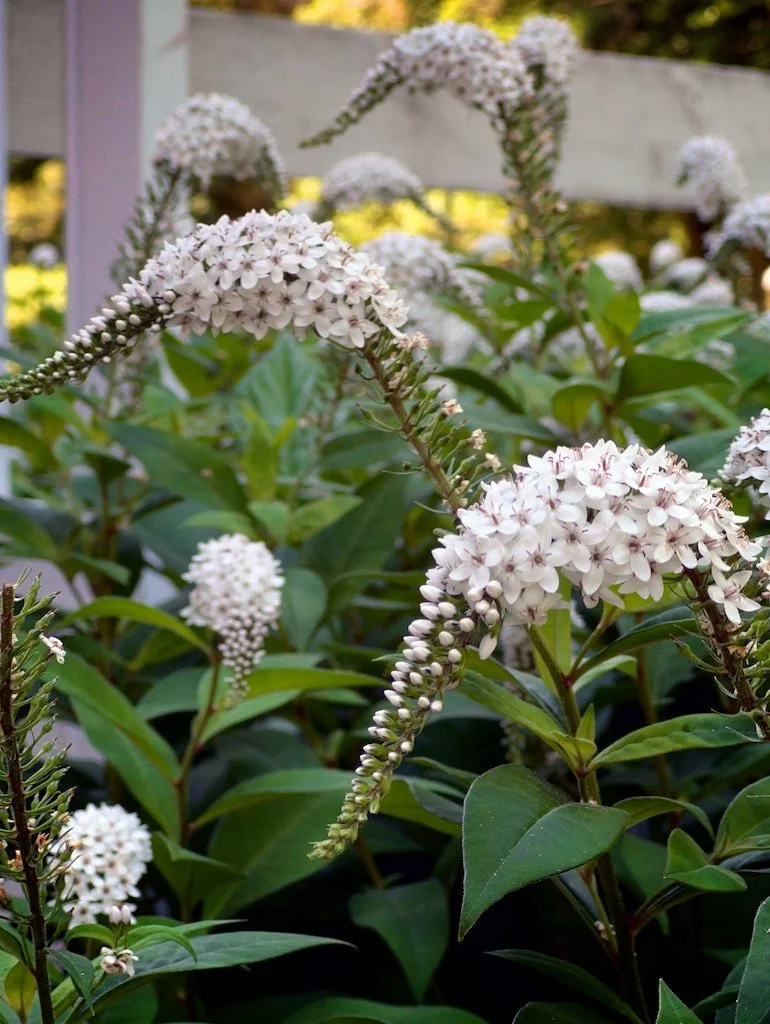
Garden Planting: The gardens of Woodlawn are based on contemporary gardening manuals of their time.
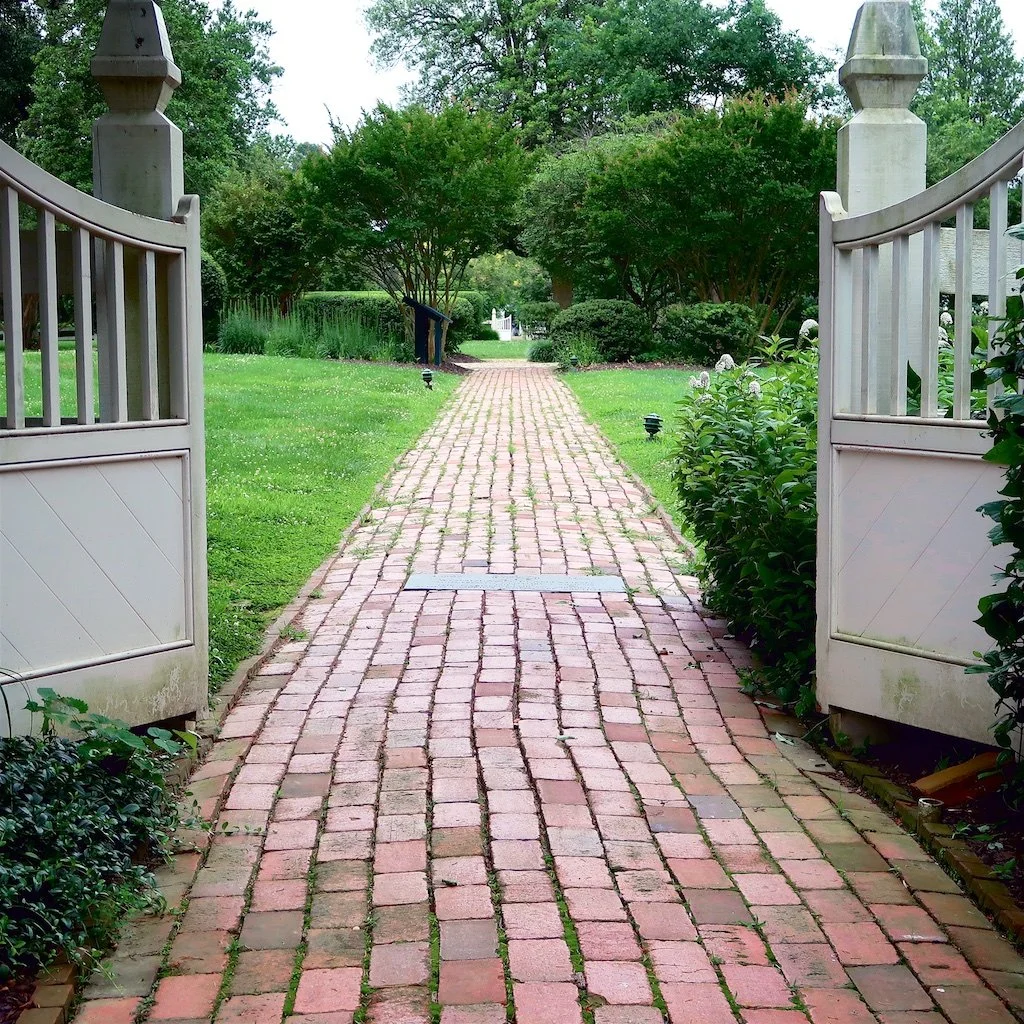
Garden Entrance: Gardens of Woodlawn are a reflection of archaeological survey work. As envisioned by landscape architect Alden Hopkins - two parterres are now planted with roses, summer annuals, and flowering shrubs.
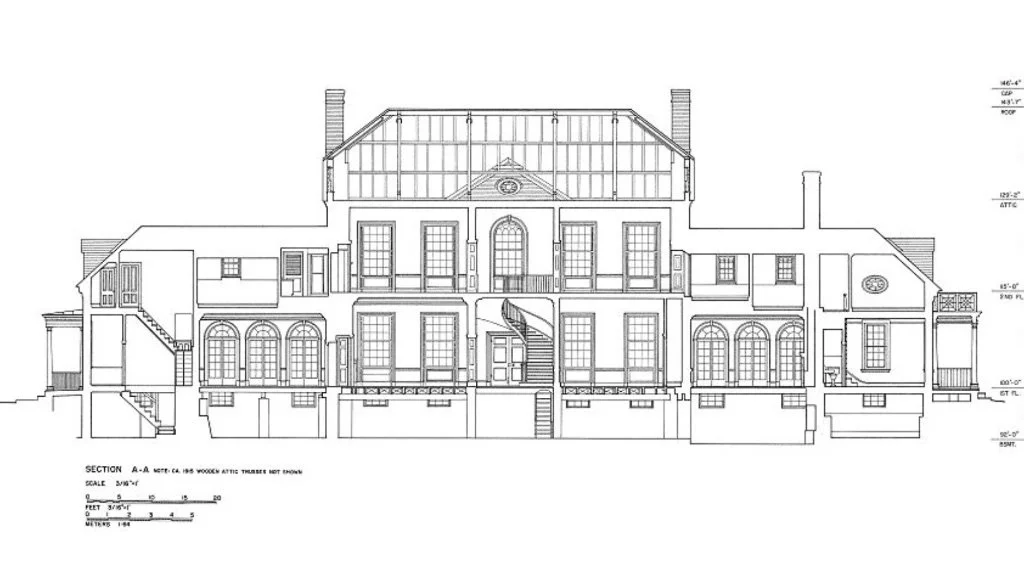
Woodlawn: Documentation compiled after 1933- Measured Drawing(s) Historic American Buildings Survey (Library of Congress)
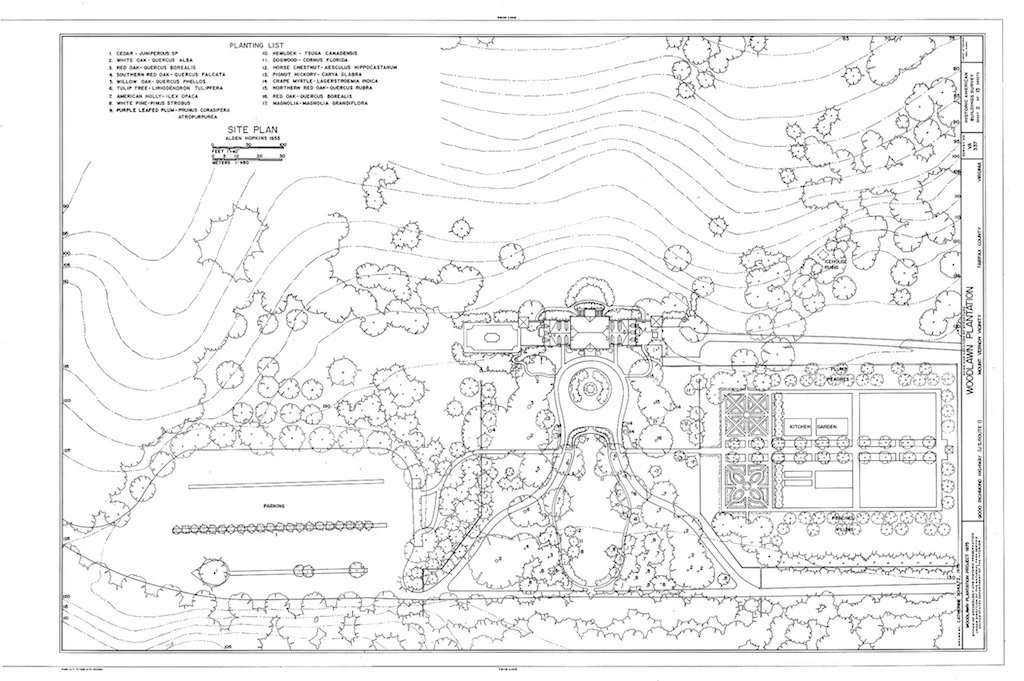
Woodlawn: Layout for Woodlawn Estate and gardens - Woodlawn was built between 1800 and 1805 on land Washington gifted, which had been part of his Dogue Run Farm. Washington selected the house site because of the tremendous view.
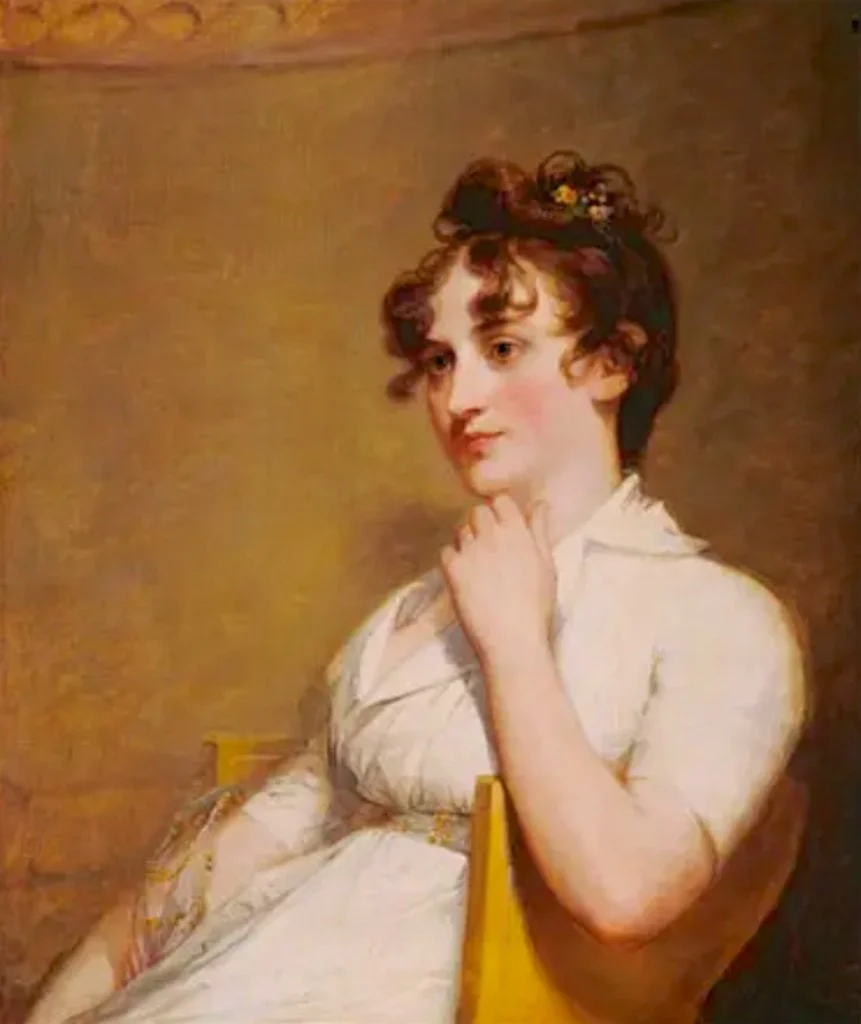
Nelly Parke Custis - granddaughter of Martha Washington and bride to George Washington's nephew, Lawrence Lewis.
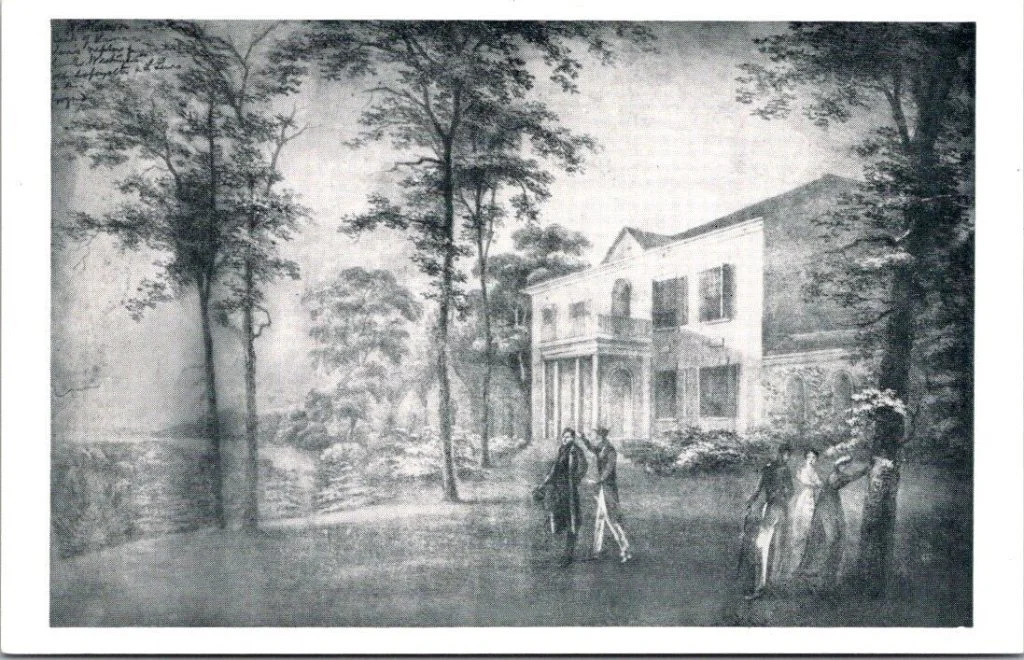
Woodlawn Plantation c. 1820 - East Facade