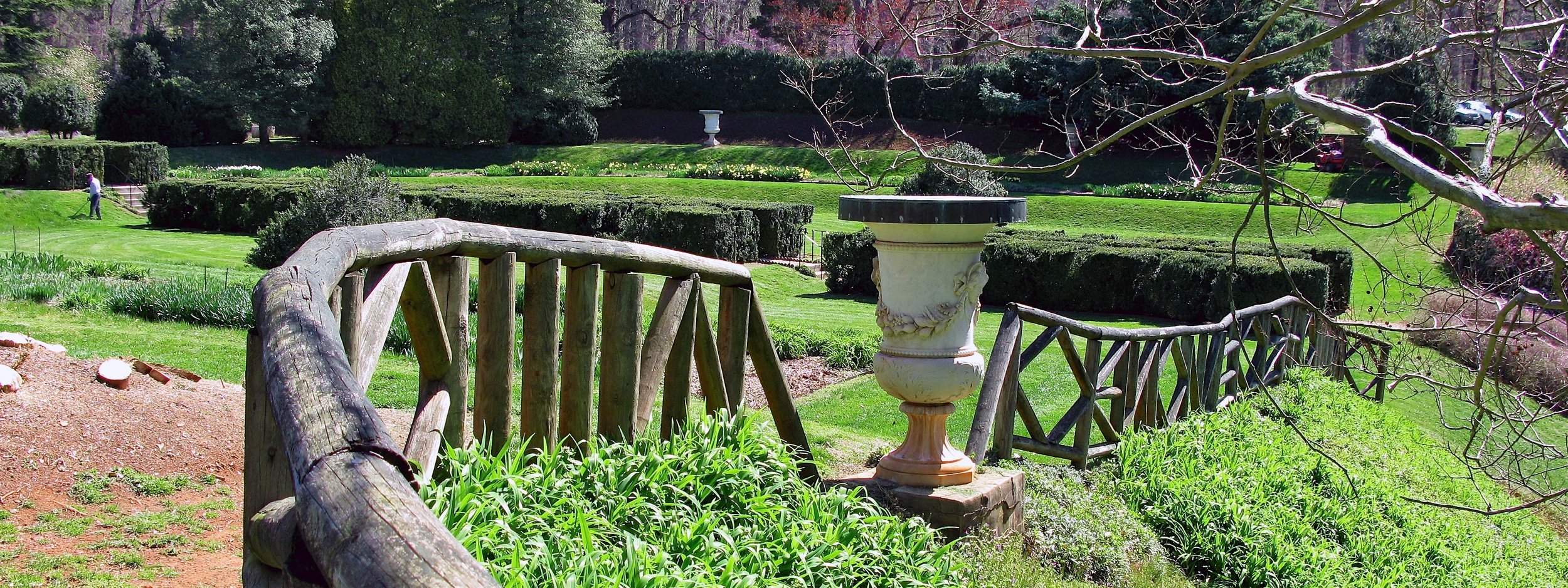
Photography by Bruce A deArmond
Montpelier evolved over a series of remodeling over the ownership of the Madison’s. Initially, it was more like a duplex with two separate households. The final phase of 1809-12 is where the finished form associated with the Montpelier we see today emerged, including new wings. In its final stage, as James and Dolley Madison’s residence, Montpelier was conceived to service the aging President and for Dolley now having to take charge of running the estate. Fast forward to the 20th century, ownership by the duPont family brings significant changes in the design and layout of the home. The Dupont enhancements are removed after an extensive and complex research process. to get Madison’s house back to its 1820 appearance. As a result, Montpelier has one of the most breathtaking backstories of renovation and restoration alongside the prominent and fascinating inhabitants and how each used the estate.

Montpelier: James Madison's Montpelier, located in Orange County, Virginia, was the plantation house of the Madison family, including Founding Father and fourth president of the United States James Madison and his wife, Dolley.
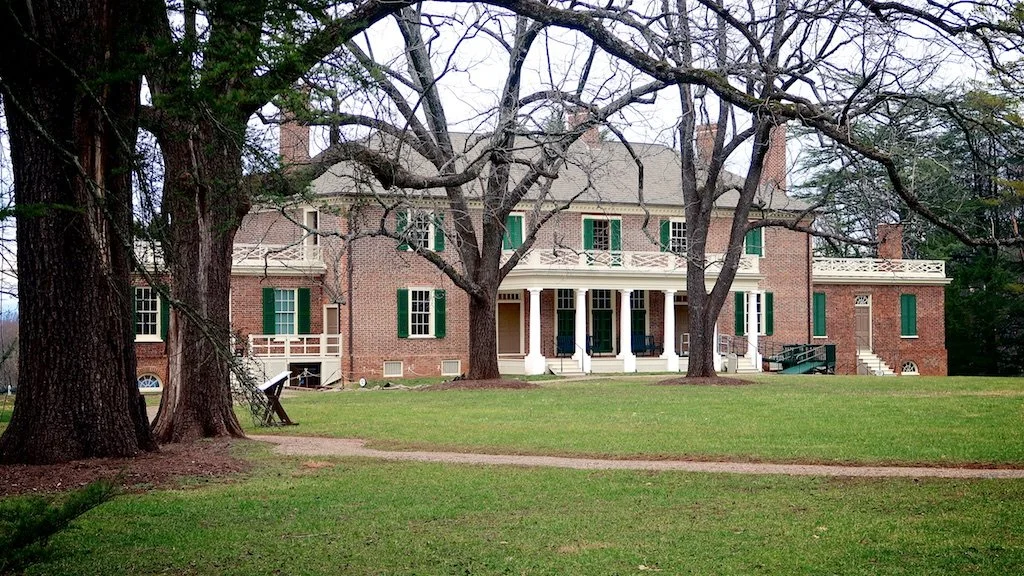
A $25 million restoration project launched in October 2003 was completed on Constitution Day, September 17, 2008. The restoration returned Montpelier to its 1820 appearance: it demolished additions made to the house by the duPont family,
An inventory of the estate was taken at Madison's death. The inventory provided the Curatorial & Collections Department a blueprint of what items were in the rooms and, in turn, how the space was used.
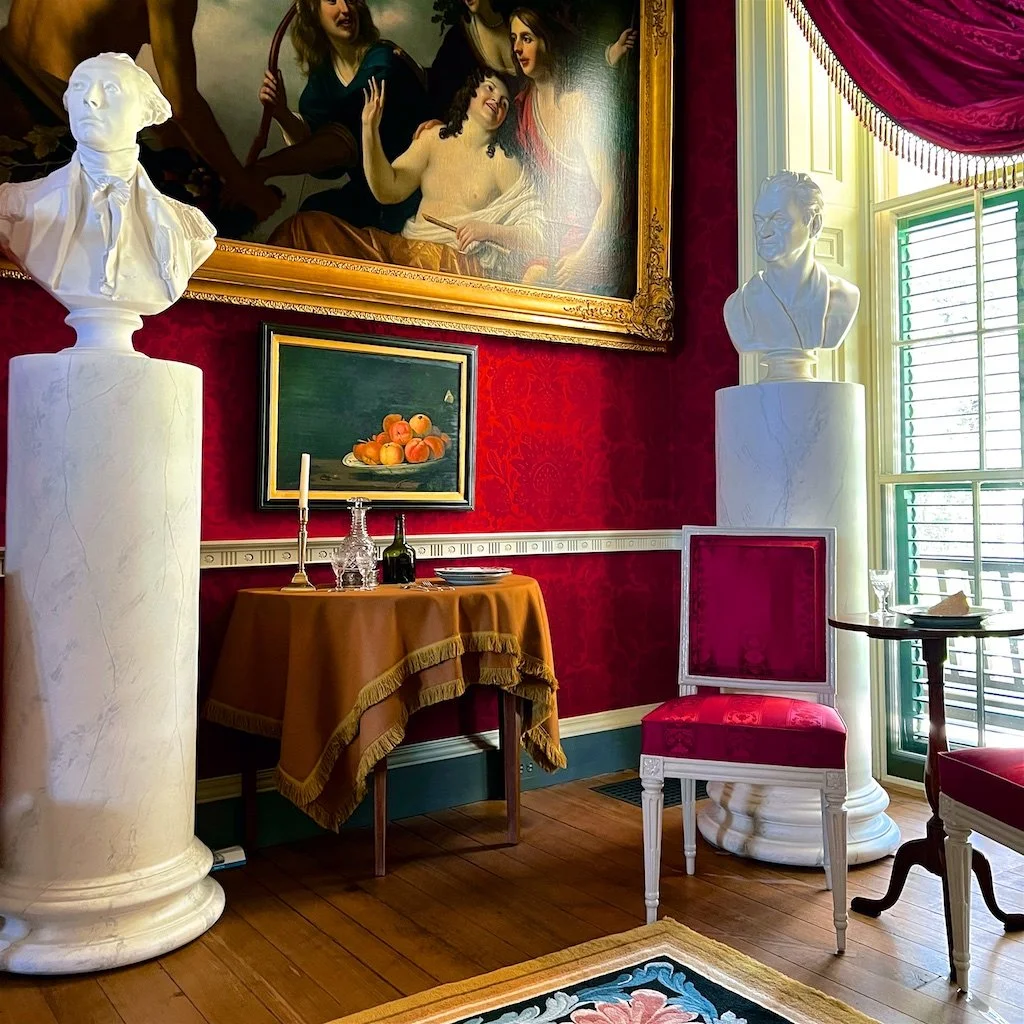
The Drawing Room was the main entertainment space for James and Dolley Madison at Montpelier. The room resulted from 1809 architectural modifications, and two rooms are joined to create one space. Pan, Youths & Nymphs" by Dutch artist Gerrit Van Honthorst is one of the Madison's original artworks.
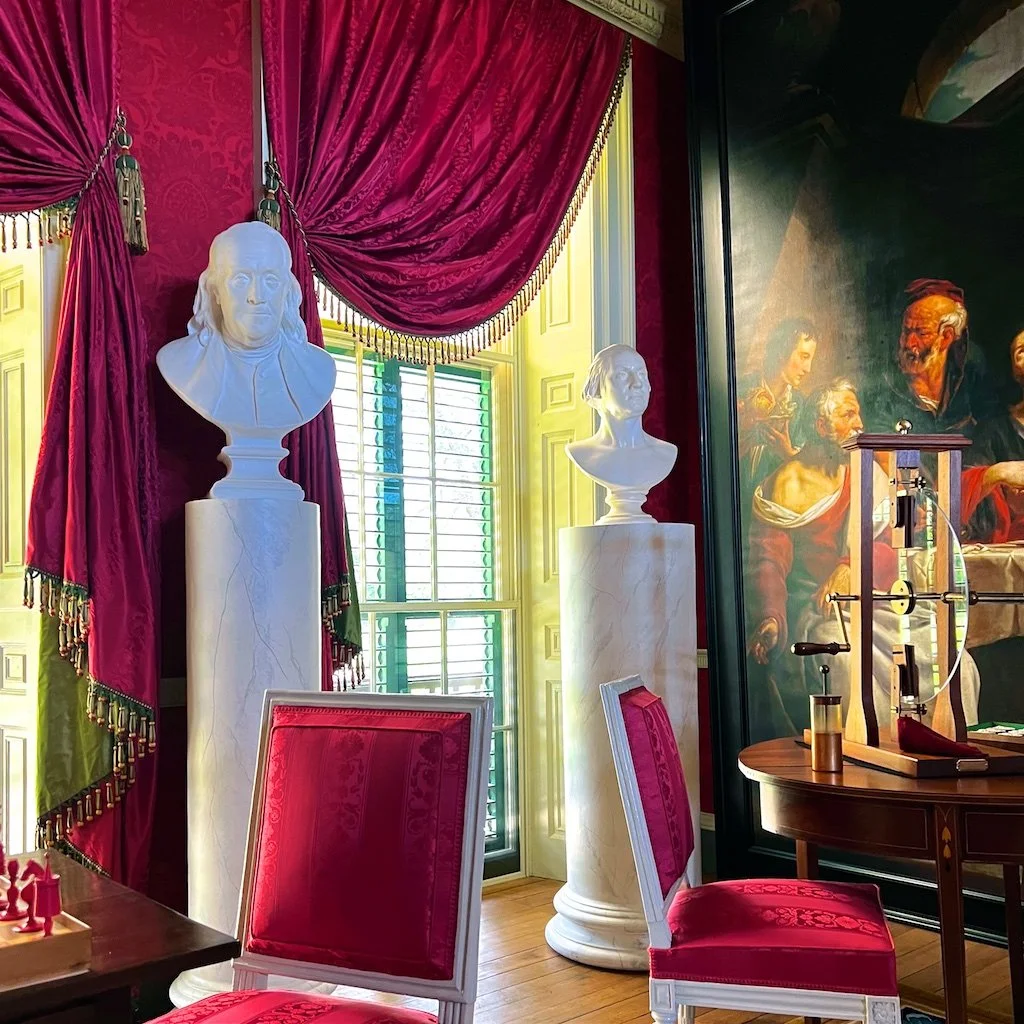
An avid art collector, some of the original art of the Madison's has been returned to Montpelier. The the Madison's collection reflects well known artists of the period.
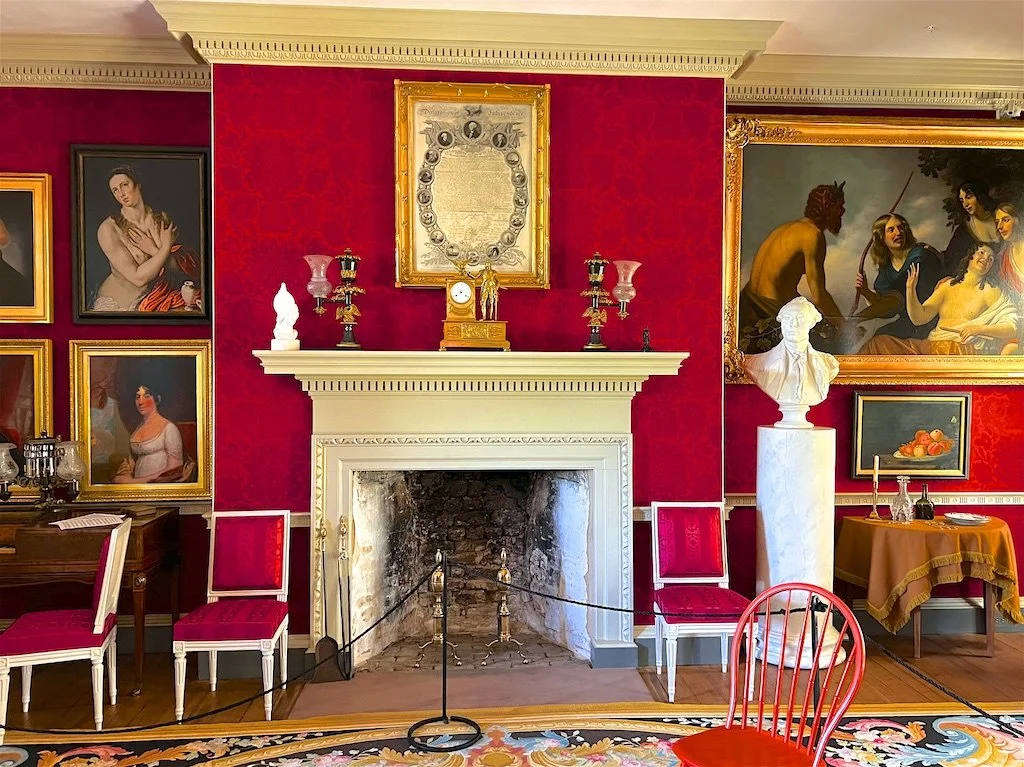
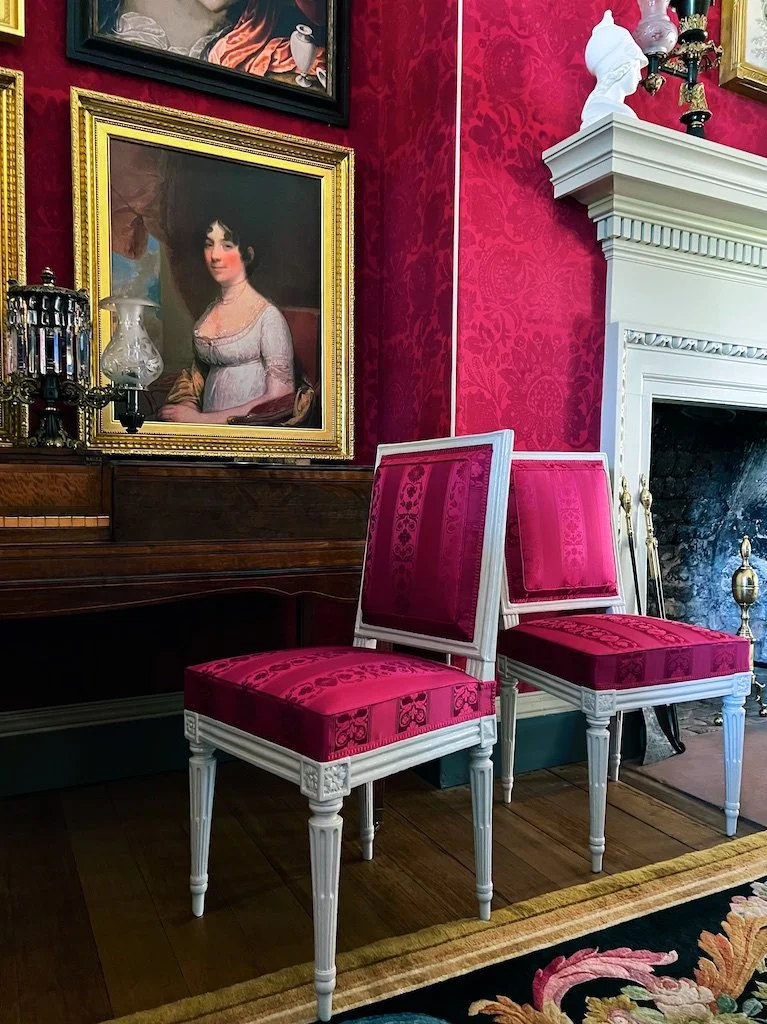
The Madisons painted Louis XVI drawing-room chairs probably are bought when George Washington auctioned off some of his presidential furniture on his retirement to Mount Vernon at the end of his second term. Washington had bought the originals, made by a Parisian cabinetmaker named Lelarge, from a departing French ambassador.
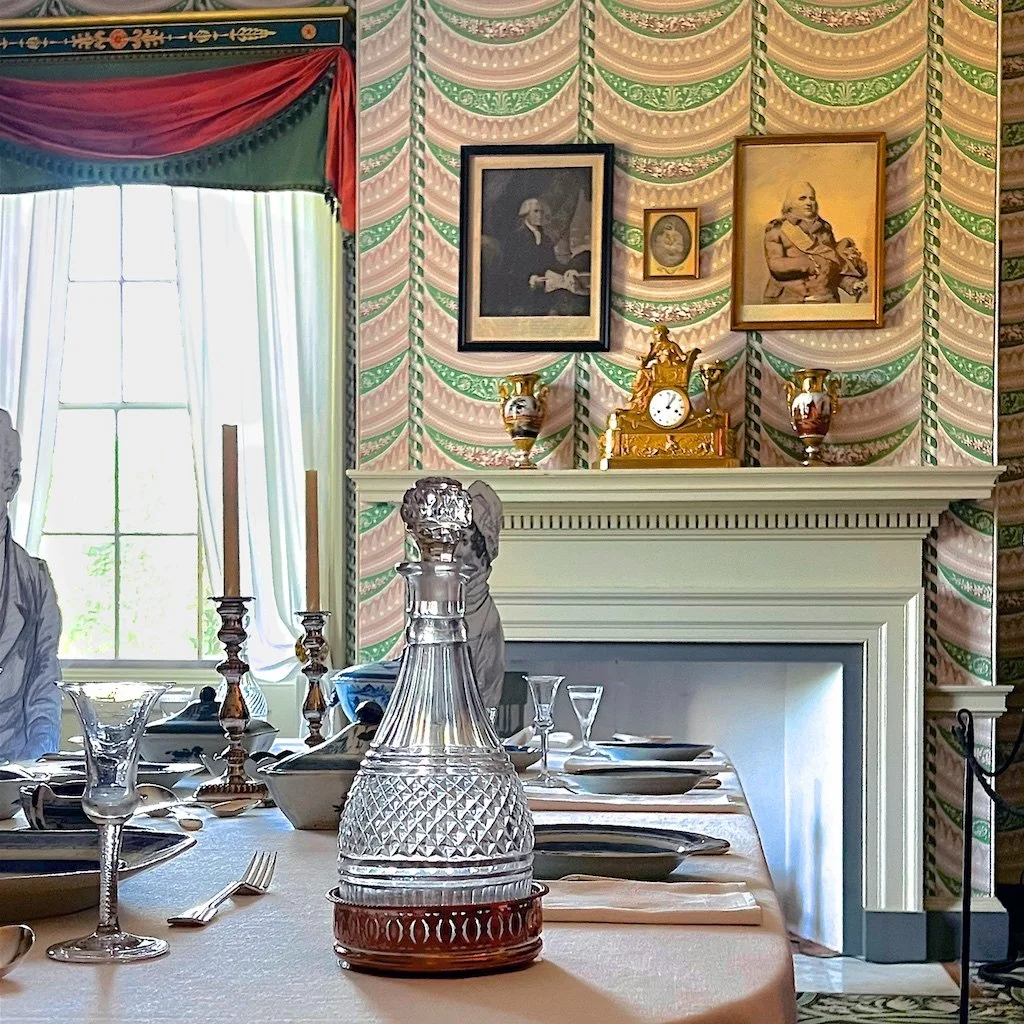
In 2010, a committee of Montpelier curatorial staff and experts in the fields of historic furnishings and wall coverings selected the wallpaper pattern “Virchaux Drapery,” for the Madison Dining Room.
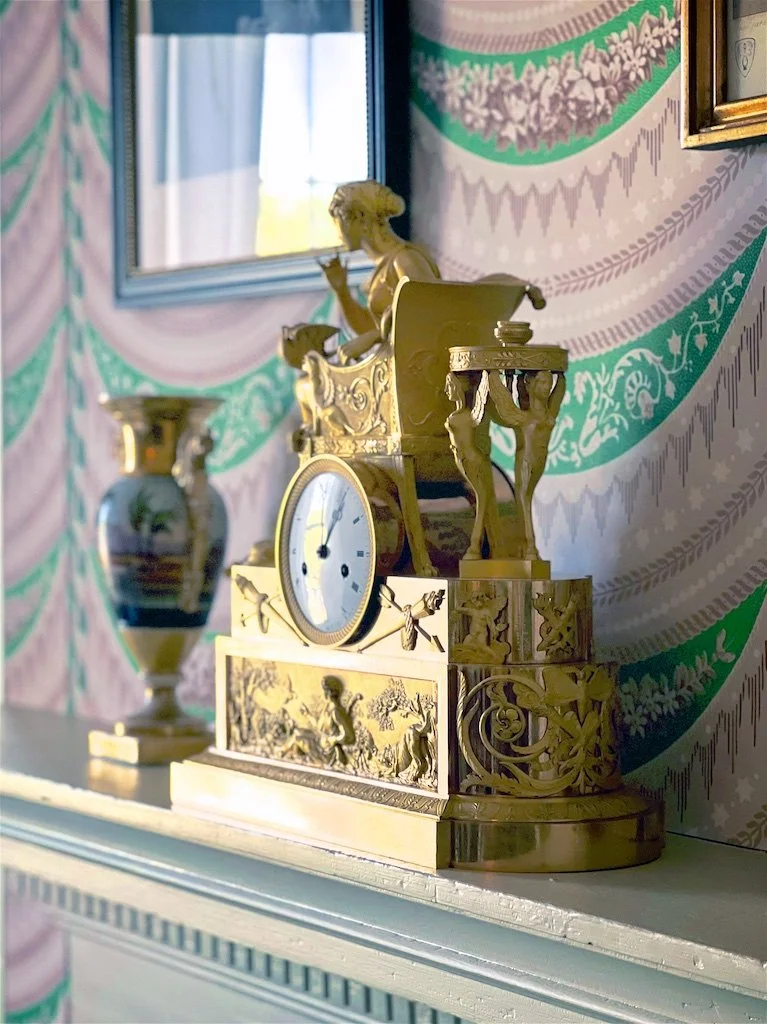
The “Virchaux Drapery” pattern was chosen for its French style and for being designed and produced in Philadelphia in 1815, the same time James and Dolley Madison were considering and purchasing paper.
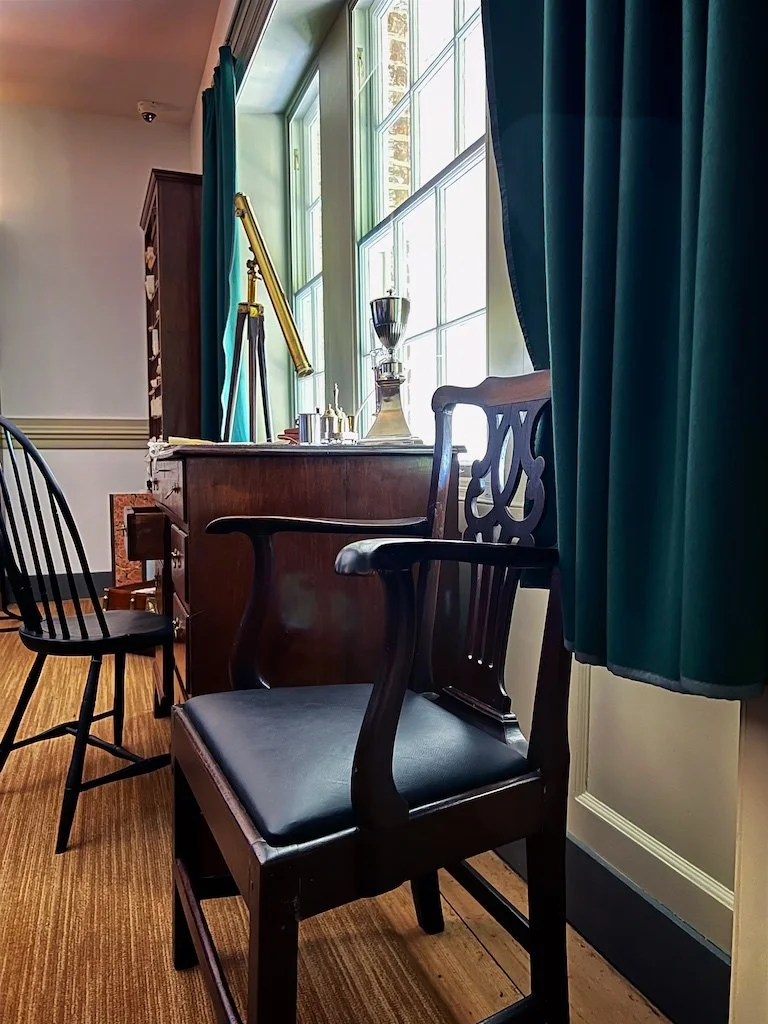
James Madison's desk in the Library of Montpelier. Madison owned over 4,000 volumes in his library.

The estate was purchased by the duPont family in 1901 and Annie du Pont restored the terraces and added brick walls, iron gates and statuary.
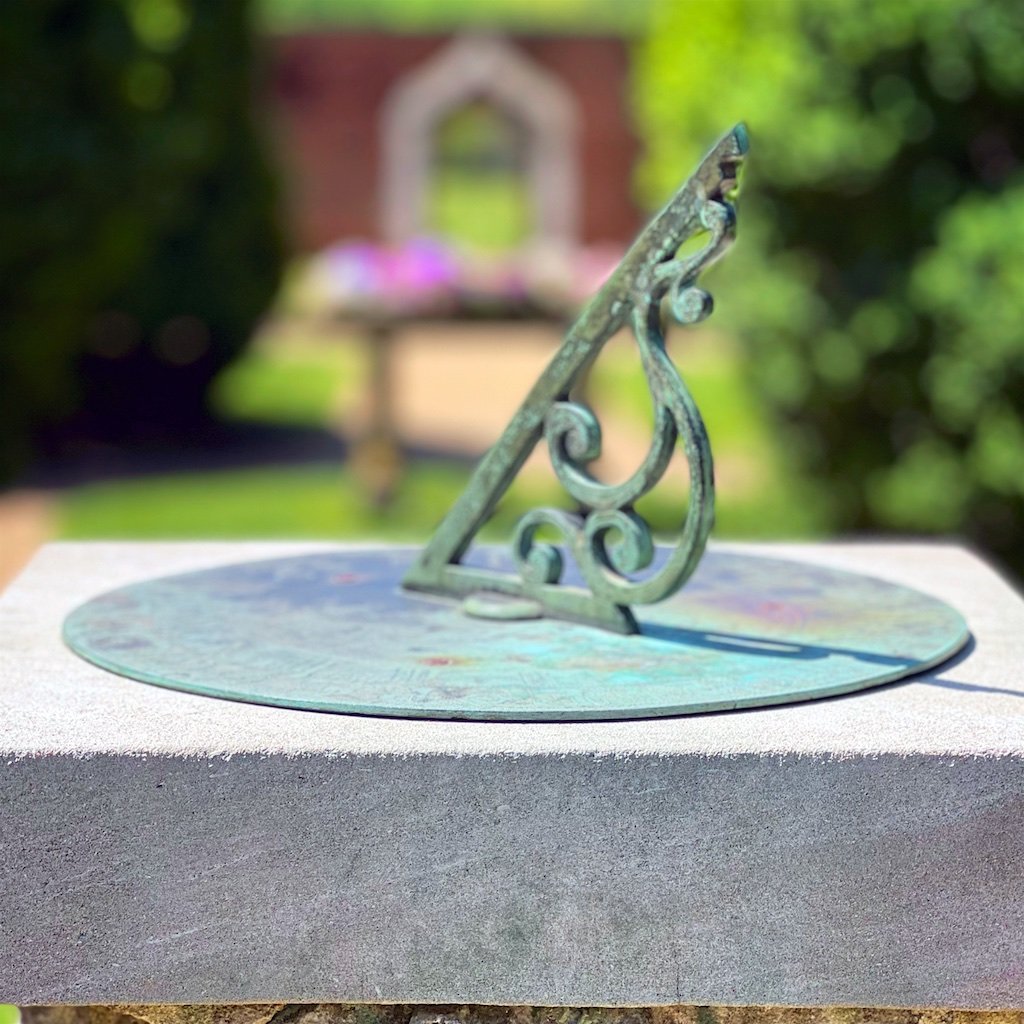
Annie's dePont's daughter Marion hired Charles Gillette to design additonal perennial beds. The National Trust for Historic Preservation bought Montpelier in 1984.
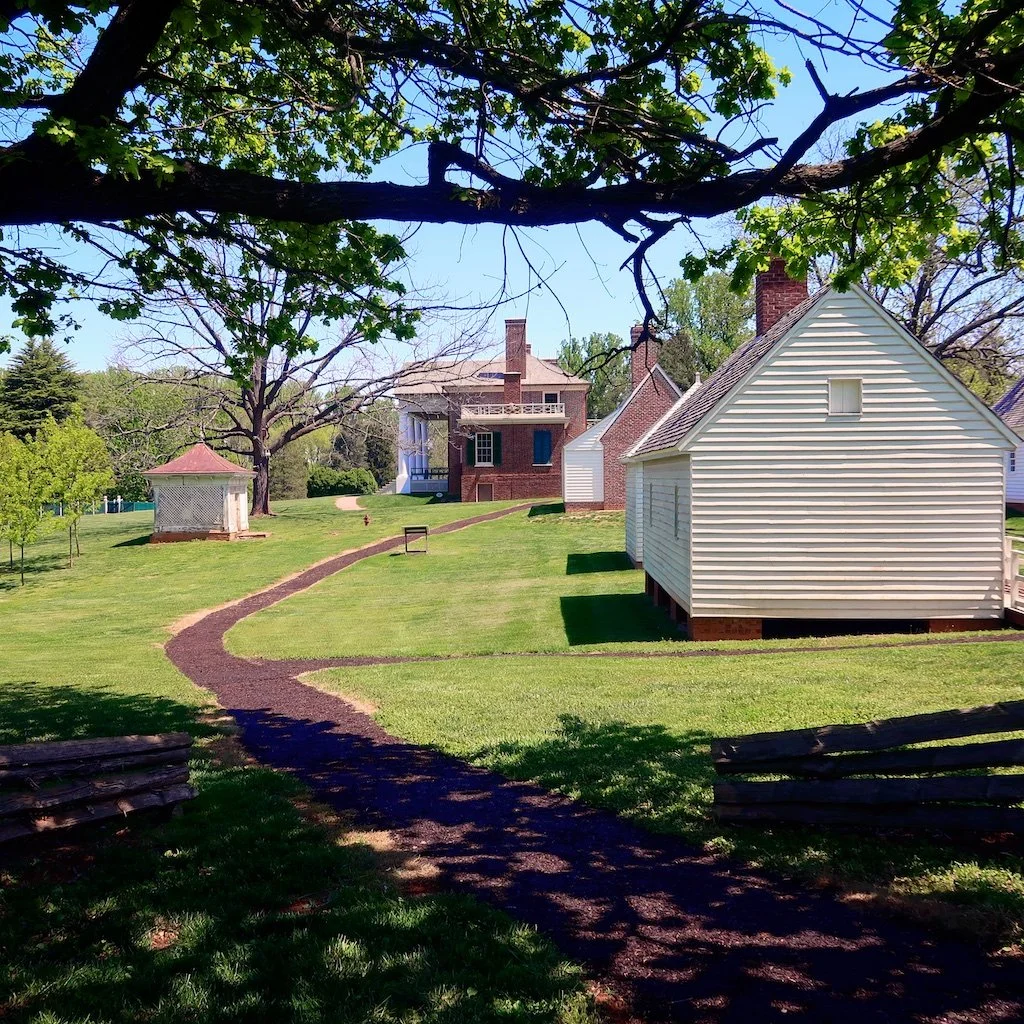
The South Cellar details the Montpelier story of slavery, complete with the voices of descendants and the names of everyone known to be enslaved on the property throughout the Madison ownership.
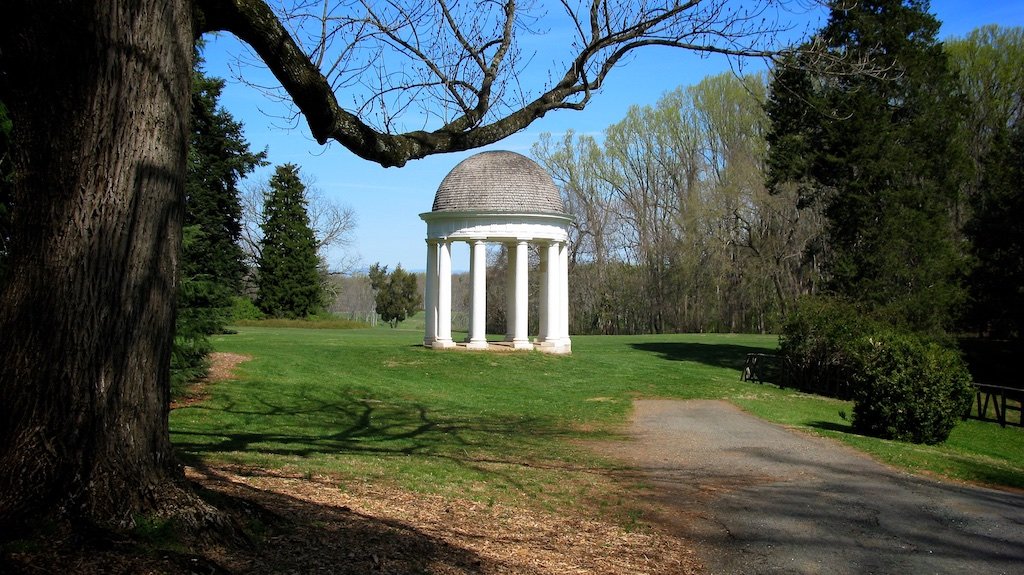
The Temple at Montpelier, which served both an aesthetic purpose and a practical one as a working icehouse.
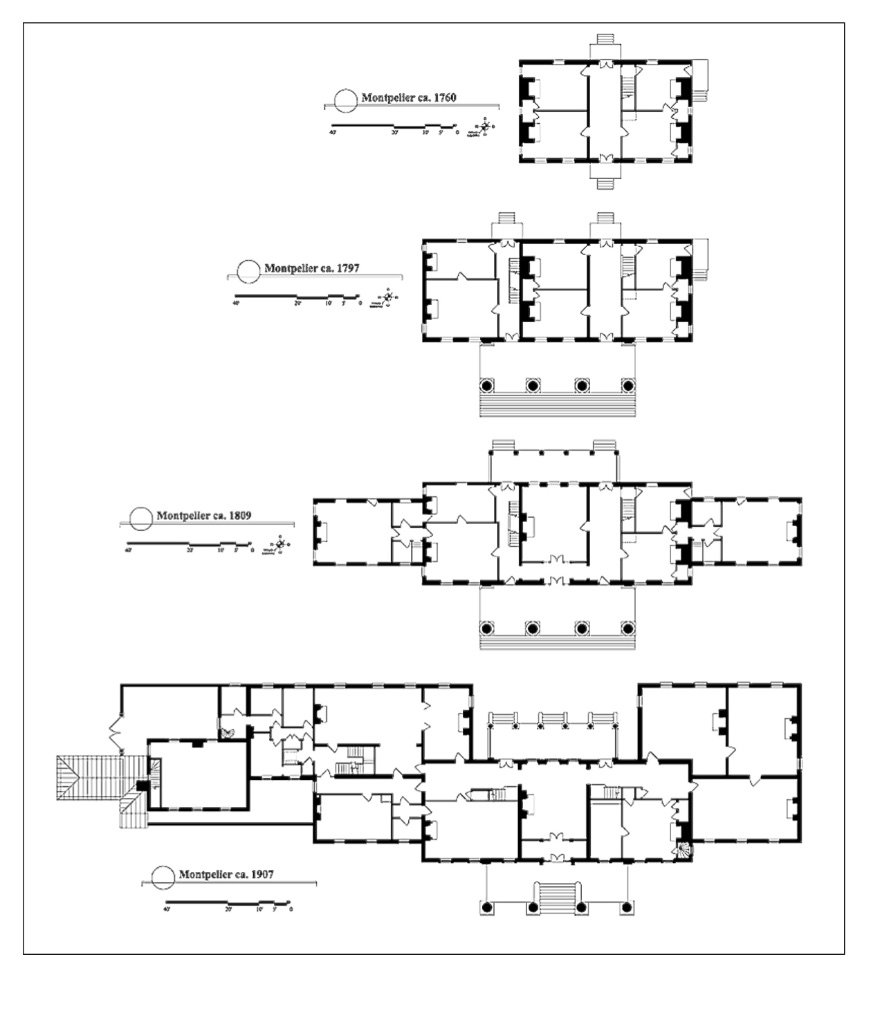
Floor Plan: Montpelier floor plan as it evolves from 1760-1907.
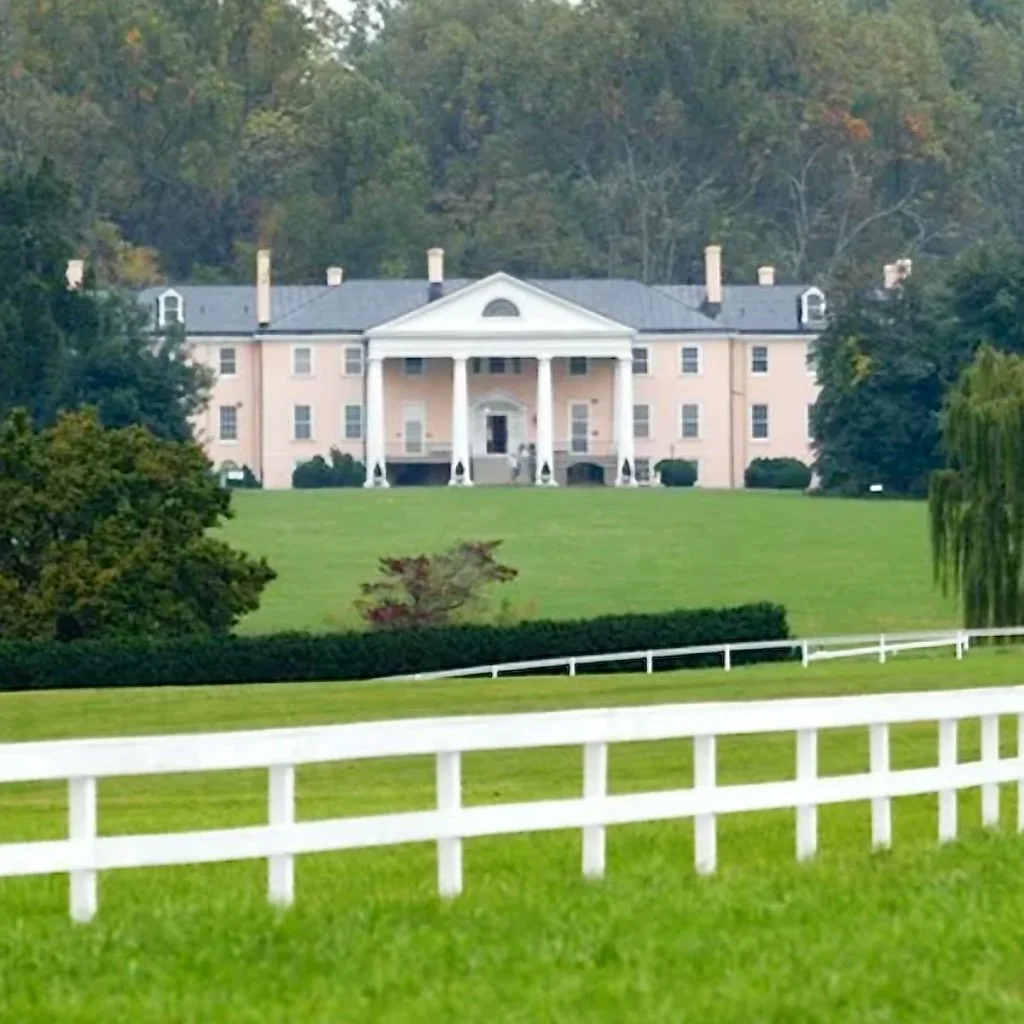
Montpelier as reimagined by the duPont's